
AI’s Milestone in Space Exploration: Claude’s Autonomous Planning of a Mars Rover Mission
Space exploration has always been a testament to human ingenuity and technological prowess. However, recent advancements in artificial intelligence (AI) have ushered in a new era, where machines are not just tools but autonomous planners and decision-makers. One such groundbreaking achievement is the autonomous planning of a Mars rover mission by Claude, an advanced AI system. This milestone marks a significant leap in AI’s role in space exploration, offering practical insights, industry implications, and future possibilities.
The Rise of AI in Space Exploration
AI has been gradually integrating into space missions, enhancing data analysis, image recognition, and even robotic operations. However, the autonomous planning of a Mars rover mission by Claude represents a quantum leap. Claude, developed by a leading AI research lab, is designed to handle complex decision-making processes, making it an ideal candidate for autonomous mission planning.
Claude’s Autonomous Planning: A Game Changer
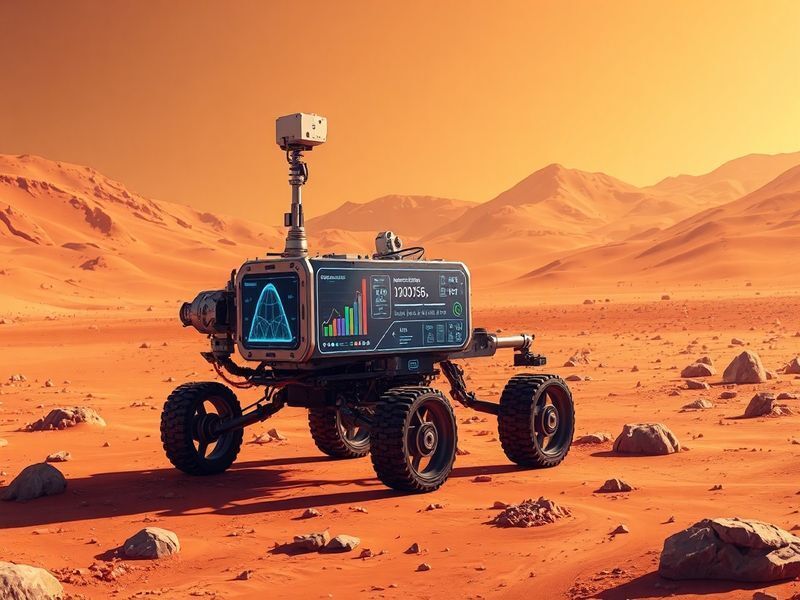
Claude’s ability to autonomously plan a Mars rover mission is a testament to the advancements in AI and machine learning. Here’s how Claude achieved this milestone:
- Data Integration: Claude integrated data from various sources, including satellite imagery, topographical maps, and previous rover missions, to create a comprehensive understanding of the Martian landscape.
- Path Planning: Using advanced algorithms, Claude planned the rover’s path, considering factors like terrain difficulty, energy consumption, and scientific value of potential exploration sites.
- Decision-Making: Claude made real-time decisions based on the rover’s sensor data, adjusting the mission plan as needed to ensure mission success.
- Risk Assessment: Claude assessed potential risks and devised contingency plans, ensuring the rover’s safety and the mission’s success.
Practical Insights and Industry Implications
The successful autonomous planning of a Mars rover mission by Claude has several practical insights and industry implications:
Enhanced Mission Efficiency
AI-driven autonomous planning can significantly enhance mission efficiency. By making real-time decisions and adjusting mission plans as needed, AI can optimize resource usage and maximize mission outcomes.
Reduced Human Intervention
Autonomous planning reduces the need for human intervention, allowing mission control to focus on other critical aspects. This is particularly important for deep space missions where communication delays make real-time human intervention challenging.
Increased Mission Safety
AI’s ability to assess risks and devise contingency plans can increase mission safety. By anticipating potential issues and preparing for them, AI can help prevent mission failures and ensure the safety of expensive and irreplaceable equipment.
Cost-Effective Missions
Autonomous planning can make space missions more cost-effective. By optimizing resource usage and reducing the need for human intervention, AI can help lower mission costs, making space exploration more accessible.
Future Possibilities
The successful autonomous planning of a Mars rover mission by Claude opens up exciting future possibilities:
Autonomous Spacecraft
In the future, AI could enable fully autonomous spacecraft capable of exploring our solar system and beyond without human intervention. These spacecraft could make real-time decisions, adjust their mission plans, and even repair themselves, making deep space exploration more feasible.
AI-Driven Space Colonization
AI could play a crucial role in space colonization efforts. From planning and constructing habitats to managing life support systems, AI could help make space colonization a reality.
Advanced Space Telescopes
AI could enhance the capabilities of space telescopes. By autonomously planning observation schedules, adjusting telescope settings, and analyzing data, AI could help us uncover the secrets of the universe.
Conclusion
Claude’s autonomous planning of a Mars rover mission marks a significant milestone in AI’s role in space exploration. This achievement offers practical insights, industry implications, and exciting future possibilities. As AI continues to advance, its role in space exploration will only grow, paving the way for a new era of discovery and innovation.
As we stand on the brink of this new era, one thing is clear: the future of space exploration is not just about human ingenuity and technological prowess, but also about the intelligent machines that will help us explore the cosmos.