
AI’s Role in Software Engineering: The Rise of Coding Agents
As software development continues to evolve at a rapid pace, artificial intelligence (AI) is stepping into the spotlight, transforming how coding tasks are approached and executed. The emergence of advanced AI models signals a new era in software engineering, where coding agents are poised to revolutionize development practices. In this article, we will explore the role of AI in software engineering, focusing on how these innovations are set to reshape the industry in the coming year.
The Current Landscape of Software Development
Software engineering has traditionally relied on human expertise to write, debug, and maintain code. However, as project demands grow and timelines shorten, the need for efficiency and speed has never been more critical. AI technologies, particularly machine learning algorithms, are being integrated into various phases of software development, providing support that enhances productivity.
What are Coding Agents?
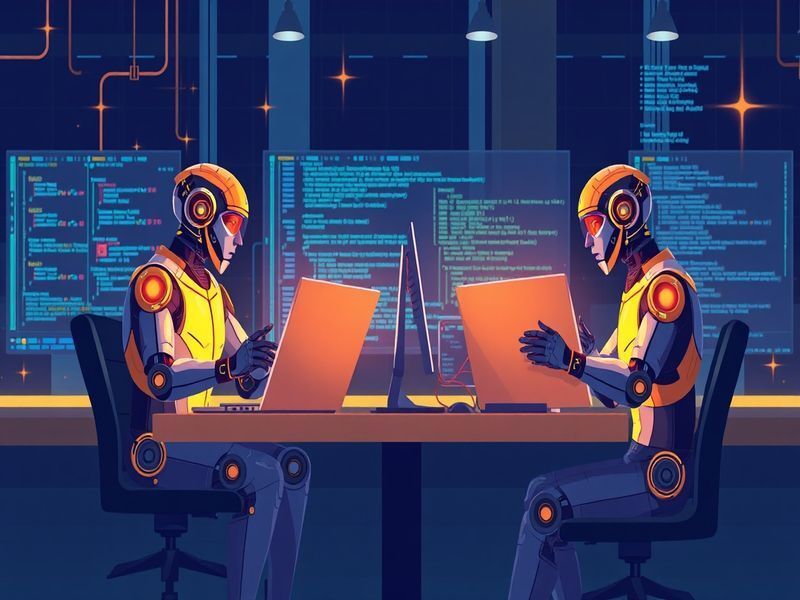
Coding agents are AI-driven tools designed to assist developers by automating parts of the coding process. These agents can perform tasks ranging from code generation to debugging and even testing. The rise of coding agents stems from the need to streamline workflows and reduce the time spent on repetitive coding tasks.
How AI Models are Revolutionizing Software Development
1. Code Generation
One of the most significant contributions of AI in software engineering is its ability to generate code. By leveraging natural language processing (NLP) and deep learning techniques, coding agents can translate user requirements into functional code snippets. This capability not only accelerates the development process but also minimizes human error.
- Efficiency: AI models can analyze vast amounts of code from existing repositories, learning best practices and patterns.
- Consistency: Automated code generation ensures uniformity in style and structure, reducing discrepancies across different parts of a project.
- Accessibility: Non-programmers can utilize coding agents to create simple applications without extensive coding knowledge.
2. Intelligent Debugging
Debugging can be a tedious and time-consuming task for developers. AI coding agents are equipped with the ability to analyze code for potential issues, offering suggestions and even automatically fixing bugs. By using machine learning algorithms that learn from previous debugging sessions, these agents can improve their accuracy over time.
- Faster Resolution: AI can identify and resolve issues in real-time, significantly reducing development time.
- Predictive Analytics: By analyzing patterns from past bugs, AI can anticipate potential future issues.
- Reduced Human Error: Automating the debugging process minimizes the chance of human oversight.
3. Testing Automation
Quality assurance is a critical phase in software development. AI-driven testing agents can automate the testing process, running various test cases and analyzing results more efficiently than human testers. This leads to quicker release cycles while maintaining high-quality standards.
- Comprehensive Coverage: AI can generate extensive test cases that cover a wide range of scenarios.
- Continuous Improvement: Machine learning algorithms can learn from previous test results to enhance future testing strategies.
- Integration with CI/CD Pipelines: AI testing agents can be seamlessly integrated into continuous integration and continuous deployment workflows.
Industry Implications of AI in Software Development
The integration of AI in software engineering is not just a trend; it has profound implications for the industry at large. Here are some of the key consequences:
- Job Transformation: While AI will automate many coding tasks, it will also create new roles focused on managing and improving AI systems.
- Increased Collaboration: Developers will work alongside AI agents, leading to a collaborative environment where human creativity meets machine efficiency.
- Focus on Complex Problems: With routine tasks automated, developers can concentrate on more complex and creative aspects of software design.
Future Possibilities
As we look to the future, several trends are expected to shape the landscape of AI in software engineering:
- Integration with Low-Code Platforms: AI will enhance low-code development environments, making it easier for businesses to create custom applications.
- Enhanced Personalization: AI models will become more adept at understanding user preferences, leading to more personalized software solutions.
- Greater Adoption of AI Ethics: As AI takes on more responsibilities, ethical considerations will become increasingly important in software development practices.
In conclusion, AI’s role in software engineering is set to expand dramatically, with coding agents at the forefront of this transformation. As we embrace these advancements, the industry can look forward to increased efficiency, reduced errors, and a more collaborative environment between human developers and AI. The future of software development is undoubtedly intertwined with the evolution of AI technologies, promising a revolutionary leap forward in how we create and maintain software.