
Anthropic’s AI Security Breach: Hacking Firefox
In an era dominated by rapid technological advancements, security breaches remain a significant concern, especially in the realm of software applications. Recently, Anthropic, an AI safety and research organization, demonstrated how artificial intelligence can both identify vulnerabilities in widely-used software and lead to substantial updates and improvements. This article explores the recent incident involving Firefox, the widely popular web browser, and how AI played a pivotal role in exposing security flaws.
The Role of AI in Cybersecurity
Artificial intelligence has increasingly become an essential tool in cybersecurity. Its ability to analyze vast amounts of data quickly allows it to identify patterns and anomalies that human analysts might overlook. Here are some ways AI contributes to improving security:
- Automated Threat Detection: AI systems can continuously monitor network traffic and detect unusual behavior in real-time.
- Vulnerability Assessment: AI tools can scan software code for vulnerabilities, assessing risks faster than traditional methods.
- Incident Response: AI can help automate responses to security incidents, minimizing damage and recovery time.
How Anthropic’s AI Discovered Firefox Vulnerabilities
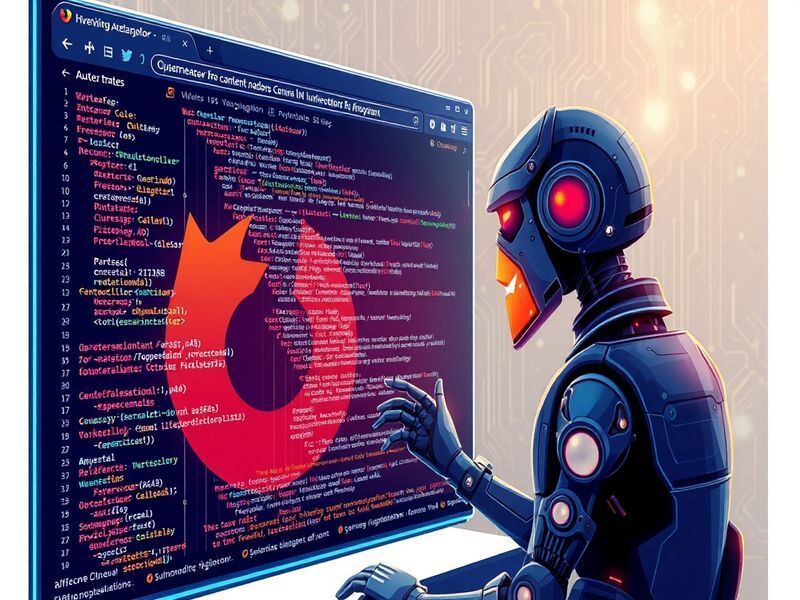
In the case of Firefox, Anthropic’s AI identified several vulnerabilities that posed significant risks to users. The AI employed a combination of machine learning algorithms and natural language processing to analyze the browser’s codebase and user interactions. Here’s how the process unfolded:
- Data Collection: The AI scraped data from public repositories and community forums to gather insights on existing vulnerabilities.
- Code Analysis: Using sophisticated algorithms, the AI performed a comprehensive analysis of the Firefox source code, identifying potential weak points.
- Simulated Attacks: By simulating various attack vectors, the AI evaluated how these vulnerabilities could be exploited in real-world scenarios.
- Reporting Findings: The AI generated a detailed report outlining the vulnerabilities, their potential impacts, and recommendations for mitigation.
Industry Implications
The implications of this incident extend far beyond just Firefox. As AI continues to evolve, its integration into cybersecurity will likely reshape how organizations approach security management. Here are some key industry implications:
- Increased Reliance on AI: Organizations may increasingly rely on AI-driven tools for vulnerability assessments, leading to more proactive security measures.
- New Standards in Security Protocols: The discovery of vulnerabilities through AI may establish new standards in how software is developed and maintained.
- Collaboration Between Companies: Companies may form partnerships to share AI tools and findings, enhancing overall security across platforms.
Future Possibilities
Looking ahead, the future of AI in cybersecurity holds exciting possibilities. Here are some trends and innovations we might expect:
- Enhanced Machine Learning Models: Continued advancements in machine learning will lead to more sophisticated models capable of predicting and preventing cyber threats before they occur.
- AI-Driven Security Frameworks: The development of comprehensive AI-driven security frameworks could automate much of the security lifecycle, from threat detection to incident response.
- Ethical Considerations: As AI takes on more significant roles in cybersecurity, ethical considerations will become paramount, particularly concerning data privacy and bias in decision-making processes.
Conclusion
The recent incident involving Anthropic’s AI and Firefox serves as a vital reminder of both the power of artificial intelligence and the constant need for vigilance in software security. While AI can significantly enhance our ability to identify and mitigate vulnerabilities, it also emphasizes the importance of responsible development and deployment. As we continue to navigate this rapidly evolving landscape, organizations must embrace AI technologies while remaining committed to ethical practices and security standards.