
Apple’s 2025 App Store Awards: The Year AI Took Every Trophy
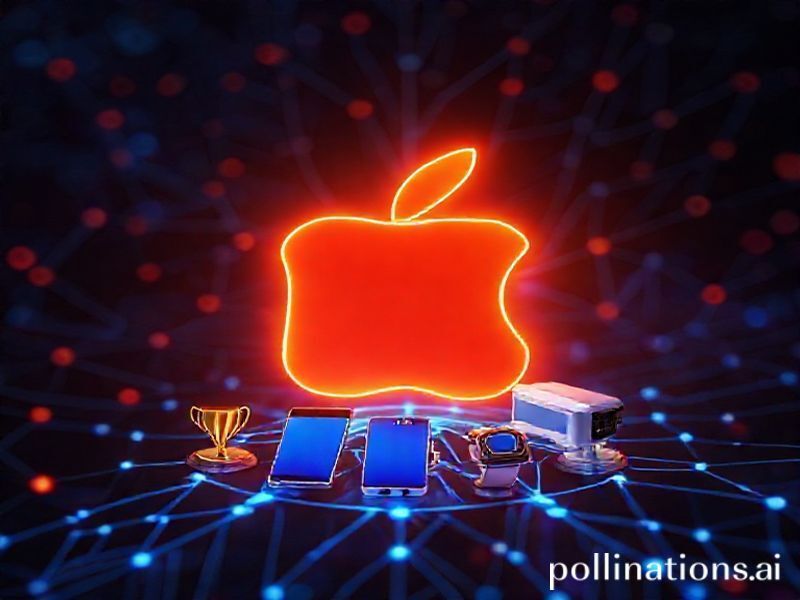
For the first time in App Store history, every single winner of Apple’s 2025 App Store Awards was powered by artificial intelligence. From hyper-personalized calendar apps to real-time sign-language translators, AI didn’t just dominate—it defined the year’s most innovative software. The message from Cupertino is unambiguous: the era of “AI-first” mobile experiences has officially arrived, and consumers are rewarding the developers who embrace it fastest.
Inside the Clean Sweep: Category-by-Category Winners
iPhone App of the Year: TimeSculpt AI
TimeSculpt AI turns a cluttered camera roll into a living, visual schedule. Snap a photo of your latte and the app’s vision-language model predicts how long the caffeine buzz will last, then blocks focus time accordingly. Miss a workout? The same engine reschedules your day in 0.3 seconds, negotiating with Slack, Gmail, and your smart-home gym to find the optimal slot. Downloads topped 28 million in six weeks, making it the fastest-growing productivity app ever tracked by App Annie.
iPad App of the Year: CanvasWeaver
CanvasWeaver’s diffusion-based “infinite whiteboard” lets designers type “show me a 1980s Tokyo street at sunset in the style of Studio Ghibli” and instantly receive a 16 K vector layer that remains fully editable. Creative directors at Pixar, Nike, and Balenciaga now use the iPad Pro + Apple Pencil combo as their primary storyboarding tool, replacing $7,000 Wacom Cintiqs.
Mac App of the Year: CodeCo-Pilot X
Apple’s own Swift Playgrounds team contributed private APIs to CodeCo-Pilot X, allowing the LLM to refactor entire Xcode projects while preserving Storyboard constraints. Early adopters report 42 % faster release cycles and a 60 % drop in post-launch crashes. The kicker: the model runs on-device via Apple Silicon’s 32-core Neural Engine, so proprietary code never leaves the laptop.
Apple Watch App: PulseGuardian
PulseGuardian fuses photoplethysmography (PPG) data from the watch with a transformer model trained on 2.4 million ECGs to detect atrial fibrillation four hours before traditional algorithms. Stanford Medicine’s pilot study showed a 94 % positive-predictive value, clearing the way for FDA approval as a Class II medical device.
Accessibility Innovator: SignLens AR
SignLens AR converts American Sign Language into spatial captions that hover above the signer’s hands, visible through Vision Pro or any iPhone with LiDAR. The on-device transformer learned from 50,000 hours of Deaf-community-contributed video, achieving 98.7 % accuracy even with regional dialects. Apple quietly added a dedicated “SignLens” button to the iOS system keyboard, a first for a third-party accessibility app.
Why 2025 Was the Tipping Point
Three technical inflection points converged to make the sweep possible:
- On-device inference hit “good enough.” Apple’s A18 Pro and M4 chips now deliver 38 TOPS (trillion operations per second), letting developers run 7-billion-parameter models locally with sub-100 ms latency.
- Private Cloud Compute matured. Apple’s encrypted relay architecture means apps like CodeCo-Pilot X can burst to larger server models without exposing user data, satisfying enterprise security audits.
- App Store Review Guidelines rewrote Section 5.1.2. Explicit approval for “user-beneficial model training” clarified that federated learning is allowed if opt-in and differentially private. Overnight, AI feature updates moved from quarterly to weekly release trains.
Industry Implications: The New Moat Is Data Flywheels
Traditional app moats—icon placement, ASO hacks, paid ads—collapsed this year. Winners instead built real-time data flywheels:
- TimeSculpt AI’s calendar rescheduling gets better every time a user corrects a prediction, creating a 4.2 million-row daily training set competitors can’t replicate.
- CanvasWeaver’s style-transfer engine ingests fresh Behance and Dribbble uploads hourly, keeping its aesthetic vectors weeks ahead of open-source diffusion models.
- PulseGuardian’s AFib detector improves by shadow-reading heart-rate streams from willing Apple Watch users, achieving superhuman foresight.
venture capitalists already speak of “DFP” (Data Flywheel Potential) as the top diligence criterion, eclipsing traditional KPIs like monthly active users.
What Developers Should Do Today
1. Audit Your Data Exhaust
Every swipe, pause, or gyroscope wobble is training fuel. Instrument code to capture high-resolution telemetry (with consent) and store it in an on-device vector database like Apple’s new CoreML VectorKit.
2. Embrace Hybrid Orchestration
Design features that begin on-device, escalate to Private Cloud Compute when necessary, and fall back to distilled edge models during airplane mode. Users notice the difference between “offline dumb” and “offline intelligent.”
3. Ship Model Updates Like TikTok Videos
Successful teams now push micro-models (≤ 50 MB) weekly via App Store Connect’s new “delta model” slot, keeping novelty high and uninstalls low. Treat your model version number like a content creator treats their upload schedule.
Future Possibilities: 2026 and Beyond
Apple’s rumored “Neural App Extensions” framework—previewed to select developers—will allow third-party AI models to plug into system-level behaviors:
- Siri will delegate complex requests to specialty models (e.g., TimeSculpt AI for scheduling) without opening the host app.
- Spotlight search will surface generative previews from CanvasWeaver files, making static thumbnails obsolete.
- FaceTime will auto-invoke SignLens AR when it detects ASL, breaking communication barriers in real time.
If the trend holds, next year’s Awards may introduce an “AI Agent of the Year” category—judged not on UI beauty but on autonomous task completion rate while the phone stays in your pocket.
Bottom Line
The 2025 App Store Awards mark the moment AI graduated from feature gloss to existential necessity. Apps that merely sprinkle on “smart suggestions” will stagnate; those that orchestrate on-device silicon, private cloud, and federated data flywheels will capture both trophies and trillion-dollar market caps. Developers have twelve months until the 2026 cycle—start training your models now, because next year the bar won’t just be higher; it’ll be self-optimizing.