

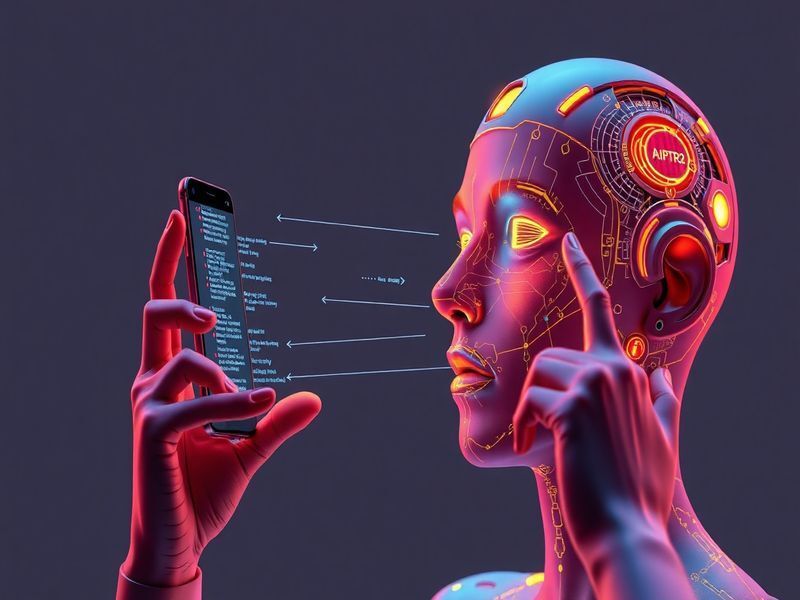
# Apple’s Acquisition of Q.ai: The Future of Silent Speech Technology
## The Dawn of a New Era in Human-Computer Interaction
Apple’s recent acquisition of Q.ai, a startup specializing in silent speech technology, has sent ripples through the tech industry. This move underscores Apple’s commitment to innovation and its relentless pursuit of cutting-edge technologies that redefine human-computer interaction. Silent speech technology, which interprets facial micro-movements to translate thoughts into text or commands, could revolutionize how we interact with our devices. This article explores the implications of this acquisition, the technology behind silent speech, and the future possibilities it unlocks.
## Understanding Silent Speech Technology
Silent speech technology leverages artificial intelligence and machine learning to interpret subtle facial movements, muscle activity, and even neural signals to decipher what a person is trying to say or command without uttering a word. This technology has the potential to transform communication for individuals with speech impairments and to create more intuitive interfaces for everyone.
### How It Works
### Practical Applications
- **Accessibility**: Silent speech technology can provide a voice for individuals who are unable to speak due to medical conditions.
- **Hands-Free Interaction**: Users can control devices without using their hands, enhancing convenience and safety.
- **Privacy**: Silent speech offers a more private way to interact with devices, reducing the need for vocal commands in public settings.
## Apple’s Strategic Move
Apple’s acquisition of Q.ai is a strategic move that aligns with its long-term vision of creating intuitive and accessible technologies. By integrating silent speech technology into its ecosystem, Apple can enhance the user experience across its devices, from iPhones and iPads to Macs and wearables.
### Industry Implications
- **Competitive Edge**: Apple’s investment in silent speech technology positions it ahead of competitors in the race to develop the next generation of human-computer interfaces.
- **Innovation Ecosystem**: The acquisition fosters a culture of innovation, encouraging other companies to explore similar technologies.
- **Market Expansion**: Silent speech technology can open new markets, particularly in healthcare and accessibility, where the demand for advanced communication tools is high.
## Future Possibilities
The potential applications of silent speech technology are vast and varied. As the technology evolves, we can expect to see it integrated into a wide range of devices and applications.
### Healthcare and Accessibility
- **Assistive Devices**: Silent speech technology can be integrated into assistive devices for individuals with speech impairments, providing them with a reliable means of communication.
- **Medical Monitoring**: The technology can be used to monitor patients’ health by analyzing facial micro-movements associated with pain or discomfort.
### Consumer Electronics
- **Smart Homes**: Users can control smart home devices with silent commands, enhancing convenience and security.
- **Entertainment**: Silent speech can enable more immersive gaming and entertainment experiences, allowing users to interact with content in new ways.
### Workplace and Productivity
- **Remote Work**: Silent speech technology can facilitate more efficient remote work by enabling seamless communication and collaboration.
- **Productivity Tools**: Integration with productivity tools can streamline workflows, allowing users to issue commands without interrupting their tasks.
## Challenges and Considerations
While the potential of silent speech technology is immense, there are challenges and considerations that need to be addressed.
### Privacy and Security
- **Data Protection**: Ensuring the privacy and security of biometric data is paramount. Robust encryption and data protection measures are essential.
- **Consent**: Users must have control over their data and be able to give informed consent for its use.
### Accuracy and Reliability
- **Training Data**: The accuracy of silent speech technology depends on the quality and diversity of the training data. Ensuring that the data represents a wide range of users is crucial.
- **Real-World Performance**: The technology must perform reliably in real-world conditions, accounting for variations in lighting, background noise, and user behavior.
### Ethical Implications
- **Bias and Fairness**: Ensuring that silent speech technology is fair and unbiased is essential. Developers must be mindful of potential biases in the training data and algorithms.
- **Accessibility**: The technology should be accessible to all users, regardless of their abilities or backgrounds.
## Conclusion
Apple’s acquisition of Q.ai marks a significant step forward in the development of silent speech technology. This innovation has the potential to revolutionize human-computer interaction, making it more intuitive, accessible, and private. As the technology evolves, we can expect to see it integrated into a wide range of applications, from healthcare and accessibility to consumer electronics and the workplace. However, addressing challenges related to privacy, accuracy, and ethical considerations will be crucial to realizing its full potential.
The future of silent speech technology is bright, and Apple’s investment in Q.ai positions it at the forefront of this exciting frontier. As we look ahead, the possibilities are endless, and the impact on our daily lives could be profound.
—