

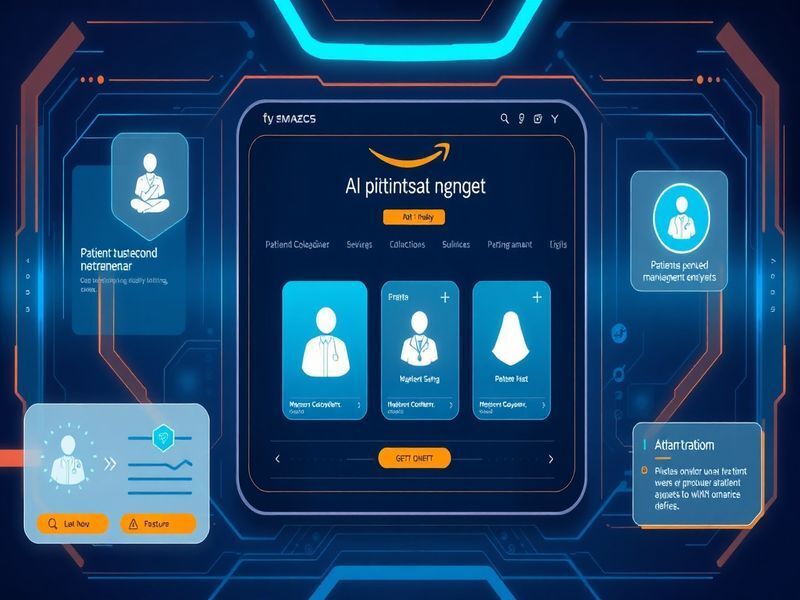
AWS Launches AI Solutions for Healthcare: Introducing Amazon Connect Health
In a world where technological advancements are reshaping industries at an unprecedented pace, Amazon Web Services (AWS) has stepped into the healthcare arena with a groundbreaking innovation. The launch of Amazon Connect Health, a dedicated AI agent, aims to revolutionize patient management and clinical documentation by leveraging the power of artificial intelligence. This initiative not only streamlines healthcare operations but also enhances the patient experience and improves clinical outcomes.
Understanding Amazon Connect Health
Amazon Connect Health is designed specifically for healthcare providers. It integrates seamlessly with existing healthcare systems to offer a range of functionalities that simplify communication and documentation processes. This AI-driven solution utilizes natural language processing (NLP) and machine learning algorithms to automate patient interactions and clinical record keeping, thereby reducing administrative burdens on healthcare professionals.
Key Features of Amazon Connect Health
Amazon Connect Health is packed with features that address the unique challenges faced by healthcare providers today:
- Automated Patient Interaction: The AI agent can handle patient inquiries, schedule appointments, and provide information on medication and treatment plans, all without human intervention.
- Clinical Documentation Assistance: By transcribing and organizing patient interactions, it helps clinicians maintain accurate and comprehensive records, facilitating better patient care.
- Real-Time Data Analysis: The solution analyzes patient data to provide actionable insights, which can enhance clinical decision-making and improve patient outcomes.
- Integration with Existing Systems: Amazon Connect Health works with other AWS services and third-party applications, ensuring that it fits seamlessly into the existing healthcare IT ecosystem.
Practical Insights for Healthcare Providers
The introduction of Amazon Connect Health provides healthcare providers with several practical benefits:
- Enhanced Efficiency: By automating routine tasks, healthcare staff can focus more on direct patient care rather than administrative duties.
- Improved Patient Experience: Patients benefit from quicker responses to their inquiries and a more streamlined scheduling process, which can lead to higher satisfaction levels.
- Reduced Errors: Automation in documentation helps minimize human errors, leading to more accurate patient records and better care outcomes.
Industry Implications
The launch of Amazon Connect Health is set to have far-reaching implications for the healthcare industry:
- Shifting Roles: As AI solutions take over routine tasks, the role of healthcare professionals may shift more towards complex decision-making and personalized patient care.
- Increased Accessibility: With AI facilitating interaction, healthcare services can become more accessible to underserved populations, breaking down geographical and economic barriers.
- Data-Driven Decision Making: Enhanced data analytics will allow healthcare providers to make more informed decisions based on real-time patient data.
Future Possibilities
As Amazon Connect Health continues to evolve, several future possibilities emerge:
- Personalized Patient Care: Future iterations may incorporate advanced machine learning algorithms that provide tailored healthcare recommendations based on individual patient profiles.
- Telehealth Integration: With the growing trend of telehealth, integrating Amazon Connect Health with virtual care platforms could provide a seamless experience for remote consultations.
- Predictive Analytics: By analyzing historical patient data, AI could help predict potential health issues, enabling proactive care strategies.
Conclusion
In conclusion, the launch of Amazon Connect Health is a significant step toward harnessing the potential of artificial intelligence in healthcare. By streamlining patient management and clinical documentation, AWS is not only enhancing operational efficiency but also improving the overall patient experience. As this technology continues to mature, its implications for healthcare will be profound, paving the way for a more efficient, accessible, and data-driven future.