
The Evolution Beyond Chatbots: Building Advanced AI Agents That Think, Speak, and Collaborate
Remember when chatbots were little more than glorified FAQ systems? Those days are rapidly fading into technological prehistory. Today’s advanced AI agents represent a quantum leap in capability—they can engage in natural voice conversations, coordinate with other agents in complex workflows, and conduct deep research that rivals human expertise. This isn’t science fiction; it’s happening right now in labs and enterprises worldwide.
As we stand at the precipice of this new era, understanding how to build and deploy these sophisticated systems isn’t just interesting—it’s becoming essential for staying competitive in an AI-driven future.
Voice Agents: Giving AI a Human Face
The transformation from text-based chatbots to voice agents marks one of the most significant leaps in AI accessibility. Modern voice agents don’t just convert speech to text and back again—they understand context, emotion, and intent in ways that create genuinely natural interactions.
The Technology Stack Behind Conversational AI
Building a sophisticated voice agent requires orchestrating multiple AI components in real-time:
- Automatic Speech Recognition (ASR): Systems like Whisper or DeepSpeech that achieve near-human accuracy even in noisy environments
- Natural Language Understanding (NLU): Advanced models that grasp context, sarcasm, and implied meaning
- Dialogue Management: State machines that maintain conversation context and manage turn-taking
- Text-to-Speech (TTS): Neural voices that sound remarkably human, complete with appropriate pauses and intonation
Perhaps most impressively, modern voice agents can handle interruptions—a uniquely human conversation pattern. When you cut off an AI agent mid-sentence, it can pause, listen, and respond appropriately rather than continuing its scripted response.
Real-World Applications Making Waves
Companies are already deploying voice agents in transformative ways:
- Customer Service Revolution: Delta Air Lines’ voice agent handles complex rebooking scenarios, understanding context like weather delays and passenger loyalty status
- Healthcare Companions: AI agents that conduct preliminary patient interviews, showing empathy while gathering crucial medical information
- Educational Tutors: Language learning agents that correct pronunciation in real-time and adapt teaching styles to individual learning patterns
Multi-Agent Workflows: The Power of AI Collaboration
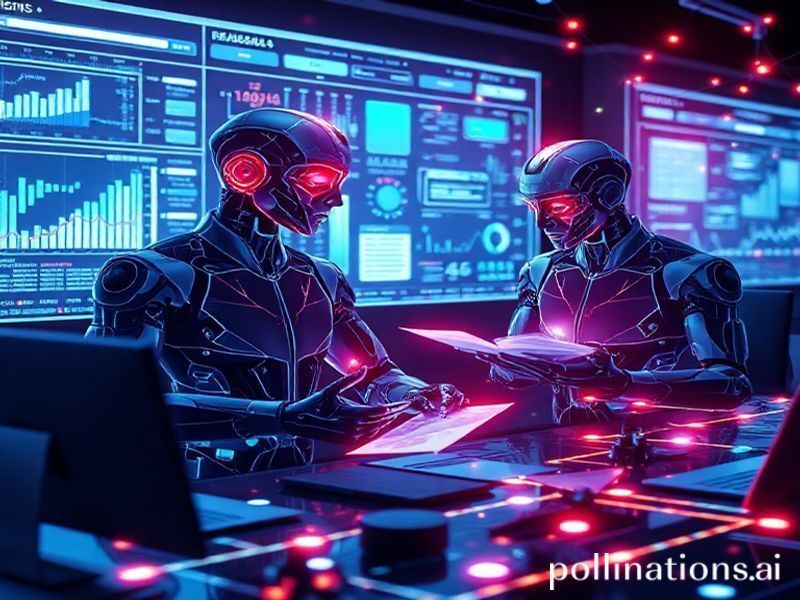
While single agents are impressive, the real magic happens when multiple AI agents work together. Think of it as assembling a digital dream team, where each agent specializes in different domains but collaborates seamlessly on complex tasks.
Architecting Agent Ecosystems
Building effective multi-agent systems requires careful orchestration:
- Role Definition: Each agent needs clear specializations—research, analysis, creativity, or execution
- Communication Protocols: Agents must share information in standardized formats, often using structured data or natural language
- Conflict Resolution: When agents disagree, the system needs mechanisms for arbitration or voting
- Resource Management: Preventing agents from duplicating work or creating bottlenecks
A practical example: imagine a content creation workflow where one agent researches topics, another writes drafts, a third fact-checks, and a fourth optimizes for SEO—all working autonomously while maintaining quality standards.
The Swarm Intelligence Advantage
Multi-agent systems exhibit emergent behaviors that surpass individual capabilities. When GitHub Copilot pairs with multiple specialized agents—security analyzers, performance optimizers, and documentation generators—the resulting code isn’t just functional; it’s robust, secure, and well-documented without human intervention.
Deep Research Systems: AI as Subject Matter Expert
Perhaps the most academically intriguing development is the emergence of AI systems capable of genuine research. These aren’t just retrieving information—they’re synthesizing knowledge, identifying gaps, and generating novel insights.
Components of Research-Grade AI
Deep research systems combine several advanced capabilities:
- Literature Review Automation: Agents that can parse thousands of papers, extract key findings, and identify research trends
- Hypothesis Generation: Systems that propose testable theories based on existing knowledge gaps
- Experimental Design: AI that can suggest methodologies and control for variables
- Peer Review Simulation: Agents that critique research methodology and identify potential flaws
IBM’s recent demonstration of an AI system that discovered a novel antibiotic compound showcases this potential. The AI didn’t just search existing databases—it understood molecular biology principles, predicted protein interactions, and proposed entirely new chemical structures.
Industry Implications and Transformation
The shift from simple chatbots to advanced agent systems is reshaping entire industries:
Professional Services Evolution
Law firms are deploying research agents that can analyze precedents across multiple jurisdictions simultaneously. Consulting companies use multi-agent systems where one agent gathers market data, another analyzes competitors, and a third generates strategic recommendations—all in minutes rather than weeks.
Scientific Research Acceleration
Pharmaceutical companies report that AI research agents are reducing drug discovery timelines from years to months. These systems can propose molecular modifications, predict side effects, and even suggest patient populations most likely to benefit from new treatments.
The Road Ahead: Possibilities and Challenges
As we look toward the future, several exciting possibilities emerge:
- Personal Agent Ecosystems: Individuals will maintain personal AI teams—financial advisors, health coaches, learning companions—all working in concert
- Democratic Innovation: Small companies and even individuals will access research capabilities previously limited to large corporations
- Creative Collaboration: Artists and designers will partner with AI agents that understand aesthetic principles and can iterate on creative concepts
However, significant challenges remain. Ethical considerations around agent autonomy, privacy concerns when multiple agents share data, and economic disruption as these systems replace traditional job functions all require careful navigation.
Getting Started: Building Your First Advanced Agent
For developers and organizations ready to dive in, the barrier to entry has never been lower. Start with these practical steps:
- Choose Your Platform: Open-source frameworks like AutoGen, CrewAI, or Microsoft’s Semantic Kernel provide excellent starting points
- Define Clear Objectives: Start with a specific use case rather than trying to build a general-purpose agent
- Iterate Rapidly: Use prompt engineering and fine-tuning to refine agent behavior based on real feedback
- Measure Everything: Track not just success rates but conversation quality, task completion times, and user satisfaction
The key is starting small but thinking big. Today’s experimental voice agent for customer support could evolve into tomorrow’s fully autonomous business process.
As we stand at this inflection point, one thing is clear: the future belongs not to simple chatbots, but to sophisticated agent ecosystems that can reason, collaborate, and innovate. The question isn’t whether these systems will transform our world—it’s how quickly we’ll adapt to harness their full potential.