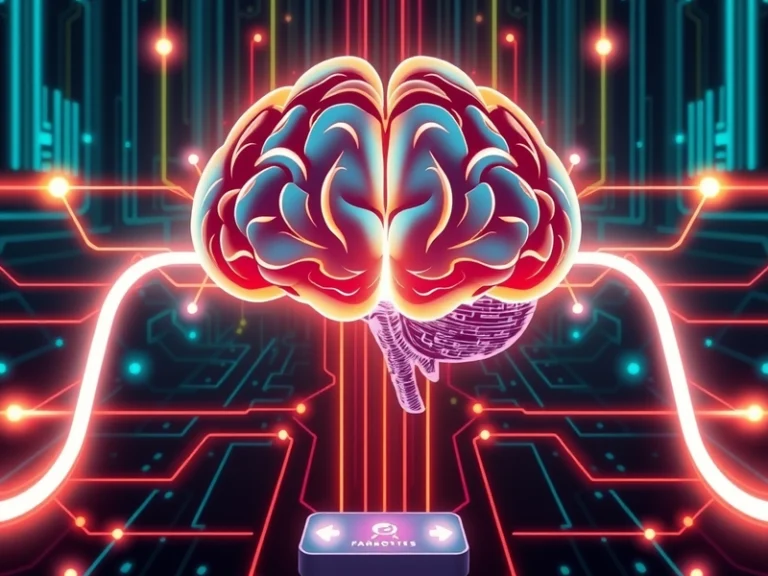
The ambitious goal of enabling individuals to communicate directly through artificial intelligence, leveraging neural signals, is steadily progressing from science fiction to a tangible reality, driven by significant advancements in brain-computer interface (BCI) technologies.
At its core, this frontier involves decoding the electrical and chemical signals within the brain and translating them into actionable outputs, be it text, speech, or control commands for external devices. While the concept of BCIs has existed for decades, the integration of sophisticated artificial intelligence and machine learning algorithms has dramatically accelerated their capabilities, transforming raw neural data into coherent communication.
The Foundation: Brain-Computer Interfaces (BCIs)
BCIs are systems that establish a direct communication pathway between the brain and an external device. They can be broadly categorized by their invasiveness:
- Invasive BCIs: These involve surgically implanting electrodes directly into the brain tissue. This approach offers the highest signal fidelity and bandwidth because the electrodes are in close proximity to individual neurons. Companies like Neuralink and Blackrock Neurotech are prominent in this space. Neuralink, for instance, gained significant attention with its recent human implant, demonstrating the patient’s ability to control a computer cursor with thought. Blackrock Neurotech has a long history, with its arrays being used in numerous research settings to restore motor control and facilitate communication for individuals with severe paralysis.
- Partially Invasive BCIs: An example is Synchron’s Stentrode, an endovascular electrode array that is delivered to a blood vessel over the motor cortex via a minimally invasive procedure, avoiding open brain surgery. This approach aims to strike a balance between signal quality and surgical risk, enabling users to control digital devices.
- Non-Invasive BCIs: These systems, such as electroencephalography (EEG) caps, measure brain activity from outside the skull. While easier to deploy and without surgical risks, they typically offer lower spatial resolution and signal fidelity compared to invasive methods. Despite these limitations, non-invasive BCIs are being explored for applications like attention monitoring and basic command input.
AI’s Indispensable Role in Neural Communication
The sheer complexity and variability of neural signals make direct interpretation by humans virtually impossible. This is where artificial intelligence becomes critical. AI algorithms, particularly those rooted in machine learning and deep learning, are essential for:
- Signal Decoding: AI models are trained on vast datasets of neural activity correlated with specific thoughts, intentions, or movements. They learn to identify patterns in electrical impulses that correspond to an imagined letter, a desired word, or a motor command.
- Noise Reduction and Feature Extraction: Brain signals are inherently noisy. AI helps filter out irrelevant activity and extract salient features that are indicative of communicative intent, improving the clarity and reliability of the output.
- Translation and Synthesis: Once decoded, AI translates these neural patterns into a usable format. For communication, this often means converting imagined speech or text into actual spoken words or typed characters on a screen. Sophisticated AI models can even generate natural-sounding speech from brain activity, complete with prosody and intonation.
- Personalization and Adaptation: Every brain is unique. AI systems can adapt to an individual user’s specific neural patterns over time, continuously refining their decoding accuracy and improving the speed and fluency of communication as the user interacts with the system.
Pioneering Efforts and Real-World Applications
Research institutions and private companies are making significant strides in leveraging AI for brain-to-AI communication:
In academic settings, researchers have achieved remarkable feats in restoring communication for individuals with paralysis. For instance, studies from Stanford University and the University of California, San Francisco (UCSF), have demonstrated the ability to decode imagined speech and handwriting from neural signals with impressive accuracy. Participants, using implanted arrays, have been able to generate text on a screen at speeds approaching natural conversation or type out sentences by merely imagining forming letters.
Companies like Blackrock Neurotech have long supported research using their arrays to enable individuals to control robotic arms or computer cursors with their thoughts, giving them new avenues for interaction with their environment. More recently, the focus has expanded to direct communication. Neuralink’s initial human trial, while focused on cursor control, is a foundational step towards more complex communicative applications, demonstrating the feasibility of high-bandwidth neural interfaces in humans.
Synchron’s Stentrode system has also shown promise in human trials, allowing individuals to control digital devices like tablets and computers to text, email, and shop online, effectively restoring a degree of digital autonomy through thought alone.
Challenges and Ethical Considerations
Despite rapid progress, significant hurdles remain. Technical challenges include increasing the bandwidth and longevity of implants, ensuring long-term signal stability, and developing robust, generalizable AI models that can work effectively across diverse individuals. The ultimate goal is seamless, high-fidelity communication that feels as natural as speaking or typing.
Beyond the technical, ethical considerations loom large. Issues of data privacy and security are paramount, as neural data is highly sensitive and personal. Questions around autonomy, identity, and equitable access to these transformative technologies must be addressed proactively. Ensuring that these advancements benefit all of humanity, rather than exacerbating existing inequalities, will require careful societal deliberation and policy development.
The Horizon of Human-AI Communication
The trajectory of brain-to-AI communication points towards increasingly sophisticated and intuitive interfaces. As AI models become more powerful and neural interface hardware more refined, we can anticipate a future where direct mental interaction with digital environments, and perhaps even with other human minds via AI intermediaries, becomes commonplace. This new frontier promises to redefine human interaction, accessibility, and our very understanding of communication itself.