

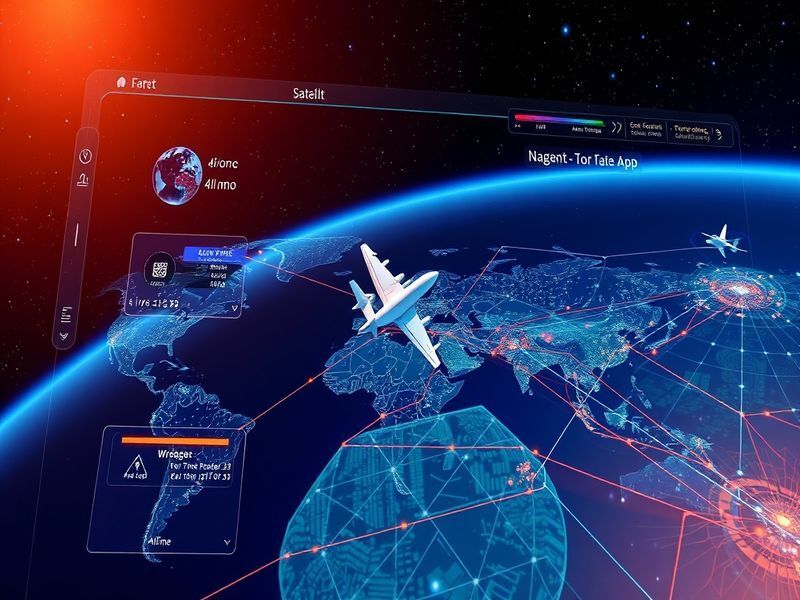
Building a Browser-Based Spy Satellite Simulator with AI
In the rapidly evolving world of technology, the convergence of artificial intelligence (AI) and traditional tools has brought forth innovative solutions that were previously unimaginable. One such groundbreaking project is the development of a browser-based spy satellite simulator that leverages AI to enhance live aircraft tracking and surveillance. This article explores how a single developer harnessed AI coding agents to create a revolutionary tool, its implications for various industries, and what the future holds for such technology.
The Vision Behind the Simulator
The primary motivation behind this simulator was to provide a real-time, user-friendly platform that could simulate the capabilities of a spy satellite. By integrating AI, the developer aimed to automate and optimize processes that would normally require extensive manual input. This approach not only streamlined the simulation but also opened doors for applications in defense, aviation, and emergency response sectors.
How AI Coding Agents Made It Possible
AI coding agents played a pivotal role in the simulator’s development. These intelligent agents were able to:
- Generate Code Efficiently: By utilizing pre-trained models, the AI agents could write functional code snippets based on high-level commands provided by the developer.
- Debug and Optimize: The agents could identify potential errors in the code and suggest optimizations, significantly reducing development time.
- Simulate Complex Scenarios: They enabled the simulation of various aircraft movements and environmental conditions, providing a comprehensive tool for tracking and surveillance.
As a result, the developer was able to focus on high-level design and user experience, while the AI agents handled the more technical aspects of coding.
Practical Insights for Developers
For developers looking to embark on similar projects, several practical insights emerged from the development of this simulator:
- Leverage Existing AI Frameworks: Using established AI frameworks can significantly reduce the learning curve and implementation time.
- Iterative Development: Embrace an iterative approach to development, allowing for continuous feedback and improvements based on user interaction.
- Focus on User Experience: A user-friendly interface is crucial for complex tools, especially when targeting non-technical users.
- Collaborate with Experts: Partnering with domain experts can enhance the tool’s functionality and accuracy, ensuring it meets real-world requirements.
Industry Implications
The implications of this technology stretch across multiple industries:
- Defense and Security: Real-time tracking capabilities can enhance national security efforts and improve response times in crisis scenarios.
- Aviation: Airlines can utilize such simulators for better flight path optimization and safety measures, ensuring more efficient air traffic management.
- Emergency Services: First responders can benefit from improved situational awareness during emergencies, allowing for more effective resource allocation.
As organizations recognize the value of real-time data and simulation, the demand for such tools will likely increase, driving further innovation and investment in AI technologies.
Future Possibilities
The future of browser-based spy satellite simulators powered by AI holds immense potential:
- Enhanced Data Analytics: As AI continues to evolve, integrating more advanced analytics will enable deeper insights from the simulation data.
- Integration with IoT: Future developments may include real-time data feeds from IoT devices, further enhancing the simulator’s capabilities.
- Augmented Reality (AR) and Virtual Reality (VR): Incorporating AR and VR could allow users to visualize simulations in immersive environments, making training and operational planning more effective.
Moreover, as ethical considerations around surveillance technology become increasingly important, developers will need to address privacy concerns and ensure their tools are used responsibly.
Conclusion
The development of a browser-based spy satellite simulator using AI coding agents is a testament to the power of innovation and the potential of emerging technologies. As we move forward, the integration of AI into various applications will not only enhance efficiency but also reshape industries. By embracing these advancements, developers and organizations can harness the full potential of AI and create solutions that drive progress while addressing ethical challenges.