

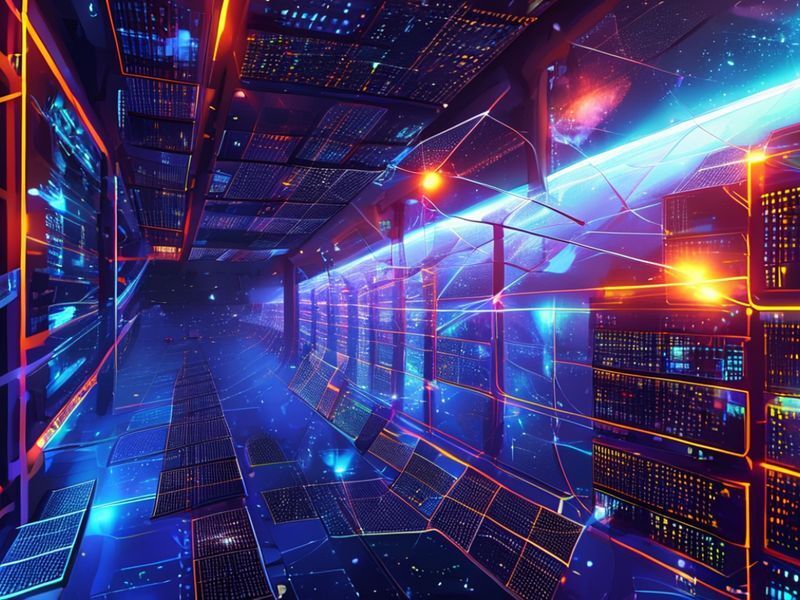
Building AI Data Centers in Space: A Bold Vision for Meeting AI’s Energy Demands Through Extraterrestrial Solutions
The rapid evolution of artificial intelligence (AI) and machine learning technologies is revolutionizing industries, enhancing productivity, and fostering innovation. However, this progress comes with a significant energy demand that our current infrastructure struggles to meet. As we stand on the brink of a new era in AI, innovative solutions must be explored to address these energy challenges. One such audacious concept is the establishment of AI data centers in space. This article delves into the feasibility, implications, and future possibilities of this bold vision.
The Rationale Behind Space-Based AI Data Centers
The demand for computational power in AI applications, from natural language processing to deep learning, is skyrocketing. Traditional data centers are increasingly becoming energy-intensive, leading to concerns over sustainability and environmental impact. Space-based data centers could potentially alleviate these issues by:
- Utilizing solar energy: Space offers an abundant source of solar power, which can be harnessed to run data centers without the limitations of terrestrial energy grids.
- Reducing cooling costs: With the vacuum of space, heat dissipation becomes more efficient, reducing the energy required for cooling systems that are essential in earthbound data centers.
- Minimizing latency: Proximity to satellite networks and global connectivity can enhance data processing speeds, benefiting real-time AI applications like autonomous vehicles and emergency response systems.
Practical Insights into Building Space-Based Data Centers
While the concept of space-based AI data centers is compelling, several practical considerations must be addressed to bring this vision to life:
- Infrastructure Development: Building data centers in space necessitates the development of robust infrastructure. This includes the creation of modular data center units capable of being launched and assembled in orbit.
- Launch and Maintenance: Regular transport of equipment and personnel to space will require innovative launch solutions and possibly the establishment of orbital assembly stations.
- Cost Management: The initial investment in space-based AI data centers will be substantial. To justify these costs, a clear business model that demonstrates return on investment is essential.
- Sustainability Practices: Ensuring that the operation of these centers is sustainable will be paramount. This includes developing recycling systems for equipment and minimizing space debris.
Industry Implications
The establishment of AI data centers in space could have profound implications across various sectors:
- Telecommunications: Enhanced data processing capabilities can lead to more efficient and faster communication networks, particularly for global satellite internet services.
- Aerospace and Defense: AI-driven analytics for satellite data could improve national security measures and space exploration missions, making real-time decisions based on vast amounts of data.
- Research and Development: Scientific research could benefit from high-performance computing capabilities that allow for simulations and analyses at unprecedented scales.
Future Possibilities and Innovations
As we look towards the future, the potential for innovation in space-based AI data centers is vast. Some possibilities include:
- AI-Driven Resource Management: AI could manage resources efficiently, optimizing energy use and operational processes within the data centers.
- Interplanetary Connectivity: As exploration extends beyond Earth, data centers could facilitate communications and operations for missions to Mars and beyond, enabling real-time decision-making.
- Collaboration with Space Agencies: Partnerships with organizations like NASA or private space companies could accelerate development and deployment, sharing expertise and resources.
Conclusion
The concept of building AI data centers in space is not merely a futuristic dream; it represents a potential solution to the critical energy demands posed by AI technologies. While challenges abound, the benefits of reduced energy consumption, enhanced processing speeds, and the sustainability of operations in space are compelling motivators for exploration. As we move forward, collaboration between tech companies, governments, and space agencies will be vital in turning this bold vision into reality. By embracing these extraterrestrial solutions, we can pave the way for a sustainable future where AI thrives without compromising our planet.