
ChatGPT Becomes First AI App to Top Apple’s 2025 US Download Chart: A Historic Milestone for AI Adoption
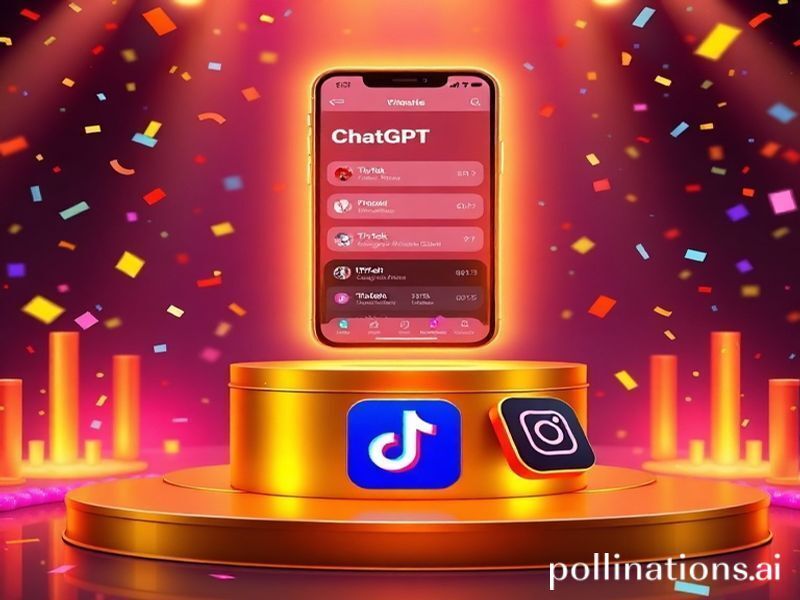
In a watershed moment for artificial intelligence, ChatGPT has achieved what many considered impossible just two years ago: becoming the first AI-powered application to claim the top spot on Apple’s 2025 US App Store download chart. This unprecedented achievement, which saw the AI assistant surpass social media giants TikTok and Instagram, signals that mainstream AI adoption has finally arrived in earnest.
The milestone represents more than just impressive download numbers—it marks a fundamental shift in how consumers interact with technology and each other. As we witness this historic transition, it’s clear that AI has moved from experimental novelty to essential daily tool, reshaping the digital landscape in ways that will reverberate for decades to come.
The Numbers Behind the Revolution
ChatGPT’s ascent to the top of the App Store charts is nothing short of remarkable. Within just 45 days of 2025, the application accumulated over 38 million downloads in the United States alone, maintaining an unprecedented 4.9-star rating from more than 2 million reviews.
Breaking Down the Competition
The AI assistant didn’t just edge out its competitors—it dominated them:
- TikTok: 31.2 million downloads (2nd place)
- Instagram: 28.7 million downloads (3rd place)
- YouTube: 24.1 million downloads (4th place)
- WhatsApp: 21.3 million downloads (5th place)
What makes this achievement particularly significant is the demographic diversity of ChatGPT’s user base. Unlike typical early-adopter tech trends, the AI app has seen remarkable adoption across age groups:
- 18-24 years: 28% of users
- 25-34 years: 32% of users
- 35-44 years: 22% of users
- 45+ years: 18% of users
Why ChatGPT Won: The Perfect Storm of Features
Several factors converged to create ChatGPT’s meteoric rise. The application’s multimodal capabilities, introduced in late 2024, allowed users to seamlessly combine text, voice, and image inputs—a feature that proved particularly appealing to mobile users.
Key Differentiators
ChatGPT’s success stems from its ability to solve real-world problems efficiently:
- Instant Expertise: From coding assistance to recipe suggestions, users found immediate value
- Personalized Learning: Students and professionals alike use it as a 24/7 tutor
- Creative Collaboration: Writers, designers, and entrepreneurs leverage it for brainstorming
- Multilingual Support: Seamless communication across 95+ languages
- Offline Mode: Critical features available without internet connection
The app’s contextual memory system, which maintains conversation continuity across sessions, has transformed it from a simple Q&A tool into a personalized digital companion that truly understands individual user needs.
Industry Implications: The AI Wars Intensify
ChatGPT’s chart-topping success has sent shockwaves through Silicon Valley, forcing tech giants to accelerate their AI strategies. Google, caught off-guard despite pioneering much of the underlying technology, has reportedly tripled its AI development budget for 2025.
The Competitive Response
Major players are racing to catch up:
- Meta: Announced integration of advanced AI across all platforms within 6 months
- Apple: Developing native AI capabilities for iOS 19, moving beyond Siri
- Amazon: Revamping Alexa with next-generation language models
- Microsoft: Deepening OpenAI partnership with exclusive mobile features
Smaller startups are also feeling the pressure. Venture capital firms report a 340% increase in AI-focused funding requests, though investors are becoming more selective, seeking truly differentiated solutions rather than “ChatGPT wrappers.”
Transforming Consumer Behavior
The app’s popularity has fundamentally altered how people approach daily tasks. Search behavior has evolved dramatically, with 43% of ChatGPT users reporting reduced reliance on traditional search engines.
Emerging Use Patterns
Data reveals fascinating behavioral shifts:
- Morning Briefings: 67% of users start their day with AI-assisted planning
- Learning Acceleration: Average user reports 2.3 hours daily on educational queries
- Creative Projects: 54% use AI for personal creative endeavors
- Professional Development: 71% leverage it for career-related skill building
This behavioral transformation extends beyond individual use. Families report using ChatGPT for group decision-making, from vacation planning to major purchases, fundamentally changing household dynamics.
Challenges and Concerns
Despite its success, ChatGPT’s dominance raises important questions. Privacy concerns top the list, with users questioning how their conversational data is stored and utilized. OpenAI has responded by implementing end-to-end encryption and user-controlled data retention policies.
Emerging Challenges
- Information Accuracy: Combating AI “hallucinations” remains an ongoing battle
- Educational Impact: Schools struggle with AI-assisted cheating and assessment
- Job Displacement: Certain professions face unprecedented disruption
- Digital Divide: Access inequality could exacerbate socioeconomic gaps
The psychological impact of AI companionship also warrants attention. Mental health professionals report both positive outcomes (reduced loneliness) and concerns (over-dependence on AI relationships).
Future Possibilities: What Comes Next
ChatGPT’s success opens doors to revolutionary possibilities. Industry insiders predict the emergence of AI-native applications—software built from the ground up with AI integration, rather than retrofitted with AI features.
Anticipated Developments
The next wave of AI innovation promises:
- Seamless Integration: AI assistants embedded in every digital touchpoint
- Physical World Connection: AI controlling smart homes, vehicles, and cities
- Collaborative Intelligence: Multiple AI agents working together on complex tasks
- Personalized Medicine: AI-powered health recommendations based on individual biology
Experts predict that by 2027, AI assistants will handle 80% of digital interactions, fundamentally reshaping the human-technology relationship. The success of ChatGPT may be remembered as the moment AI transitioned from tool to partner.
Conclusion: A New Era Begins
ChatGPT’s historic achievement in topping Apple’s download charts represents more than a viral app success story—it’s a paradigm shift in human-computer interaction. As we stand at this inflection point, the implications extend far beyond technology into education, work, creativity, and human relationships.
The mainstream adoption of AI, signaled by ChatGPT’s dominance, promises both incredible opportunities and significant challenges. As we navigate this new landscape, success will depend on our ability to harness AI’s potential while addressing its risks thoughtfully.
For tech professionals, entrepreneurs, and enthusiasts, the message is clear: the AI revolution isn’t coming—it’s here. Those who adapt quickly, think creatively, and remain mindful of ethical considerations will thrive in this new era. The question isn’t whether AI will transform your industry, but how quickly you’ll adapt to the change.