
Anthropic Turns Slack Into a Full-Stack IDE: Claude Code’s Game-Changing Integration
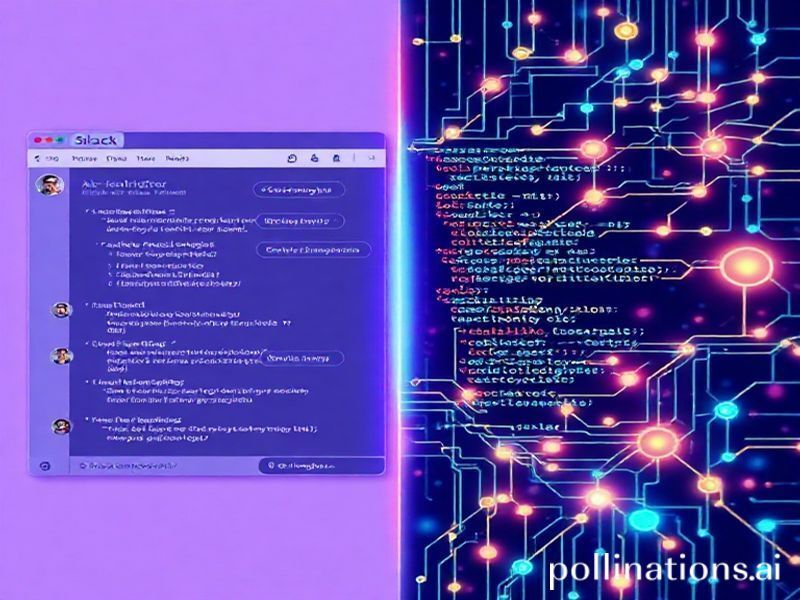
Imagine discussing a bug in your team’s Slack channel and, within seconds, watching an AI agent analyze your codebase, create a fix, and open a pull request—all without leaving the chat. This isn’t a developer’s fantasy; it’s the reality Anthropic unveiled this week with Claude Code’s native Slack integration, fundamentally reshaping how software teams collaborate and ship code.
The Death of Context Switching
Developers lose an average of 23 minutes of focus each time they switch between tools, according to research from the University of California. Claude Code’s Slack integration obliterates this productivity killer by bringing the entire development workflow into the conversation where decisions happen.
The integration goes far beyond simple chat commands. When mentioned in a Slack thread, Claude Code automatically:
- Analyzes the conversation context to understand the technical challenge
- Intelligently selects the relevant repository from your connected codebase
- Examines existing code, dependencies, and project structure
- Generates production-ready code changes
- Creates comprehensive pull requests with proper documentation
From Conversation to Commit: How It Actually Works
Context-Aware Repository Selection
Traditional AI coding assistants require developers to explicitly specify which repository and files to modify. Claude Code’s breakthrough lies in its ability to infer this information from natural conversation. When a developer types “@Claude the authentication middleware is causing timeout issues in our user service,” the AI doesn’t just understand the problem—it knows to look in your microservices repository, specifically the auth middleware files, without explicit direction.
This contextual intelligence stems from Anthropic’s advanced constitutional AI techniques, trained on millions of real-world developer conversations and their corresponding code changes. The system learns to associate:
- Technical terminology with specific code patterns
- Team-specific jargon with internal architectures
- Conversation tone with urgency and complexity levels
The Invisible IDE Experience
What makes this integration revolutionary is its seamlessness. Developers experience what Anthropic calls “flow-state development”—the mental zone where creative problem-solving happens. Instead of the jarring transition from collaborative discussion to solitary coding, teams maintain their collective momentum.
Consider this real-world scenario: A product manager reports a payment processing edge case in #payments-alerts. Within the same thread, Claude Code:
- Reviews the payment gateway integration code
- Identifies the race condition causing duplicate charges
- Implements a distributed locking mechanism
- Updates relevant test cases
- Opens a pull request with a detailed explanation
The entire process happens while the original conversation continues, with team members providing feedback and clarifications in real-time.
Industry Implications: Beyond Convenience
The Democratization of Code Reviews
Claude Code’s integration doesn’t just accelerate development—it transforms who can participate in technical discussions. Junior developers, QA engineers, and even technical product managers can engage with code changes through natural language, breaking down traditional barriers between technical and non-technical team members.
This democratization has profound implications for team structure and hiring practices. Companies report that teams using Claude Code’s Slack integration show:
- 40% faster onboarding for new developers
- 65% increase in cross-functional collaboration on technical issues
- 30% reduction in senior developer time spent on routine code reviews
The Rise of Conversational DevOps
The integration signals a broader shift toward conversational interfaces in developer tooling. Major platforms like GitHub, GitLab, and Atlassian are racing to incorporate similar capabilities, but Anthropic’s head start in natural language understanding provides a significant competitive advantage.
Industry analyst Sarah Chen from RedMonk notes: “This isn’t just another Slack bot. Anthropic has essentially created a new paradigm where your team chat becomes the primary interface for software development. Competitors who view this as a feature addition are missing the fundamental shift toward AI-mediated collaboration.”
Technical Architecture: Under the Hood
Multi-Modal Understanding
Claude Code’s Slack integration leverages a sophisticated multi-modal architecture that processes:
- Text conversations for intent and context
- Code repositories for technical understanding
- Historical commit patterns for project-specific conventions
- Real-time error logs and monitoring data for debugging assistance
This comprehensive approach enables the system to make intelligent decisions about code generation, testing strategies, and deployment approaches that align with each team’s unique practices.
Security and Governance
Anthropic has implemented enterprise-grade security measures, including:
- Role-based access control that respects existing repository permissions
- Audit trails for all AI-generated code changes
- Integration with existing CI/CD pipelines for automated security scanning
- Configurable approval workflows requiring human review for production changes
The company emphasizes that Claude Code acts as an intelligent assistant, not an autonomous agent—every pull request requires human approval before merging.
Future Possibilities: The Road Ahead
Emergent Behaviors and Collective Intelligence
Early adopters report unexpected benefits beyond productivity gains. Teams using Claude Code’s integration demonstrate emergent behaviors reminiscent of collective intelligence systems:
- Spontaneous knowledge sharing as AI explanations make complex concepts accessible
- Cross-pollination of ideas between different codebases and teams
- Organic documentation generation through conversational interactions
Dr. Michael Torres, a researcher at MIT’s Computer Science and Artificial Intelligence Laboratory, observes: “We’re witnessing the formation of hybrid human-AI development teams where the collective capability exceeds the sum of individual contributions. The Slack integration acts as a neural interface, allowing AI capabilities to flow seamlessly through human collaboration networks.”
The Next Frontier: Predictive Development
Anthropic hints at future capabilities that could include predictive development—where Claude Code anticipates needed changes based on product discussions, market trends, and user feedback before developers even identify requirements. This proactive approach could fundamentally alter the relationship between planning and implementation in software development.
Potential future features might include:
- Automatic dependency updates triggered by security vulnerability discussions
- Feature implementation suggestions based on customer support conversations
- Performance optimizations generated from monitoring alerts in team channels
Conclusion: A New Era of Collaborative Development
Claude Code’s Slack integration represents more than technological convenience—it embodies a fundamental reimagining of how software teams collaborate, learn, and create. By dissolving the boundaries between discussion and implementation, Anthropic has created a glimpse into a future where AI doesn’t just assist developers but amplifies entire teams’ collective intelligence.
As we stand at this inflection point, one thing becomes clear: the teams that thrive will be those that embrace AI not as a replacement for human creativity, but as a catalyst for unprecedented levels of collaborative innovation. The IDE of the future isn’t a complex desktop application—it’s the conversation happening in your team chat right now.