
Disney’s Olaf: A Breakthrough in Robotic Animation
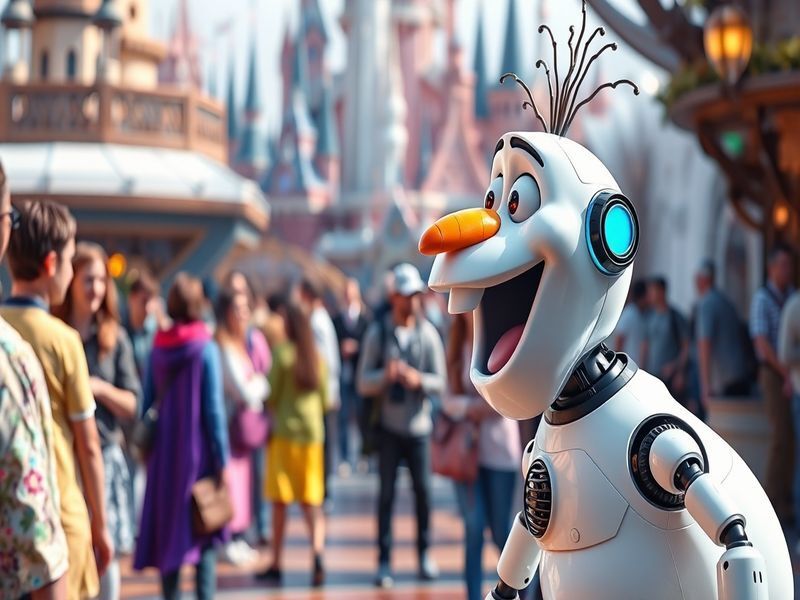
As artificial intelligence and robotics continue to advance, one of the most exciting applications can be found in the realm of entertainment. Disney has taken a significant leap forward in this domain with its lifelike robotic character, Olaf, from the beloved film “Frozen.” This transformation is not merely a technical feat but a testament to how virtual training and innovative AI technologies can breathe life into animated characters. In this article, we will explore how Disney’s Olaf robot evolved into a captivating presence in theme parks, the implications of such advancements, and the future possibilities that lie ahead.
The Evolution of Olaf: From Screen to Reality
Disney’s journey to bring Olaf to life began with a profound understanding of character animation and audience engagement. The company utilized cutting-edge robotics and AI to create a character that resonates with visitors on multiple levels. Here are some key components of Olaf’s evolution:
- 3D Motion Capture: Disney employed advanced motion capture technology to record the movements of professional actors. This data was then translated into the robot’s movements, allowing Olaf to express a wide range of emotions.
- AI-Driven Learning: The Olaf robot is equipped with machine learning algorithms that enable it to adapt its responses based on audience interaction. This allows Olaf to react in real-time, enhancing the visitor experience.
- Facial Recognition: Using computer vision, Olaf can recognize visitors and tailor its interactions accordingly, making each encounter unique and engaging.
Virtual Training: The Key to Realism
What sets Disney’s Olaf apart from traditional animatronics is the extensive virtual training process that the team undertook. This process involved simulating various scenarios that Olaf might face in a theme park environment. The training included the following:
- Behavioral Simulations: Engineers created simulations where Olaf would interact with guests, allowing the AI to learn appropriate responses based on different visitor behaviors.
- Voice Modulation: Disney’s team trained the robotic voice to match Olaf’s iconic personality, ensuring that the character’s charm and humor were preserved.
- Emotional Intelligence: By analyzing audience reactions, Olaf was programmed to display empathy and humor, making it more relatable and endearing to visitors.
Industry Implications
The successful implementation of a lifelike robotic character like Olaf marks a pivotal moment for the theme park industry and beyond. Here are some implications of this breakthrough:
- Enhanced Guest Experience: The integration of AI-driven characters can lead to more immersive and personalized experiences for visitors, setting a new standard for entertainment.
- Cost Efficiency: While the initial investment in technology is significant, the ability for robots to operate autonomously can reduce staffing costs in the long run.
- Expanded Applications: Beyond theme parks, the technology could be utilized in various sectors, including education, healthcare, and retail, enhancing customer engagement across industries.
Future Possibilities
As Disney continues to refine its robotic characters, the future holds exciting possibilities. Here are some anticipated developments:
- Improved AI Interactions: The potential for even more advanced AI could lead to characters that not only respond to visual cues but also understand and react to verbal prompts, taking guest interactions to a higher level.
- Integration of Augmented Reality: Future robots could work in tandem with AR technology, allowing guests to see enhanced experiences through their smartphones or AR glasses.
- Scaling Up Production: As the technology matures, we may see more characters being developed, allowing for a wider array of interactions and experiences across different franchises.
Conclusion
Disney’s Olaf is more than just a robotic character; it represents a significant advancement in the fusion of artificial intelligence, robotics, and entertainment. With its ability to engage, learn, and adapt, Olaf sets a new benchmark for interactive experiences in theme parks. As technology continues to evolve, we can expect to see even more lifelike characters that enhance storytelling and audience interaction. The journey from animated film to a real-world, interactive robot is a testament to the power of innovation and the limitless possibilities that lie ahead in the realm of AI and robotics.