
Exploring Anthropic’s Free AI Course Library: Unlocking Essential Skills in Artificial Intelligence with Accessible Resources
The rapid advancement of artificial intelligence (AI) has transformed various sectors, creating a growing demand for skilled professionals who can navigate this complex landscape. In response to this need, Anthropic, a leader in AI research and development, has launched a free AI course library designed to equip learners with the essential skills required to thrive in the AI ecosystem. This article explores the contents of Anthropic’s course library, its implications for the industry, and future possibilities for AI education.
The Structure of Anthropic’s Course Library
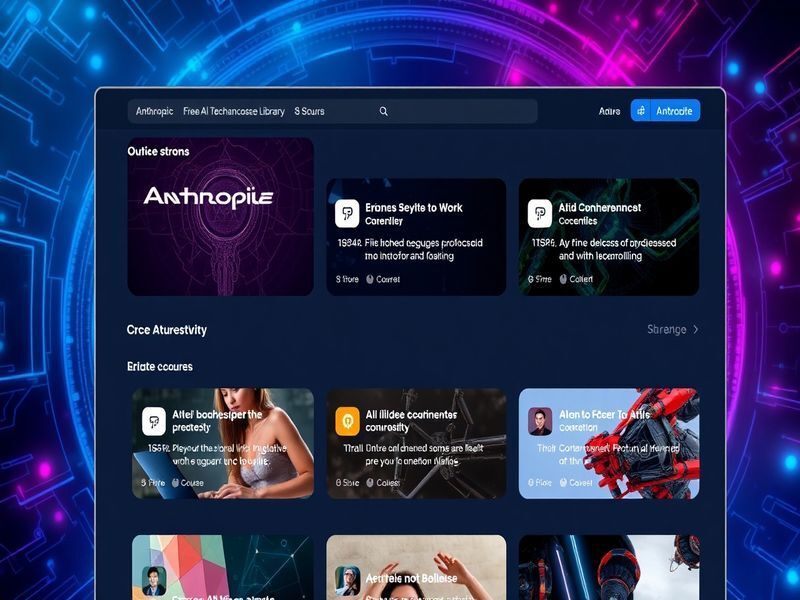
Anthropic’s AI course library is structured to cater to a wide range of learners, from novices to seasoned professionals. The courses are organized into various modules that cover an array of topics, ensuring that anyone interested in AI can find relevant material. Key features of the library include:
- Self-paced Learning: Learners can progress through the courses at their own pace, making it easier to balance education with other commitments.
- Diverse Topics: Courses span fundamental concepts, advanced techniques, and ethical considerations in AI, providing a holistic view of the field.
- Interactive Content: Many courses include quizzes and hands-on projects to reinforce learning and provide practical experience.
Key Courses to Consider
Among the offerings in Anthropic’s course library, several stand out for their relevance and depth. Here are a few noteworthy examples:
- Introduction to Machine Learning: This course covers the basics of machine learning, including supervised and unsupervised learning, common algorithms, and real-world applications.
- Ethics in AI: As AI becomes more integrated into society, understanding ethical implications is critical. This course delves into bias, fairness, and transparency in AI systems.
- Deep Learning Fundamentals: A comprehensive look at neural networks, this course introduces learners to the building blocks of deep learning and how to apply them in various contexts.
Industry Implications
The availability of free, high-quality educational resources like Anthropic’s course library has several implications for the AI industry:
- Bridging the Skills Gap: As businesses increasingly rely on AI, the demand for skilled professionals continues to grow. Anthropic’s initiative helps bridge the skills gap by making education accessible to a broader audience.
- Encouraging Innovation: By empowering more individuals to learn about AI, the course library fosters a culture of innovation, encouraging the development of new ideas and applications.
- Promoting Ethical AI Development: With courses focused on ethics, professionals are better equipped to consider the societal implications of their work, leading to more responsible AI development.
Future Possibilities in AI Education
As Anthropic continues to expand its course offerings, several future possibilities emerge for AI education:
- Collaborative Learning Environments: Future courses could incorporate collaborative projects where learners from different backgrounds work together to solve AI-related challenges.
- Integration with Emerging Technologies: As new technologies like quantum computing and edge AI evolve, the course library could adapt to include relevant content that keeps learners at the forefront of innovation.
- Partnerships with Industry Leaders: Collaborating with organizations and universities could enhance the curriculum, providing learners with insights from industry experts and real-world case studies.
Conclusion
Anthropic’s free AI course library is a significant step towards democratizing AI education. By providing accessible resources, the library not only helps individuals develop essential skills but also contributes to the broader AI community’s growth. As the industry continues to evolve, initiatives like this will be critical in shaping the future landscape of artificial intelligence, fostering innovation, and promoting ethical practices within the field.