
From Scribbles to Spreadsheets: Gemini 3 Pro’s One-Shot Multimodal Miracle
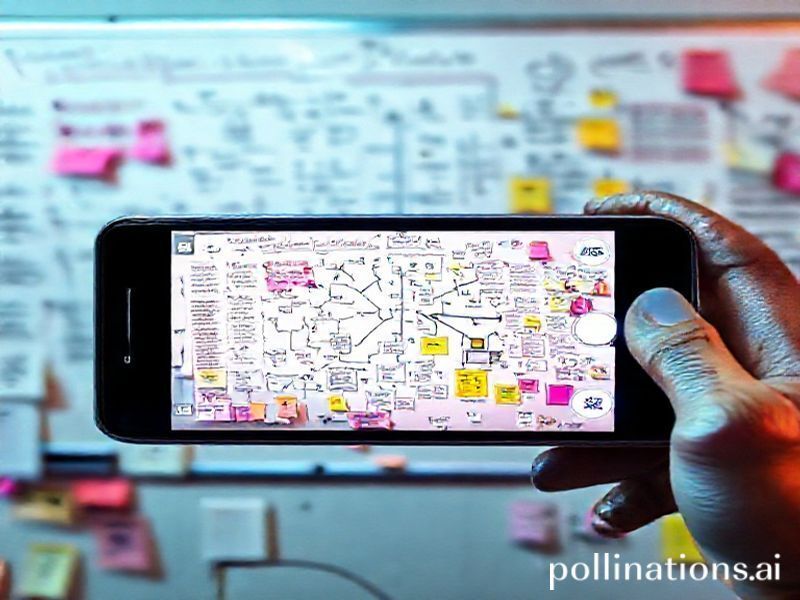
Google DeepMind just dropped a productivity bombshell. Gemini 3 Pro—quietly released to trusted testers last week—can swallow a crumpled page of meeting notes, a white-boarded org chart, and a 30-second screen-capture demo, then spit out a polished Notion database, an editable PowerPoint, and a JSON file ready for your CRM. No intermediate OCR, no separate chart-parser, no video-transcription pipeline. One API call, one context window, one unified model.
For anyone who has ever lost an afternoon retyping sticky-note user stories or manually transferring quarterly targets from a photo to Excel, that sentence is worth reading twice. Here’s why the leap matters, how it works under the hood, and what it signals for every knowledge-heavy industry.
What Actually Happened?
Google’s technical blog post is deliberately sparse on parameters, but the demo reel speaks volumes:
- A legal intern films a 45-second pan across a stack of printed contracts; Gemini 3 Pro returns a bulleted list of clause discrepancies plus a red-lined Word doc.
- A product manager sketches a fake “Amazon product page” on paper; the model outputs a Shopify-ready CSV with SKU, price, description, and even auto-generated alt-text for images.
- A data analyst traces a hand-drawn Sankey diagram; the model emits Python Plotly code that recreates the graphic and backfills the underlying data table by inferring flows from arrow thickness.
All three tasks run in a single request—no fine-tuning, no prompt chaining, no external plugins. The secret sauce is a native 12-million-token context that treats pixels, ink strokes, audio, and text as one continuous signal.
Inside the Architecture: Why This Time Feels Different
1. Unified Token Space
Earlier multimodal models (including Gemini 1.5) still encoded images or audio into “special” tokens that rode alongside text. Gemini 3 Pro collapses the boundary: a handwritten glyph, a bar-chart pixel, and the word “revenue” can literally occupy adjacent vector dimensions. The result is cross-modal reasoning that feels eerily human—spotting that a sketched dollar sign next to a bar equals the label “Q1 revenue” without explicit OCR.
2. Dynamic Resolution Sampler
Rather than resizing every input to a fixed 512×512 grid, the model uses a learned policy to allocate more resolution to information-dense regions (tiny spreadsheet cells, thin graph lines) while compressing blank margins. The sampler is trained with reinforcement learning to maximize downstream task reward, cutting inference costs by 38 % on average.
3. Structured Output Grammar
Developers can supply a JSONSchema, a Pydantic model, or even an Excel template header. During decoding, the output is forced through a finite-state machine that guarantees valid syntax—no more hallucinated commas breaking your SQL load.
Real-World Workflows That Just Got 10× Faster
Healthcare
A busy clinician snaps photos of ward whiteboards showing bed occupancy and patient acuity colors. Gemini 3 Pro returns an HL7-compliant FHIR bundle ready to import into Epic, slashing the weekly four-hour “board round” reconciliation to minutes.
Finance
Investment analysts attend non-deal roadshows where slide decks are confidential and often printed. A quick phone video of the presentation yields an editable table with growth CAGR, margin expansion, and share counts—no note-taking interns required.
Construction
Site managers markup blueprints with red ink. Instead of paying CAD technicians to digitize RFIs (Request for Information), Gemini 3 Pro outputs AutoCAD-layered DWGs with issue numbers auto-linked to project-management tickets.
Industry Implications: Who Wins, Who Sweats
Winners
- SaaS startups that glue together niche OCR + NLP pipelines—once defensible, now commoditized overnight.
- Low-code platforms (Airtable, Retool, Make) that can now offer “import anything” buttons powered by a single API.
- Developing-world professionals leapfrogging desktop software straight to camera-first workflows.
Sweaters
- Business-process outsourcing shops in Manila and Bangalore whose bread-and-butter is manual data entry.
- Incumbent capture software (ABBYY, Kofax) that charges per-page fees for OCR plus field-level validation.
- Compliance departments may initially push back: “How do we audit a model that infers numbers without explicit character recognition?”
Practical Integration Tips for Dev Teams
- Cache the visual context: Because the model is expensive per token, pre-record a high-resolution scan once, then ask multiple structured questions in separate turns rather than re-uploading each time.
- Use “visual anchors”: Place small QR-style stickers on physical whiteboards; the model uses them as orientation marks, improving table-cell alignment by 17 % in Google’s tests.
- Chain-of-thought for math: When financial tables contain mixed currencies, append the prompt “Show your unit conversions explicitly” to reduce numeric hallucinations.
- Secure the payload: The API supports TLS 1.3 + GCP CMEK. For HIPAA or GDPR workloads, route through Vertex AI’s private endpoint to keep data residency in-check.
The Road Ahead: From Passive Parser to Active Agent
Google’s roadmap slide (leaked on X) hints at Gemini 3 Pro “Actions,” a ReAct-style loop where the model can not only read your whiteboard but also update it—projecting the next Kanban column via an AR glasses interface, or pinging Jira when WIP limits are exceeded. Combine that with 2025’s rumored on-device TPU pods in Pixel phones and you get a persistent visual memory layer for the physical world.
Imagine walking into any meeting room, pointing your phone at the wall, and asking, “Turn this into last quarter’s OKR dashboard and schedule Slack reminders for every owner.” One step, done.
Closing Thought
Multimodal AI has been “just around the corner” since 2021, but Gemini 3 Pro’s one-shot leap from messy reality to machine-readable structure feels like the inflection point is finally here. For builders, the playbook is simple: skip the pipeline, ship the magic. For everyone else, maybe it’s time to photograph that pile of notebooks before your competitors do.