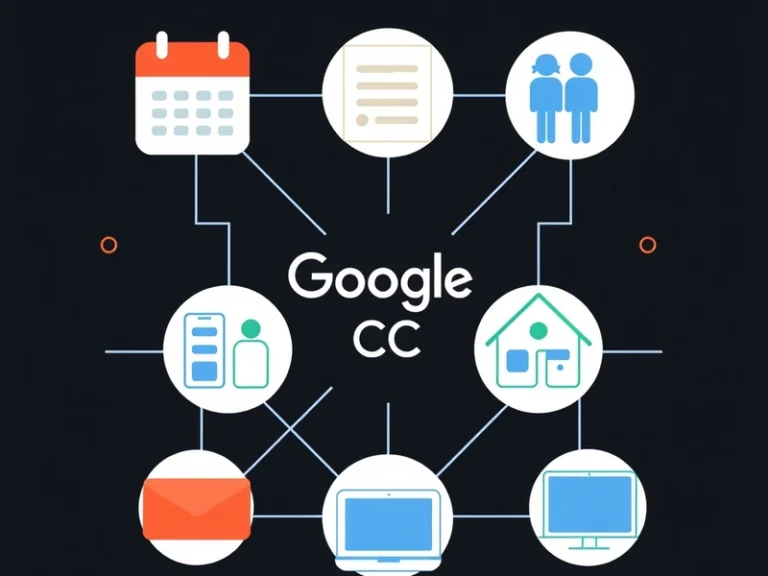
Google has introduced Google CC, a new platform designed to streamline family coordination and task management, leveraging the company’s extensive AI capabilities to simplify daily administrative burdens for households.
Google CC, short for “Coordinated Core” or “Community & Control” (the official full name has not been widely disclosed), aims to centralize the disparate tools families often use to manage schedules, chores, shopping, and communication. By integrating deeply with existing Google services and infusing them with advanced artificial intelligence, the platform seeks to move beyond simple shared calendars to offer predictive assistance and proactive organization.
The AI-Powered Family Hub
At its core, Google CC is envisioned as an intelligent assistant for the modern family. It moves beyond static lists and manual entries by employing AI to understand context, anticipate needs, and suggest actions. This intelligence is crucial for transforming a mere collection of features into a cohesive, helpful system.
- Intelligent Scheduling and Reminders: Leveraging natural language processing (NLP), Google CC can interpret conversational requests for scheduling events, setting reminders, and assigning tasks. For instance, a spoken command like “Remind everyone that soccer practice is at 5 PM on Tuesday and to pack shin guards” can populate calendars, create specific reminders for relevant family members, and even suggest a packing list. The system can learn individual preferences and schedules, prompting users about potential conflicts or suggesting optimal times for shared activities.
- Predictive Task Management: The platform analyzes recurring tasks, shopping habits, and family routines to offer proactive suggestions. If a family typically buys groceries on Friday, Google CC might prompt for a shopping list creation mid-week. If a child has a school project due, it could suggest breaking down the work into smaller, manageable tasks and assigning them over several days, complete with reminders. It aims to reduce the mental load often associated with remembering and delegating household responsibilities.
- Smart Communication and Coordination: Google CC integrates with communication tools, allowing families to create dedicated channels for specific projects or simply share updates. AI can help summarize lengthy message threads, highlight critical decisions, or even draft polite reminders for overdue tasks. It also connects with Google Assistant, enabling hands-free interaction across various devices within the home.
- Centralized Information & Media Sharing: Families often struggle with fragmented information—photos on one device, important documents on another, shared notes in a third. Google CC provides a unified dashboard where family members can share photos, documents, and notes securely. It could use image recognition to help organize family photos, suggesting albums based on faces or events, and making them easily accessible to all approved members.
- Location-Based Assistance: Drawing on Google Maps data, the system can offer location-aware reminders and suggestions. For example, it can remind a parent to pick up a specific item from a store when they are physically near it, or alert family members when someone is on their way home.
Integration with the Google Ecosystem
A significant strength of Google CC lies in its deep integration with the broader Google ecosystem. It’s not a standalone application but rather an intelligent layer built upon familiar tools.
For example, events scheduled in Google CC automatically appear in Google Calendar for all relevant family members. Shopping lists created within the platform can be accessed via Google Assistant on a smart display or phone. Shared photos and documents are likely managed through Google Photos and Google Drive, providing familiar interfaces and robust cloud storage. This seamless integration aims to reduce friction and leverage existing user habits, making adoption potentially easier for those already invested in Google’s services.
Addressing a Common Challenge
The challenges of family administration are universal: coordinating schedules, delegating chores, managing finances, and ensuring everyone is on the same page. While various apps and techniques exist—from shared whiteboards to specialized chore apps and digital calendars—many require significant manual input and lack the proactive intelligence that AI can provide.
Google CC seeks to differentiate itself by offering a more holistic and intelligent solution. Instead of merely providing a digital canvas, it aims to be an active participant in managing family life, anticipating needs and automating routine tasks. This approach could significantly reduce the cognitive load on parents and other primary caregivers, freeing up time and mental energy for other aspects of family life.
While the full scope of Google CC’s capabilities and its long-term impact remain to be seen, its introduction signals Google’s continued commitment to integrating AI into everyday life, particularly in areas like home and family management. By offering an intelligent, centralized hub, Google CC aims to transform the often-chaotic world of family coordination into a more streamlined and manageable experience.