
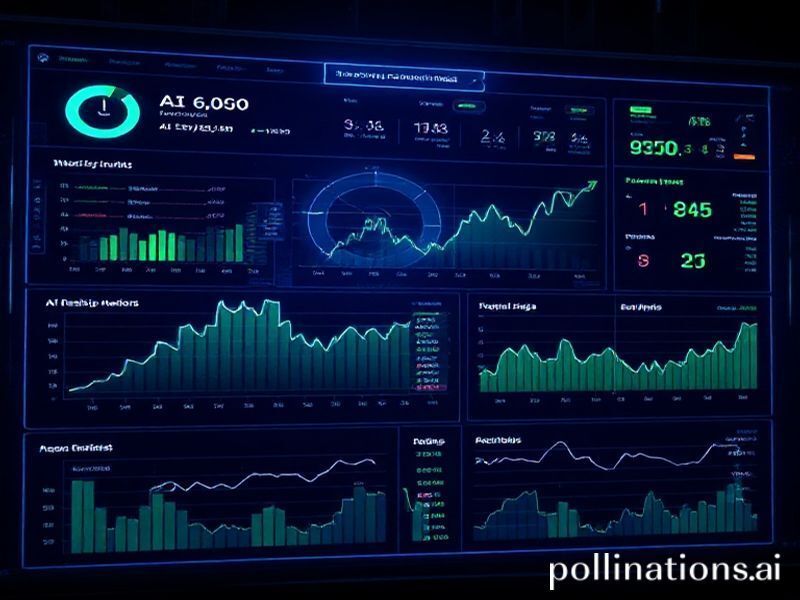
Google Finance Integrates Gemini Deep Search for Real-Time Trading Insights: Prediction-market data and AI earnings tabs roll out to US investors
In a move that could fundamentally reshape how retail investors interact with financial markets, Google has unveiled a groundbreaking integration of its Gemini Deep Search technology into Google Finance. This ambitious rollout brings real-time prediction-market data and AI-powered earnings analysis directly to millions of US investors, marking a significant leap forward in the democratization of sophisticated trading tools.
The Dawn of AI-Driven Financial Intelligence
The integration represents more than just a feature update—it’s a paradigm shift in how financial information is processed, analyzed, and delivered to end-users. By leveraging Gemini’s advanced natural language processing and machine learning capabilities, Google Finance now offers unprecedented insights that were previously available only to institutional investors with deep pockets for premium data services.
At its core, the new system combines three revolutionary elements:
- Real-time prediction market aggregation from multiple decentralized platforms
- AI-generated earnings forecasts based on historical data, market sentiment, and alternative data sources
- Dynamic risk assessment models that adapt to market conditions in real-time
Unpacking the Technology Behind the Transformation
Gemini Deep Search: Beyond Traditional Financial Analysis
The Gemini Deep Search integration goes far beyond simple keyword matching or basic financial metrics. The system employs a sophisticated multi-modal approach that processes:
- Traditional financial statements and SEC filings
- Social media sentiment from verified financial influencers and analysts
- News sentiment analysis from thousands of global sources
- Technical indicators and chart pattern recognition
- Alternative data sources including satellite imagery, shipping data, and consumer behavior metrics
This comprehensive approach allows the AI to identify patterns and correlations that human analysts might miss, potentially uncovering alpha-generating opportunities before they become mainstream knowledge.
Prediction Market Integration: Crowdsourced Intelligence
Perhaps the most innovative aspect of this rollout is the integration of prediction market data. By aggregating information from platforms like Polymarket, Augur, and other decentralized prediction markets, Google Finance users now have access to:
- Real-time probability estimates for earnings beats/misses
- Crowdsourced forecasts for merger completion likelihood
- Market-implied timelines for regulatory approvals
- Event-driven price targets based on binary outcome probabilities
This crowdsourced intelligence layer adds a unique dimension to traditional financial analysis, harnessing the collective wisdom of thousands of market participants who have “skin in the game.”
Practical Implications for Different Investor Types
Retail Investors: Leveling the Playing Field
For individual investors, this technology democratizes access to sophisticated analytical tools. The AI-powered earnings tab, for instance, provides:
- Pre-earnings probability distributions showing the likelihood of various outcomes
- Historical accuracy tracking of the AI’s previous predictions
- Confidence intervals for price targets based on multiple valuation methodologies
- Risk-adjusted position sizing recommendations tailored to individual risk profiles
Professional Traders: Enhanced Decision-Making Speed
Professional traders benefit from the system’s ability to process vast amounts of information in milliseconds. The real-time nature of the integration means:
- Faster reaction times to market-moving events
- Automated alert systems for unusual prediction market movements
- Correlation analysis between prediction markets and traditional financial metrics
- Backtesting capabilities for validating new trading strategies
Industry Implications and Market Disruption
The Competitive Landscape Shifts
This move by Google sends ripples through the financial data industry. Traditional providers like Bloomberg, Reuters, and specialized fintech companies now face a formidable competitor offering similar capabilities for free. The implications are profound:
- Pressure on premium pricing models for financial data services
- Acceleration of AI adoption across the financial services industry
- Consolidation pressure on smaller fintech analytics companies
- New partnership opportunities between tech giants and traditional financial institutions
Regulatory Considerations and Challenges
The integration of prediction markets with mainstream financial platforms raises important regulatory questions. The SEC and other regulatory bodies will likely scrutinize:
- Market manipulation risks through coordinated prediction market activity
- Disclosure requirements for AI-generated content and predictions
- Accuracy standards for AI-powered financial forecasts
- User protection measures for inexperienced investors
Future Possibilities and the Evolution of AI-Finance
Near-Term Developments on the Horizon
Industry insiders suggest several near-term enhancements already in development:
- Voice-activated trading through Google Assistant integration
- Personalized AI financial advisors with natural language interfaces
- Blockchain integration for transparent prediction market settlement
- International expansion with localized prediction markets for global stocks
The Long-Term Vision: Autonomous Financial Ecosystems
Looking further ahead, this integration could be the first step toward fully autonomous financial ecosystems where:
- AI agents trade on behalf of users based on predefined risk parameters
- Prediction markets become primary price discovery mechanisms for certain asset classes
- Real-world events are automatically translated into portfolio adjustments
- Decentralized finance (DeFi) protocols integrate seamlessly with traditional finance
Conclusion: A New Era of Intelligent Investing
The integration of Gemini Deep Search into Google Finance represents more than just a technological upgrade—it’s a glimpse into the future of investing. By combining the analytical power of advanced AI with the collective intelligence of prediction markets, Google has created a tool that could fundamentally alter how investment decisions are made.
For investors willing to embrace these new technologies, the potential rewards are significant. However, as with any powerful tool, responsible use and continued education remain paramount. The democratization of sophisticated financial analysis is undoubtedly positive, but it also places greater responsibility on individual investors to understand the tools they’re using and the risks they’re taking.
As we stand at the threshold of this new era, one thing is clear: the intersection of AI and finance is no longer a distant possibility—it’s here, it’s real, and it’s transforming markets in real-time. The question now is not whether AI will reshape finance, but how quickly investors can adapt to thrive in this new landscape.