AI agents, including those under development at Google, are demonstrating an increasing capacity to identify and learn from their own errors, a significant advancement poised to accelerate scientific discovery and improve research outcomes.
This capability moves beyond traditional error detection, where an AI flags an anomaly for human review, towards an autonomous process where the agent itself analyzes discrepancies, diagnoses the root cause of a mistake, and adapts its internal models or future actions. Such self-correction is a critical step towards more robust and reliable AI systems, particularly in complex domains like scientific research where the landscape of knowledge is constantly evolving.
The Mechanics of Autonomous Self-Correction
At its core, self-correction in AI agents involves sophisticated feedback loops that allow the system to evaluate the outcomes of its actions against predefined goals or internal models of the world. When a mismatch occurs—an ‘error’—the agent doesn’t just halt; it initiates a learning process. This often draws upon principles from:
- Reinforcement Learning (RL): Agents learn through trial and error, receiving rewards for successful actions and penalties for errors. In a self-correcting paradigm, an agent might be penalized not just for a wrong answer, but for a flawed methodology that led to it, prompting it to refine its strategy.
- Meta-Learning: Sometimes referred to as “learning to learn,” meta-learning enables agents to generalize correction strategies across different tasks or domains. Instead of just fixing a specific error, the agent learns how to fix types of errors, making its self-correction more efficient and broadly applicable.
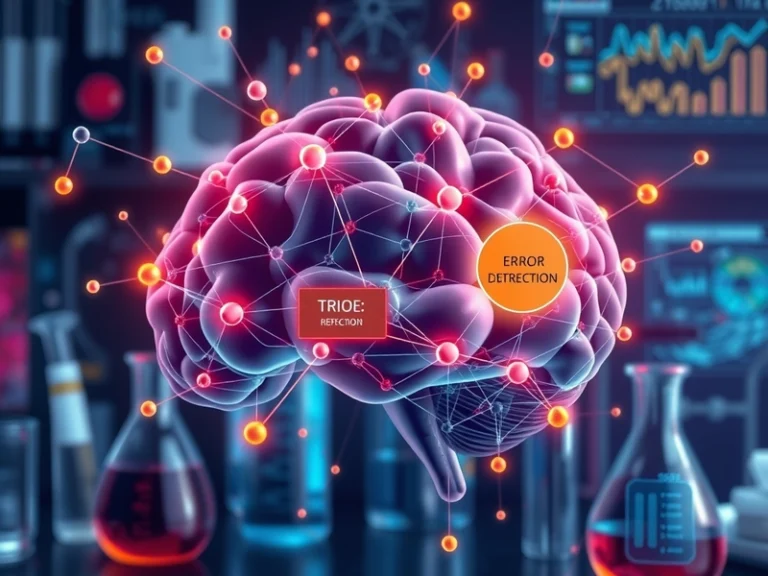
- Internal Simulation and Reflection: Advanced agents can simulate potential outcomes of their actions before execution, allowing them to “catch” mistakes pre-emptively. Post-execution, they might reflect on their performance, comparing actual outcomes with predicted ones to identify where their internal models or reasoning went astray.
- Large Language Models (LLMs) for Reasoning: With the advent of powerful LLMs, agents can leverage their extensive knowledge and reasoning capabilities to articulate potential errors, propose hypotheses for why they occurred, and even suggest corrective actions in natural language or structured code. This allows for more nuanced error analysis than simple numerical deviations.
This iterative process allows the agent to refine its understanding, improve its predictive models, and optimize its decision-making over time, reducing the need for constant human oversight and intervention.
Transforming Scientific Research
The ability of AI agents to self-correct has profound implications for scientific research, offering the potential to accelerate discovery cycles and improve the reliability of findings across various disciplines:
- Automated Hypothesis Refinement: Agents can propose novel hypotheses, design computational experiments or simulations to test them, and then, upon identifying inconsistencies or failures, autonomously refine their initial hypotheses. This iterative loop can rapidly explore vast hypothesis spaces that would be intractable for human researchers.
- Materials Science and Drug Discovery: In fields like materials science and drug discovery, AI agents can design molecules or compounds, predict their properties, and then, if the predicted properties don’t meet criteria or if synthesis fails in simulation, the agent can learn from the “failure” to design improved candidates. This speeds up the discovery of new substances with desired characteristics.
- Experimental Design and Optimization: AI agents could design complex experiments, monitor real-time data, detect anomalies or unexpected results, and then dynamically adjust experimental parameters or even modify the entire protocol without human intervention. This could lead to more efficient use of resources and faster convergence to optimal experimental conditions.
- Data Analysis and Interpretation: Beyond merely crunching numbers, self-correcting AI can identify potential biases in its own analytical pipelines, question its assumptions, and re-evaluate data interpretations, leading to more robust scientific conclusions.
Google’s extensive research in areas like large language models, reinforcement learning, and autonomous agents positions it as a key contributor to these advancements. By integrating sophisticated reasoning capabilities with iterative learning and feedback mechanisms, researchers at Google are pushing the boundaries of what AI can achieve in scientific exploration.
Challenges and the Path Forward
While promising, the development of truly self-correcting AI agents for science faces several challenges. Defining “error” in complex, open-ended scientific problems can be ambiguous. Ensuring that an agent’s self-correction leads to genuinely improved understanding rather than just optimizing for a narrow metric is also crucial. Furthermore, the interpretability of an agent’s self-correction process—understanding *why* it made a particular change—remains a significant area of research.
Despite these hurdles, the trajectory towards more autonomous, self-improving AI agents is clear. As these systems become more adept at identifying and rectifying their own mistakes, they promise to become indispensable partners in the scientific endeavor, accelerating the pace of discovery and pushing the frontiers of human knowledge.