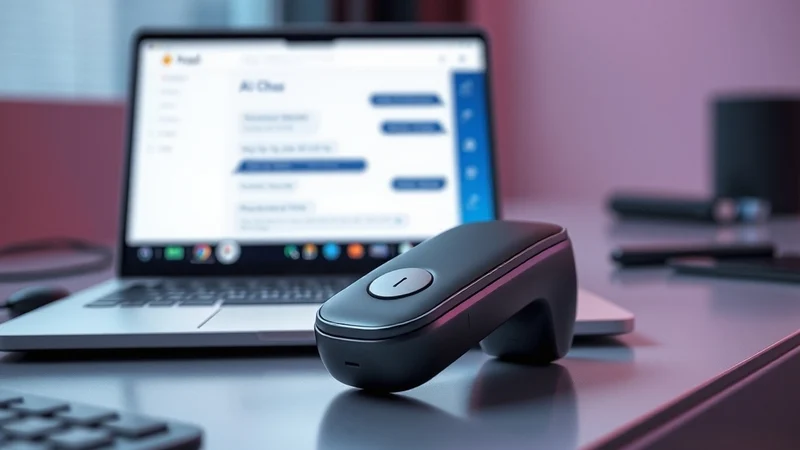
Google’s Offline AI Dictation App: A New Era of Speech Recognition
In the rapidly evolving landscape of artificial intelligence and speech recognition, Google’s latest innovation—a local AI processing app for offline dictation—marks a significant turning point. This new technology not only enhances user experience but also empowers individuals and businesses to harness the power of real-time transcription without the need for a constant internet connection. As we delve into the implications of this advancement, it becomes clear that local AI processing is set to revolutionize how we interact with technology.
The Rise of Offline AI Processing
Traditionally, speech recognition systems have relied heavily on cloud computing. These systems send audio data to remote servers, where complex algorithms process the speech and return the text transcription. While effective, this method has limitations:
- Dependency on Internet Connectivity: Users must be connected to the internet, which can be impractical in areas with poor connectivity.
- Latency Issues: The time taken for data to travel to the cloud and back can introduce delays, making real-time applications challenging.
- Privacy Concerns: Sending sensitive audio data to the cloud raises significant privacy issues, particularly for businesses handling confidential information.
Google’s offline AI dictation app addresses these challenges by utilizing local processing power. This means that the app can perform speech recognition directly on the device, drastically reducing latency and eliminating the need for an internet connection.
Key Features of Google’s Offline AI Dictation App
The app boasts several features that enhance its usability and performance:
- Real-Time Transcription: Users can dictate their thoughts and have them converted to text instantaneously, regardless of their internet connectivity.
- Multi-Language Support: The app supports a variety of languages, making it accessible to a global audience.
- Contextual Understanding: Leveraging advanced machine learning algorithms, the app can understand context, improving the accuracy of transcriptions.
- User-Friendly Interface: Google has designed the app to be intuitive, allowing users of all skill levels to navigate it easily.
Practical Insights: How Local AI Processing Changes the Game
The introduction of local AI processing in dictation apps carries several practical implications:
- Increased Accessibility: Individuals in remote areas or those with limited internet access can now utilize sophisticated speech recognition technology.
- Enhanced User Experience: With real-time processing, users can interact with the app without interruptions, leading to a smoother workflow.
- Improved Data Privacy: By processing data locally, users can maintain better control over their information, reducing concerns about data breaches and unauthorized access.
- Energy Efficiency: Local processing can be more energy-efficient, as it minimizes the need for data transmission over networks, potentially extending device battery life.
Industry Implications
The implications of Google’s offline dictation app extend far beyond individual users. Various industries stand to benefit significantly:
- Healthcare: Medical professionals can quickly transcribe patient notes in real-time without worrying about internet outages, improving workflow efficiency.
- Education: Students and educators can utilize the app for lecture notes, facilitating a more inclusive learning environment.
- Legal and Corporate Sectors: Professionals can dictate sensitive documents on the go, ensuring confidentiality and efficiency in their work.
Future Possibilities
As we look ahead, the potential for growth and innovation in offline AI processing appears limitless:
- Integration with Other AI Tools: Future iterations of the app could integrate with task management and organizational tools, allowing users to convert dictated notes directly into actionable tasks.
- Further Language and Accent Support: With continuous learning from user data, the app could expand its capabilities to understand more dialects and accents, making it even more inclusive.
- Adaptive Learning: The app could employ adaptive learning algorithms that customize the user experience based on individual speech patterns and preferences.
Conclusion
Google’s offline AI dictation app is not just a technological marvel; it represents a significant shift in how we interact with speech recognition technology. By leveraging local processing, users can enjoy the benefits of real-time transcription without the limitations of internet dependence. As industries begin to adopt this technology, the implications for privacy, efficiency, and accessibility are profound. The future of speech recognition is indeed bright, promising a more connected and efficient world.