
# Google’s Project Genie: Building Interactive 3D Worlds from Text Prompts
## Exploring the Capabilities and Limitations of Google’s New 3D World Engine
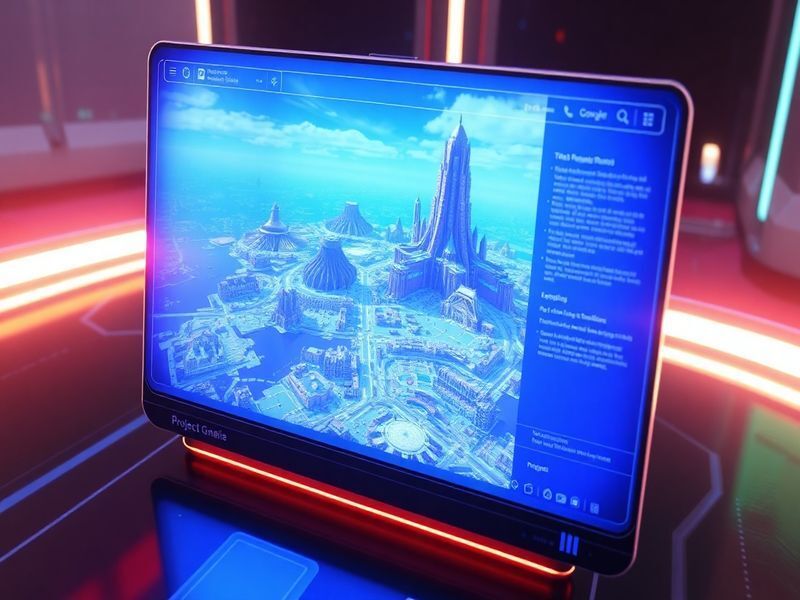
In the rapidly evolving landscape of artificial intelligence and machine learning, Google has once again pushed the boundaries of innovation with **Project Genie**. This cutting-edge initiative aims to revolutionize the way we interact with digital environments by enabling the creation of **interactive 3D worlds from simple text prompts**. By leveraging advanced AI algorithms and machine learning models, Project Genie promises to democratize the creation of immersive digital experiences, making it accessible to both professionals and enthusiasts alike.
## Understanding Project Genie
### What is Project Genie?
Project Genie is an AI-powered tool developed by Google that transforms text descriptions into fully interactive 3D environments. By inputting a textual description, users can generate complex 3D scenes, complete with objects, lighting, and even basic interactivity. This technology builds on the principles of **natural language processing (NLP)** and **computer vision**, combining them to create a seamless bridge between human language and digital creation.
### How Does It Work?
The core of Project Genie lies in its ability to interpret and translate textual input into a 3D model. Here’s a simplified breakdown of the process:
## Capabilities of Project Genie
### Rapid Prototyping
One of the most significant advantages of Project Genie is its ability to **rapidly prototype 3D environments**. For game developers, architects, and designers, this tool can significantly reduce the time and effort required to create initial concepts. Instead of spending hours or days modeling a scene, users can generate a basic structure in minutes, allowing for quicker iterations and refinements.
### Accessibility
Project Genie democratizes the creation of 3D content by making it accessible to individuals who may not have extensive technical skills. By simplifying the process through natural language input, the tool opens up the world of 3D design to a broader audience, including educators, storytellers, and hobbyists.
### Versatility
The versatility of Project Genie is another key strength. It can be applied across various industries, including:
- **Gaming**: Quickly generate game levels and environments.
- **Architecture**: Create virtual models of buildings and interiors.
- **Education**: Develop interactive learning environments.
- **Marketing**: Design immersive product showcases.
## Limitations and Challenges
### Accuracy and Detail
While Project Genie is impressive, it is not without its limitations. One of the primary challenges is the **accuracy and detail** of the generated 3D models. Complex descriptions with intricate details may not always be accurately translated into the 3D environment. This can result in models that are either too simplistic or contain errors.
### Interactivity Constraints
The interactivity of the generated worlds is currently limited. While users can explore the environments, the level of interaction is not as sophisticated as in manually created 3D worlds. For example, users may not be able to manipulate objects with the same precision or engage in complex interactions.
### Learning Curve
Although Project Genie aims to simplify the creation of 3D environments, there is still a learning curve associated with crafting effective text prompts. Users need to understand how to describe their vision in a way that the AI can accurately interpret and translate into a 3D model.
## Industry Implications
### Impact on Game Development
The gaming industry stands to benefit significantly from Project Genie. Game developers can use the tool to quickly generate levels, environments, and assets, allowing them to focus more on gameplay mechanics and storytelling. This could lead to a surge in indie game development, as smaller teams can create high-quality 3D worlds without the need for extensive modeling skills.
### Revolutionizing Architecture and Design
In the fields of architecture and design, Project Genie can streamline the process of creating virtual models of buildings and interiors. Architects can quickly generate initial designs and share them with clients for feedback, reducing the time and cost associated with traditional modeling techniques.
### Enhancing Education and Training
Educators can leverage Project Genie to create immersive learning environments that cater to different subjects, from history to science. For example, students can explore ancient civilizations or conduct virtual science experiments in a safe and interactive setting.
## Future Possibilities
### Advancements in AI and Machine Learning
As AI and machine learning technologies continue to evolve, the capabilities of Project Genie are expected to improve significantly. Future advancements may include:
- **Enhanced Accuracy**: More sophisticated NLP and computer vision algorithms can lead to more accurate and detailed 3D models.
- **Advanced Interactivity**: The development of more complex interaction systems can make the generated worlds more engaging and functional.
- **Integration with Other Technologies**: Combining Project Genie with virtual reality (VR) and augmented reality (AR) can create even more immersive experiences.
### Expanding Applications
The potential applications of Project Genie are vast and continue to grow. Some future possibilities include:
- **Virtual Tourism**: Create immersive virtual tours of real-world locations.
- **Healthcare**: Develop virtual environments for medical training and therapy.
- **Real Estate**: Offer virtual property tours and interactive floor plans.
## Practical Insights for Professionals
### For Developers
Developers can leverage Project Genie to accelerate their workflow by generating initial 3D assets and environments. By integrating the tool into their development pipeline, they can focus on refining and enhancing the final product.
### For Designers
Designers can use Project Genie to quickly prototype their ideas and explore different design concepts. This can lead to more innovative and creative solutions, as they can easily test and iterate on their designs.
### For Educators
Educators can create engaging and interactive learning environments that cater to different learning styles. By incorporating Project Genie into their teaching methods, they can enhance student engagement and understanding.
## Conclusion
Google’s Project Genie represents a significant leap forward in the field of AI-driven 3D world creation. By transforming text prompts into interactive 3D environments, it opens up new possibilities for professionals and enthusiasts alike. While there are limitations and challenges to overcome, the potential applications and future advancements make Project Genie a tool worth watching. As AI and machine learning technologies continue to evolve, the capabilities of Project Genie are expected to grow, paving the way for even more innovative and immersive digital experiences.
—