

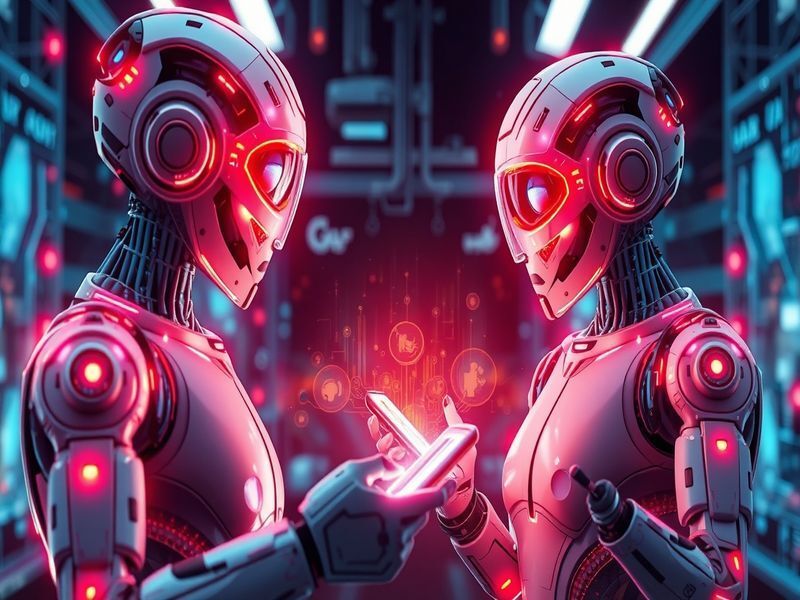
Jensen Huang Declares AGI Has Arrived: NVIDIA’s CEO Discusses the Implications of AI Agents Generating Revenue and Building Apps
In a landmark statement, Jensen Huang, CEO of NVIDIA, has declared that Artificial General Intelligence (AGI) has arrived. This bold assertion not only marks a significant milestone in the AI landscape but also sets the stage for a new era where AI agents are expected to generate revenue and build applications autonomously. As the technology continues to evolve, it raises profound questions about its implications for industries, society, and the future of work.
The Evolution of AI to AGI
Huang’s announcement is underscored by a rapid evolution in AI capabilities, particularly in the realm of deep learning and neural networks. Traditional AI systems have been designed for specific tasks, but the advent of AGI signifies a leap towards systems that can understand, learn, and apply knowledge across diverse domains.
- Deep Learning Advances: The integration of vast datasets and sophisticated algorithms has enabled AI to perform complex tasks previously thought to require human intelligence.
- Natural Language Processing: Breakthroughs in NLP have allowed AI systems to comprehend and generate human-like text, facilitating more intuitive interactions.
- Autonomous Learning: AI agents can learn from their environment and experiences, making decisions with minimal human intervention.
Implications of AI Agents Generating Revenue
The potential for AI agents to generate revenue presents a paradigm shift in how businesses operate. Huang envisions a future where companies leverage AI not just as a tool but as a core component of their revenue-generating strategy.
- New Business Models: Companies can create AI-driven products and services that evolve based on user feedback and market trends.
- Cost Efficiency: Automating routine tasks through AI agents can significantly reduce operational costs, allowing businesses to allocate resources more strategically.
- Scalability: AI agents can operate 24/7, enabling businesses to scale their operations rapidly without the traditional limitations of human workforce availability.
Building Applications with AI Agents
Huang’s vision extends beyond revenue generation; it encompasses the role of AI in application development. AI agents are now capable of not only generating code but also optimizing and deploying applications.
- Rapid Prototyping: AI can assist developers in quickly creating prototypes based on user requirements, significantly shortening the development cycle.
- Intelligent Debugging: AI systems can analyze code for errors and suggest improvements, streamlining the debugging process.
- Personalization: AI can tailor applications to individual user preferences, enhancing user experience and engagement.
Industry Implications and Future Possibilities
The implications of AGI and AI agents are vast, spanning multiple industries. From healthcare to finance, the ability of AI to independently generate revenue and build applications will revolutionize traditional workflows.
- Healthcare: AI agents could analyze patient data to create personalized treatment plans or develop new therapies, significantly improving patient outcomes.
- Finance: Automated trading algorithms driven by AI can make real-time decisions based on market conditions, enhancing investment strategies.
- Retail: AI can predict consumer behavior, allowing businesses to optimize inventory and marketing strategies effectively.
However, these advancements also bring forth challenges that must be addressed:
- Ethical Considerations: The ability of AI to make decisions raises questions about accountability and transparency.
- Job Displacement: As AI takes over routine tasks, there is concern about the future of employment in various sectors.
- Data Privacy: The reliance on vast amounts of data for training AI systems necessitates stringent measures to protect user privacy.
The Road Ahead
As we move forward, the challenge lies in harnessing the power of AGI while ensuring ethical standards and societal values are upheld. Collaboration between technologists, policymakers, and ethicists will be crucial in shaping a future where AI and humans coexist harmoniously.
In conclusion, Jensen Huang’s declaration that AGI has arrived is not merely a statement of technological progress but a call to action for industries worldwide. As AI agents begin to generate revenue and build applications, the landscape of business and society will transform in unprecedented ways. The possibilities are endless, but with them come responsibilities that must not be overlooked.