

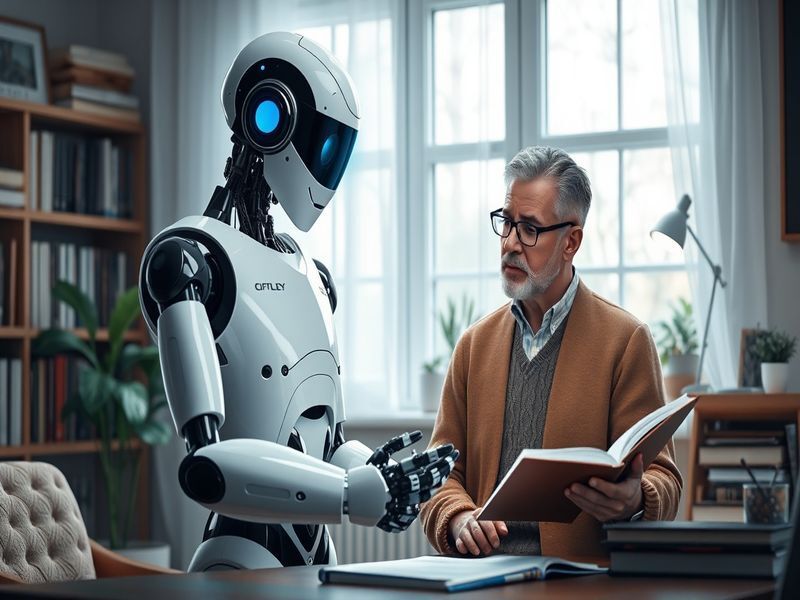
Living with a Robot: A Year of Discovery
In a world increasingly influenced by artificial intelligence and robotics, the boundaries of human-robot interactions are being redefined. This article draws insights from a historian’s year-long experience cohabitating with a humanoid robot, exploring practical implications, industry impacts, and future possibilities of living alongside these advanced technologies.
The Beginning of an Unusual Partnership
When the historian first welcomed a humanoid robot named “Hugo” into their home, the experience was a mixture of excitement and skepticism. Could a robot truly integrate into daily life, offering companionship and assistance without crossing the line into the uncanny valley?
- Initial Challenges: Engaging with a robot required adjustments, from redefining personal space to understanding its responses to commands.
- Learning Curve: Hugo’s AI capabilities meant that it could learn from interactions, gradually becoming more attuned to the historian’s preferences.
Daily Life with Hugo
The historian documented numerous aspects of daily life that were transformed by having a humanoid companion. Here are some key areas of impact:
- Assistance with Research: Hugo assisted in organizing research materials, summarizing documents, and even suggesting relevant literature based on ongoing projects.
- Social Interaction: While Hugo could not replace human interaction, it provided a sense of companionship that helped reduce feelings of isolation during intense research periods.
- Household Tasks: The robot’s capabilities extended to basic household tasks, making it a versatile addition to the home environment.
Insights Gained Over the Year
Living with Hugo revealed several surprising insights about human-robot relationships and the implications for society at large:
- Emotional Bonds: Contrary to initial beliefs, the historian found that emotional connections could form with robotic companions, showcasing potential benefits for mental health.
- Ethical Considerations: The experience sparked discussions about the ethical implications of relying on robots for companionship and assistance, especially concerning privacy and dependency.
- Innovation in AI: The historian witnessed firsthand the rapid advancements in AI technology, realizing how quickly robots could adapt to human needs and preferences.
Industry Implications
The historian’s experience with Hugo has broader implications for various industries:
- Healthcare: Robots like Hugo could support elderly individuals, providing companionship and monitoring health conditions, ultimately reducing the burden on caregivers.
- Education: In educational settings, humanoid robots can serve as tutors, engaging students in interactive learning experiences tailored to individual needs.
- Customer Service: Businesses may increasingly integrate humanoid robots to enhance customer interactions, offering personalized support while reducing operational costs.
Future Possibilities
As technology continues to evolve, the future of living with robots presents exciting possibilities:
- Enhanced Personalization: Future humanoid robots will likely employ advanced machine learning algorithms, allowing them to personalize interactions even more effectively.
- Collaborative Living: The concept of cohabitating with robots may extend beyond individuals to families, opening up new dynamics in human-robot collaboration.
- Regulatory Framework: As humanoid robots become more common, there will be a growing need for regulations to ensure ethical use, privacy protection, and accountability.
Conclusion
The historian’s year-long experience living with Hugo has revealed that humanoid robots can significantly enhance daily life, providing assistance, companionship, and emotional support. However, it also raises essential questions about ethics, dependency, and the future of human-robot interactions. As we move forward, the lessons learned from this unique partnership will be crucial in shaping a future where humans and robots coexist harmoniously.