

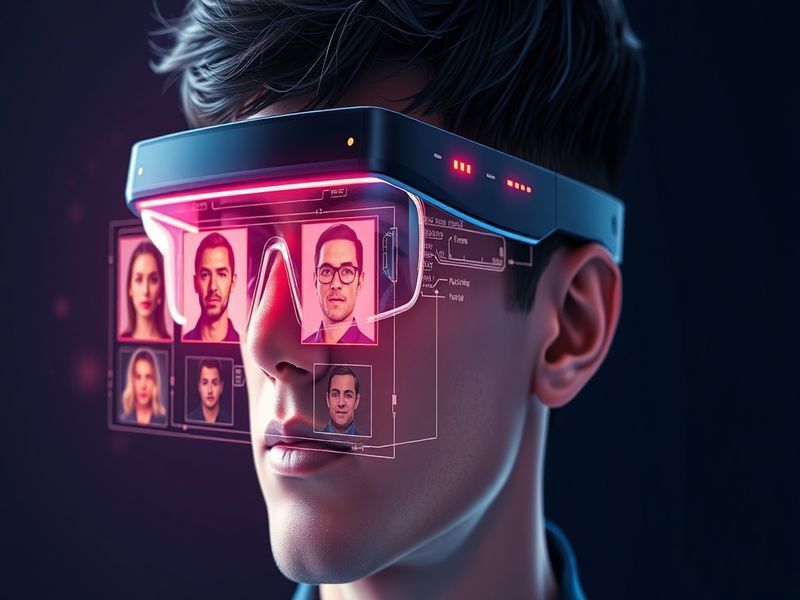
Meta’s Ambitious Move: Facial Recognition in Smart Glasses
In a bold stride towards the future of augmented reality, Meta has unveiled its latest innovation: smart glasses equipped with real-time facial recognition capabilities. This move is poised to reshape how we interact with technology and each other, but it also raises profound ethical questions. As we delve into this topic, we will explore the technology behind it, practical insights, industry implications, and future possibilities.
The Technology Behind Facial Recognition in Smart Glasses
Meta’s smart glasses utilize advanced computer vision and machine learning algorithms to identify individuals in real-time. The technology is built upon several key components:
- Image Processing: The glasses capture video feeds, which are processed using sophisticated algorithms to recognize faces.
- Machine Learning Models: Trained on vast datasets, these models learn to identify unique facial features and patterns.
- Real-Time Processing: Utilizing powerful hardware, the glasses can analyze data instantaneously, enabling seamless identification.
This convergence of hardware and software allows for an unprecedented level of interaction between users and their environment, making the technology not just a novelty but a potential everyday tool.
Practical Insights: Benefits and Use Cases
The introduction of facial recognition in smart glasses presents a range of practical applications that could revolutionize various sectors:
- Security: Enhanced surveillance capabilities could aid law enforcement in identifying suspects in real-time.
- Retail: Stores could use this technology to personalize customer experiences, adapting offers based on recognized patrons.
- Social Interactions: Users could identify acquaintances in social settings, thereby facilitating connections and networking opportunities.
- Healthcare: Medical professionals could quickly identify patients and access their records, improving service delivery.
While these use cases present exciting opportunities, they also warrant a deeper investigation into the ethical ramifications of such technology.
Ethical Implications of Facial Recognition
The deployment of facial recognition in smart glasses is not without its controversies. The ethical implications are multifaceted, and several concerns arise:
- Privacy Concerns: The ability to identify individuals in public spaces raises significant privacy issues. Will individuals be aware that they are being recognized?
- Consent: The question of consent is paramount. Are people comfortable being identified without their permission?
- Data Security: The collection and storage of biometric data pose risks. How will this information be protected from misuse?
- Bias and Accuracy: Machine learning models can be biased. If the technology inaccurately identifies individuals, it could have severe repercussions.
These concerns highlight the need for clear regulations and ethical guidelines to govern the use of facial recognition technologies.
Industry Implications and Future Possibilities
The introduction of facial recognition in smart glasses signals a shift that could have far-reaching implications across various industries. Here are some potential outcomes:
- Regulatory Frameworks: Governments may be compelled to establish regulatory frameworks that govern the use of facial recognition technology, ensuring ethical standards are met.
- Market Dynamics: Companies that adopt this technology may gain a competitive edge, prompting others to innovate or risk obsolescence.
- Public Perception: The acceptance of such technology will largely depend on public perception of its benefits versus its ethical implications.
- Technological Advancements: The ongoing development of AI and machine learning will likely enhance the accuracy and efficiency of facial recognition systems, leading to broader adoption.
As we look to the future, it is essential to balance innovation with ethical considerations. The conversation around facial recognition technology must evolve alongside its development, ensuring that societal values are upheld.
Conclusion
Meta’s ambitious move to integrate facial recognition capabilities into smart glasses represents a significant leap forward in technology. While it promises to enhance interactions and streamline various processes, it also necessitates a critical examination of the ethical implications involved. As this technology continues to develop, stakeholders from all sectors must engage in constructive dialogue to navigate the challenges and harness the potential of facial recognition responsibly.