

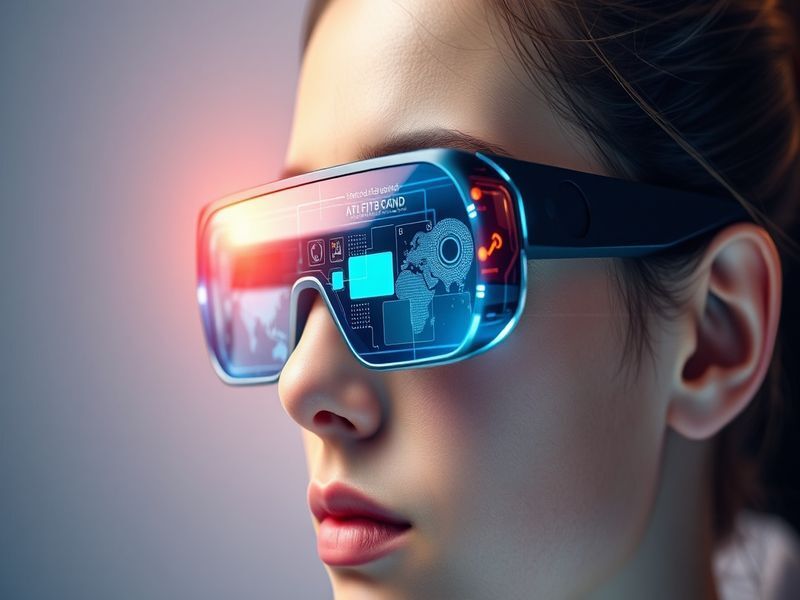
# Meta’s Bet on Smart Glasses as the Next Computing Platform: Insights from Zuckerberg on the Future of Smart Glasses
## Introduction
In a world where technology is constantly evolving, Meta (formerly Facebook) is making a bold move by positioning smart glasses as the next major computing platform. This shift is not just about hardware but represents a fundamental change in how we interact with digital content. Mark Zuckerberg, CEO of Meta, has been vocal about this vision, emphasizing the role of artificial intelligence (AI) and machine learning (ML) in making smart glasses a seamless extension of our daily lives.
## The Vision: Smart Glasses as the Next Computing Platform
### Why Smart Glasses?
Smart glasses are poised to become the next big thing in computing for several reasons:
- Hands-Free Interaction: Unlike smartphones and tablets, smart glasses allow users to interact with digital content without using their hands, making them ideal for multitasking and on-the-go use.
- Augmented Reality (AR): Smart glasses can overlay digital information onto the real world, enhancing our perception and interaction with the environment.
- Portability and Convenience: They are lightweight, portable, and can be worn all day, making them a natural extension of our daily routines.
### Zuckerberg’s Insights
Mark Zuckerberg has shared his vision for smart glasses in several interviews and public statements. Here are some key insights:
- Integration with Meta’s Ecosystem: Zuckerberg envisions smart glasses as a central component of Meta’s ecosystem, integrating with virtual reality (VR) and AR technologies to create a seamless digital experience.
- AI and Personalization: He emphasizes the role of AI in personalizing the user experience, making smart glasses adaptive to individual needs and preferences.
- Privacy and Security: Zuckerberg acknowledges the importance of privacy and security, highlighting Meta’s commitment to protecting user data.
## Practical Insights and Industry Implications
### AI and Machine Learning in Smart Glasses
AI and ML are at the heart of smart glasses’ functionality. Here’s how they are being leveraged:
- Voice Recognition: Advanced voice recognition systems allow users to control smart glasses using natural language commands.
- Computer Vision: Computer vision algorithms enable smart glasses to recognize objects, people, and text, providing real-time information and context.
- Predictive Analytics: Machine learning models can predict user behavior and preferences, offering personalized recommendations and assistance.
### Industry Implications
The rise of smart glasses has significant implications for various industries:
- Healthcare: Smart glasses can assist healthcare professionals by providing real-time information and guidance during medical procedures.
- Education: They can enhance learning experiences by offering interactive and immersive educational content.
- Retail: Smart glasses can revolutionize the retail industry by providing personalized shopping experiences and real-time product information.
- Manufacturing: They can improve efficiency and safety in manufacturing by offering hands-free access to critical information and instructions.
## Future Possibilities
### Enhanced User Experience
The future of smart glasses holds exciting possibilities:
- Seamless Integration: Smart glasses will seamlessly integrate with other devices and platforms, creating a unified digital experience.
- Advanced AR Features: Future iterations will offer more advanced AR features, such as holographic displays and interactive 3D models.
- Health Monitoring: They will incorporate health monitoring capabilities, such as heart rate tracking and stress level detection.
### Ethical Considerations
As with any emerging technology, ethical considerations are crucial:
- Privacy Concerns: The use of smart glasses raises privacy concerns, particularly regarding data collection and surveillance.
- Data Security: Ensuring the security of user data is paramount, requiring robust encryption and security measures.
- Accessibility: Designing smart glasses to be accessible to all users, including those with disabilities, is essential for widespread adoption.
## Conclusion
Meta’s bet on smart glasses as the next computing platform is a bold and visionary move. With the integration of AI and ML, smart glasses have the potential to revolutionize how we interact with digital content and the world around us. While challenges and ethical considerations remain, the future possibilities are vast and exciting. As technology continues to evolve, smart glasses could become an integral part of our daily lives, offering unprecedented convenience, personalization, and connectivity.
—