

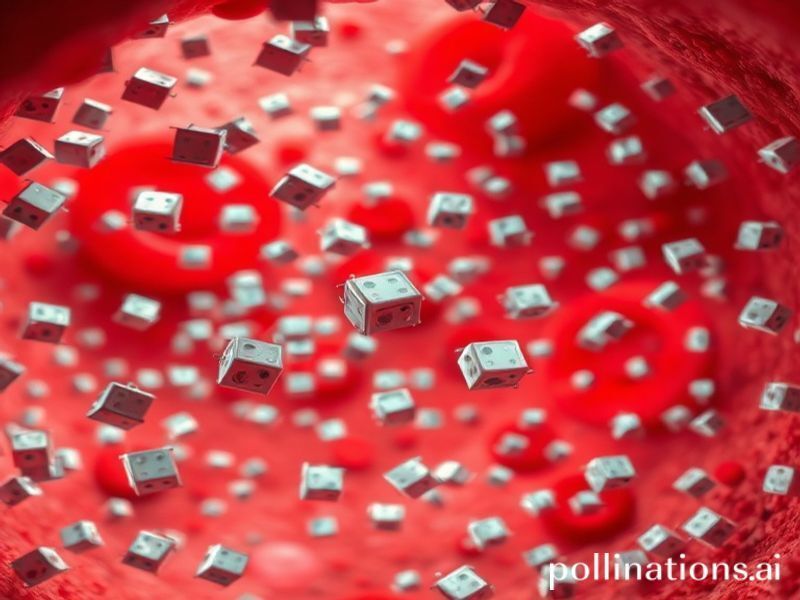
The Invisible Revolution: Microrobots Smaller Than a Grain of Sand
In a breakthrough that sounds like science fiction becoming reality, researchers have unveiled self-powered microrobots no larger than a grain of sand. These microscopic marvels can move independently, communicate with each other, and perform complex tasks without external control—ushering in a new era of autonomous nanotechnology that promises to transform medicine, environmental monitoring, and the Internet of Things (IoT).
Breaking the Size Barrier: How These Microscopic Machines Work
Traditional microrobots have always faced a fundamental challenge: the smaller they get, the harder it becomes to power and control them. Previous generations required external power sources, magnetic fields, or chemical fuels that limited their mobility and potential applications. The latest breakthrough eliminates these constraints through innovative engineering at the nanoscale.
Self-Powering Through Innovation
These new microrobots achieve autonomy through several groundbreaking approaches:
- Piezoelectric materials that generate electricity from mechanical vibrations and movement
- Bio-compatible solar cells harvesting energy from ambient light sources
- Chemical energy conversion using safe, biocompatible reactions within the robot’s structure
- Thermoelectric generation converting body heat into usable electrical power
Each robot contains a simple artificial intelligence system—essentially a microscopic brain—that processes environmental signals and makes basic decisions. This AI is so efficient it operates on mere nanowatts of power, yet can coordinate with hundreds or thousands of identical units.
Swarm Intelligence: The Power of Collective Action
What makes these microrobots truly revolutionary is their ability to work together as a swarm. Drawing inspiration from nature—think ant colonies and bee swarms—each unit follows simple rules that, when multiplied across thousands of units, create emergent intelligence and capabilities far beyond any individual robot.
Communication Without Complexity
The robots communicate through:
- Chemical signaling: Releasing and detecting trace amounts of specific molecules
- Light pulses: Using microscopic LEDs to send optical signals
- Acoustic waves: Generating and sensing vibrations at frequencies beyond human hearing
- Magnetic fields: Creating tiny, localized field variations detectable by nearby units
This communication enables sophisticated behaviors like collective navigation, task distribution, and self-repair. If one robot fails, others can detect the failure and compensate by redistributing its workload.
Medical Marvels: Healthcare Applications on the Horizon
The medical implications of self-powered microrobot swarms are staggering. These microscopic helpers could revolutionize diagnosis and treatment in ways previously confined to the realm of science fiction.
Targeted Drug Delivery
Imagine thousands of microrobots injected into a patient’s bloodstream, each carrying a precise dose of medication. Using their onboard AI and chemical sensors, they could:
- Navigate to specific organs or tumor sites
- Release medication only when detecting disease markers
- Monitor drug effectiveness in real-time
- Signal for reinforcements if initial doses prove insufficient
Microscopic Surgery
These robots could perform minimally invasive procedures from inside the body:
- Removing arterial plaque buildup
- Repairing damaged tissues at the cellular level
- Breaking down kidney stones or gallstones
- Assisting in fertility treatments by guiding sperm to eggs
Early clinical trials with animal models have shown promising results, with successful navigation through blood vessels and targeted delivery of cancer-fighting drugs to tumor sites.
Environmental and IoT Applications
Beyond medicine, these microrobots could transform environmental monitoring and IoT infrastructure.
Environmental Sentinels
Deployed in water supplies, soil, or air, microrobot swarms could:
- Continuously monitor pollution levels with unprecedented precision
- Detect chemical leaks or contamination events instantly
- Track climate change indicators across vast geographical areas
- Clean up oil spills or toxic waste by breaking down harmful substances
Smart Infrastructure
Embedded in buildings, bridges, and roads, these robots could create self-monitoring infrastructure:
- Detecting structural weaknesses before they become dangerous
- Self-repairing tiny cracks in concrete or asphalt
- Optimizing energy usage in smart buildings
- Creating adaptive lighting and climate control systems
Challenges and Considerations
Despite the enormous potential, several challenges must be addressed before widespread adoption:
Technical Hurdles
- Power management: Ensuring consistent energy supply in diverse environments
- Biocompatibility: Preventing immune system reactions in medical applications
- Manufacturing scale: Producing millions of identical units cost-effectively
- Control mechanisms: Preventing unintended collective behaviors
Ethical and Safety Concerns
The technology raises important questions about privacy, security, and environmental impact:
- How do we prevent malicious use of surveillance capabilities?
- What happens to expired or malfunctioning robots in the environment?
- Who controls these swarms once deployed?
- How do we ensure equitable access to life-saving medical applications?
The Road Ahead: Future Possibilities
Industry experts predict that practical applications will emerge within the next 5-10 years, with medical applications likely leading the way due to the urgent need and willingness to invest in healthcare innovation.
Emerging Trends
Several exciting developments are on the horizon:
- Hybrid systems combining microrobots with traditional medical devices
- AI-enhanced swarms with machine learning capabilities for adaptive behavior
- Self-replicating robots that can manufacture replacements using environmental materials
- Integration with 5G/6G networks for real-time monitoring and control
Major technology companies and startups alike are investing billions in microrobot research, recognizing the transformative potential across industries. The convergence of AI, nanotechnology, and materials science is creating opportunities that seemed impossible just a decade ago.
Conclusion: A Tiny Revolution with Massive Impact
Self-powered microrobot swarms represent more than just a technological achievement—they embody a fundamental shift in how we think about machines, intelligence, and the relationship between technology and the natural world. As these grain-sized robots move from laboratory curiosities to practical tools, they promise to unlock new frontiers in medicine, environmental science, and digital infrastructure.
The invisible revolution is underway, carried on the backs of robots smaller than a grain of sand. As they learn to work together, communicate, and adapt to their environments, these microscopic marvels are poised to make macroscopic impacts on human health, environmental sustainability, and the future of technology itself.
For tech enthusiasts and professionals, staying informed about this rapidly evolving field isn’t just interesting—it’s essential. The microrobot revolution will likely reshape entire industries and create new opportunities we’re only beginning to imagine. The future is small, smart, and swimming through your bloodstream right now.