Google is pushing the boundaries of AI-powered image manipulation with its latest conceptual tool, “Nano Banana,” designed to allow users to directly modify visuals through intuitive drawing inputs. This approach represents a significant leap from traditional text-to-image prompting, offering creators a more direct, tactile method to sculpt their digital visions.
The “Draw the Edit” Paradigm
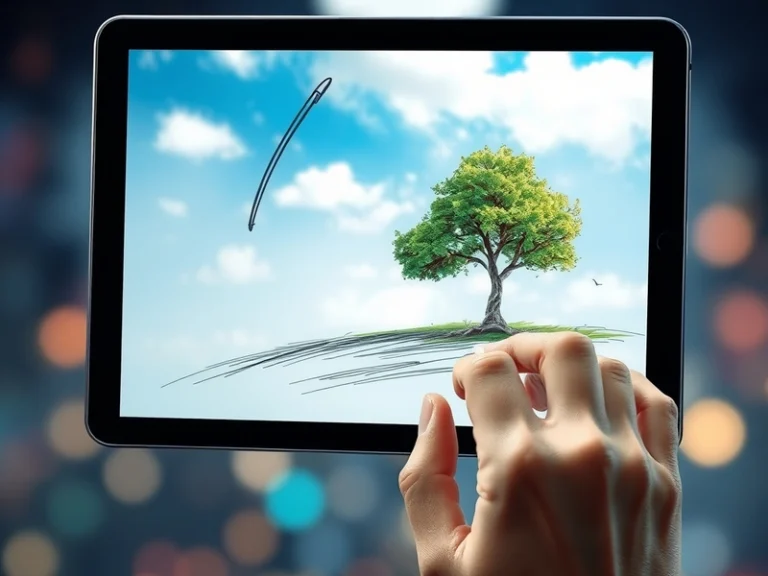
At its core, “Nano Banana” embodies the “draw the edit” paradigm, where simple strokes, shapes, or scribbles on an image or canvas guide sophisticated generative AI models. Instead of relying solely on descriptive text prompts, users can sketch out desired changes directly onto an image, indicating where new elements should appear, how existing ones should transform, or which areas need refinement. This method aims to bridge the gap between creative intent and AI execution, providing a visual language for interaction.
Consider a scenario where a user wants to add a specific type of tree to a landscape image. With traditional text prompts, one might write “add a tall oak tree on the left.” The AI would then generate an oak tree, but its precise placement, size, and orientation might require multiple re-prompts or manual adjustments. With a “draw the edit” tool like Nano Banana, the user could simply draw a rough outline of the tree’s trunk and canopy in the desired location, and the AI would interpret that sketch, generating a photorealistic oak tree that conforms to the drawn guidance.
How AI Facilitates Direct Drawing Interaction
The technical foundation for such direct manipulation typically relies on advanced generative models, predominantly diffusion models, coupled with control mechanisms. These systems learn to synthesize images from noise, but their output can be conditioned on various inputs:
- Text Prompts: The most common form, guiding generation with descriptive language.
- Image Prompts: Using an existing image as a reference for style or content.
- Control Maps: Inputs like depth maps, normal maps, or, crucially for “draw the edit,” *sketch maps* or *segmentation masks*.
Tools that allow users to draw directly on the canvas often leverage techniques similar to ControlNet, a neural network architecture that adds conditional control to diffusion models. ControlNet allows developers to feed auxiliary input conditions, such as edge maps, segmentation maps, or human pose estimations, alongside text prompts to guide image generation with remarkable precision. By interpreting user-drawn lines and shapes as such control maps, Nano Banana could direct the generative process to fill in details, alter textures, or introduce new objects precisely where indicated.
Google’s History in Interactive Image AI
Google has a rich history of developing and integrating AI into its image processing tools, demonstrating a clear focus on user-friendly applications.
- Magic Eraser: Introduced in Google Pixel phones, Magic Eraser uses AI to identify and remove unwanted objects or photobombers from images, intelligently filling in the background.
- Magic Editor: Available in Google Photos, Magic Editor goes further, allowing users to reposition subjects, enhance skies, or even generate entirely new elements based on simple user selections and prompts. This feature already hints at the capabilities of “draw the edit” by letting users define areas for AI intervention.
- ImageFX: Part of Google’s AI Test Kitchen, ImageFX is an experimental text-to-image generator that emphasizes “expressive prompting” and offers tools for creative exploration, including visual seed selection. While primarily text-driven, it showcases Google’s ongoing research into making generative AI more accessible and controllable.
These existing tools illustrate Google’s trajectory towards more intuitive and interactive AI-driven image editing. “Nano Banana” appears to be a natural evolution, pushing the boundary from selection-based or text-based edits to direct, freehand drawing as a primary mode of interaction.
The Broader Industry Landscape
The concept of sketch-guided or direct-manipulation AI editing is not unique to Google, reflecting a broader industry trend towards more controllable generative AI.
- Adobe Photoshop’s Generative Fill: A prominent example, Generative Fill allows users to select an area within an image and use text prompts to add, remove, or extend content. While powerful, it primarily relies on selections and text, though users can paint over areas to guide the fill.
- Midjourney’s Vary (Region): Midjourney, a leading text-to-image generator, offers a “Vary (Region)” feature that enables users to select specific areas of an AI-generated image and re-prompt them, generating new variations within that defined space.
- DALL-E 3’s Inpainting: OpenAI’s DALL-E 3, integrated into ChatGPT Plus and Microsoft Designer, also supports inpainting, allowing users to select parts of an image and instruct the AI to modify or replace them, typically through text prompts.
What “Nano Banana” potentially brings to the forefront is a more fluid, drawing-centric interaction model, potentially reducing the cognitive load of crafting precise text prompts or making complex selections. It could allow for a level of artistic spontaneity and iterative refinement that is harder to achieve with purely text-based or broad-selection tools.
Impact on Creative Workflows
The introduction of a tool like Nano Banana could significantly streamline creative workflows for various professionals:
- Graphic Designers: Rapidly prototyping visual concepts, making quick iterations on client feedback, or refining stock imagery with precise additions.
- Concept Artists: Quickly blocking out scenes, adding environmental details, or experimenting with character elements without needing extensive traditional drawing skills for every iteration.
- Photographers: Enhancing compositions, adding contextual elements, or performing complex retouching with greater control than automated tools currently offer.
- Everyday Users: Making sophisticated edits to personal photos, such as adding a missing element to a family picture or altering backgrounds, with an intuitive drawing interface.
The ability to “draw the edit” empowers users who think visually, translating their direct spatial and form-based ideas into AI-generated content. This could democratize advanced image editing, making sophisticated manipulations accessible to a broader audience beyond seasoned professionals.
Challenges and Future Outlook
While promising, tools leveraging direct drawing input face several technical and creative challenges. Maintaining visual coherence and stylistic consistency across an image after multiple “drawn edits” is crucial. The AI must understand not just *what* the user drew, but *how* it should integrate seamlessly with the existing content, matching lighting, perspective, and style. The robustness of the model in interpreting ambiguous or abstract sketches will also be a key factor in its usability.
As AI models continue to evolve in their understanding of visual context and user intent, the precision and versatility of tools like Nano Banana are expected to grow. Google’s exploration into this interactive paradigm suggests a future where the interface between human creativity and artificial intelligence becomes increasingly intuitive, allowing for a more symbiotic relationship in the generation and manipulation of visual media.