

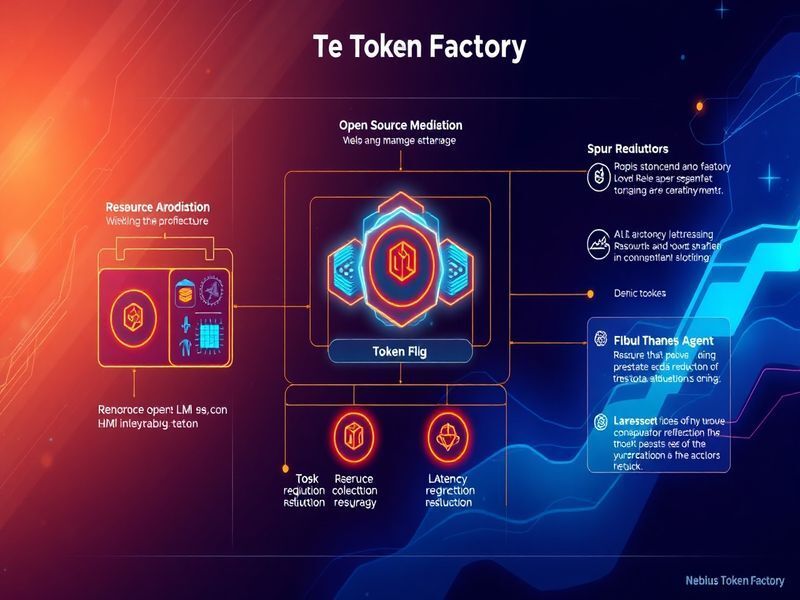
Navigating the Production Challenges of Open-Source LLMs: Understanding how Nebius Token Factory Addresses Latency and Infrastructure Issues for AI Models in Production
As artificial intelligence (AI) continues to evolve, the demand for open-source large language models (LLMs) is on the rise. These models offer incredible flexibility and accessibility, allowing developers and companies to customize them according to their specific needs. However, the production environment for these models presents unique challenges, particularly in terms of latency and infrastructure. In this article, we will explore how Nebius Token Factory is addressing these challenges, making strides to enhance the deployment and performance of AI models in production.
The Importance of Open-Source LLMs
Open-source LLMs have redefined the AI landscape by providing:
- Accessibility: Developers can leverage these models without the need for extensive proprietary licenses.
- Customizability: Organizations can fine-tune models to meet their specific requirements.
- Community Collaboration: Open-source projects benefit from collective improvements and innovations.
Despite these advantages, deploying open-source LLMs in production introduces a series of challenges, especially regarding latency and infrastructure setup.
Challenges in Production
When transitioning open-source LLMs from research to production, several issues arise:
- Latency: AI models require significant processing power, which can lead to delays in response times, particularly in real-time applications.
- Scalability: Open-source models must be able to handle varying loads, which requires robust infrastructure.
- Resource Management: Effective allocation of computational resources is essential to avoid bottlenecks.
- Monitoring and Maintenance: Continuous performance monitoring is necessary to ensure optimal operation.
Nebius Token Factory: A Solution to Latency and Infrastructure Issues
Nebius Token Factory has emerged as a pivotal player in addressing the aforementioned challenges for open-source LLMs. By leveraging a combination of advanced technologies and methodologies, they provide a robust platform for deploying AI models efficiently. Here’s how they tackle key issues:
1. Efficient Resource Allocation
Nebius Token Factory employs a dynamic resource allocation system that optimizes the use of computing power. This system ensures that:
- Resources are allocated based on demand, minimizing costs and improving response times.
- Load balancing techniques are used to distribute tasks evenly across servers, reducing the risk of overload.
2. Latency Reduction Techniques
To combat latency, Nebius Token Factory incorporates several techniques:
- Edge Computing: By processing data closer to where it is generated, latency is significantly reduced.
- Model Optimization: Techniques such as quantization and pruning help streamline models without sacrificing accuracy.
3. Scalable Infrastructure
The platform is designed to be scalable, allowing organizations to:
- Expand their infrastructure as needed without significant downtimes.
- Utilize cloud resources effectively, taking advantage of on-demand capabilities.
4. Continuous Monitoring and Maintenance
Nebius Token Factory includes robust monitoring tools that enable:
- Real-time performance analytics, helping teams identify and rectify issues swiftly.
- Automated maintenance protocols that ensure models remain updated and functional.
Industry Implications
The innovations brought forth by Nebius Token Factory have far-reaching implications for various industries:
- Healthcare: Faster and more reliable AI models can enhance diagnostics and patient care.
- Finance: Real-time data processing leads to better risk assessment and fraud detection.
- Retail: Improved customer interaction through personalized recommendations and chatbots.
Future Possibilities
As technology continues to advance, the future of open-source LLMs looks promising. Key areas to watch include:
- Integration with 5G: The rollout of 5G technology will further reduce latency, enhancing the performance of AI applications.
- Enhanced Collaboration: Increased collaboration among developers will lead to even more innovative solutions for AI challenges.
- Ethical AI Practices: The open-source community will play a vital role in promoting ethical practices in AI development and deployment.
In conclusion, while the production challenges of open-source LLMs are significant, solutions like those offered by Nebius Token Factory are paving the way for more efficient and effective AI applications. By addressing issues of latency and infrastructure, they are not only enhancing the deployment of AI models but also setting a standard for future innovations in the industry.