

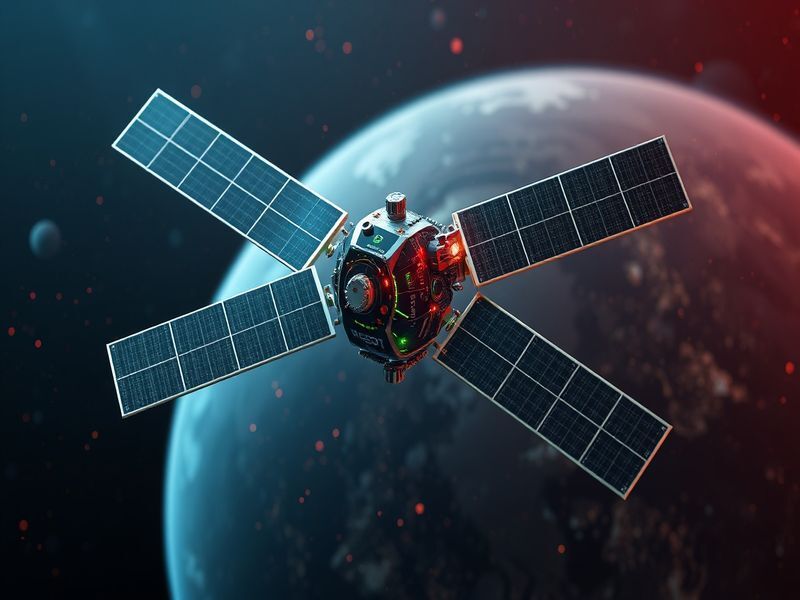
NVIDIA’s AI Takes to Space: Exploring the Implications of Data-Center-Class AI in Orbit
As humanity’s ambitions in space continue to grow, the need for advanced computational power in orbit has never been more critical. NVIDIA, a leader in graphics processing units (GPUs) and artificial intelligence (AI), has unveiled a groundbreaking initiative aimed at deploying data-center-class AI in space. This move not only redefines computing in orbit but also opens up a multitude of possibilities for scientific research, exploration, and even commercial applications.
The Need for AI in Space
Space missions generate vast amounts of data, from satellite imagery to telemetry data from rovers and probes. Traditional data processing methods often fall short due to bandwidth limitations and the time constraints involved in transmitting data back to Earth. The integration of AI directly into space-based systems can significantly enhance data analysis, enabling real-time decision-making and autonomous operations. Here are some key reasons why AI in space is crucial:
- Real-Time Data Processing: AI can analyze data on-site, reducing the need to send large data sets back to Earth.
- Autonomy: AI-powered systems can operate independently, making critical decisions without waiting for instructions from mission control.
- Predictive Analytics: Machine learning algorithms can predict equipment failures and optimize resource usage, enhancing mission longevity.
NVIDIA’s Space Computing Initiative
NVIDIA’s latest initiative involves the deployment of its powerful GPUs and AI platforms in orbit, specifically designed for the unique challenges of space. This initiative includes several key components:
- Advanced GPUs: The use of high-performance GPUs allows for complex computations that were previously impossible in a space environment.
- AI Frameworks: NVIDIA’s AI frameworks, such as TensorRT and CUDA, are being tailored for space applications, enabling developers to create specialized algorithms for tasks ranging from image recognition to data analysis.
- Partnerships with Space Agencies: Collaborations with organizations like NASA and private space companies help ensure that these technologies meet the specific needs of various missions.
Industry Implications
The implications of deploying data-center-class AI in orbit are vast and multi-faceted. Here are some critical areas where this technology could make a significant impact:
- Scientific Research: AI can accelerate scientific discovery by analyzing data from telescopes, satellites, and planetary probes. This could lead to quicker breakthroughs in understanding the universe.
- Satellite Operations: Enhanced AI capabilities can improve satellite management, enabling better resource allocation, collision avoidance, and mission planning.
- Commercial Opportunities: The development of AI systems for space can lead to new business models and markets, including satellite-based services and space tourism.
Future Possibilities
As NVIDIA’s initiative gains traction, the future of AI in space holds exciting possibilities:
- Interplanetary Missions: Future missions to Mars and beyond could benefit from autonomous rovers equipped with AI to analyze soil samples and navigate treacherous terrains.
- Deep Space Exploration: AI-powered spacecraft could explore distant exoplanets, collecting and analyzing data without real-time human intervention.
- Collaborative AI Systems: Multiple spacecraft could share AI capabilities, enabling collective problem-solving and data sharing, enhancing mission efficiency.
Moreover, the integration of AI in space is set to create a new paradigm in how we approach challenges in both space exploration and Earth-based technologies. For instance, the algorithms developed for space applications could also find their way into terrestrial industries such as agriculture, disaster management, and urban planning.
Conclusion
NVIDIA’s initiative to bring data-center-class AI to space represents a significant leap forward in the capabilities of space missions. By harnessing the power of advanced AI and machine learning, we can enhance our understanding of the universe and address complex challenges in real-time. As this technology matures, it will not only transform space exploration but could also lead to innovations that benefit life on Earth. The future of space computing is bright, and NVIDIA is at the forefront of this exciting journey.