
OpenAI’s Frontier: AI Coworkers in Enterprise Settings
The landscape of business operations is rapidly evolving with the integration of artificial intelligence. OpenAI’s new platform, designed to incorporate AI agents into enterprise settings, promises to revolutionize how organizations operate. This article explores the capabilities of these AI coworkers, their implications on various industries, and future possibilities for businesses embracing this transformative technology.
Understanding OpenAI’s New Platform
OpenAI’s new platform is engineered to seamlessly blend AI agents with traditional business processes. By harnessing advanced algorithms and vast datasets, these AI coworkers can take on various tasks, enhancing efficiency and decision-making processes. Here are some key features:
- Natural Language Processing (NLP): The AI agents can understand and interact in human language, making communication within teams smoother.
- Task Automation: Routine tasks can be automated, freeing up human employees for more strategic work.
- Data Analysis: AI can analyze large volumes of data swiftly, providing insights that inform business strategies.
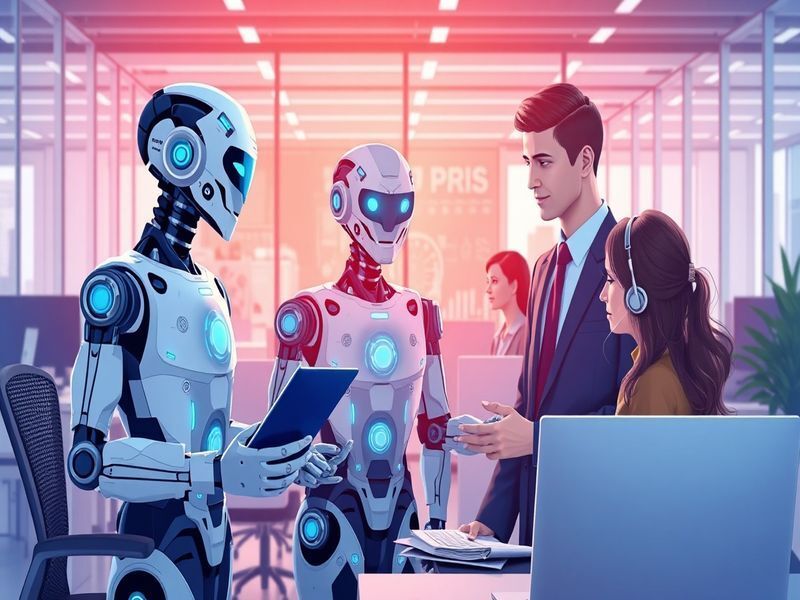
- Real-time Collaboration: AI coworkers can work alongside human employees in real-time, providing on-demand support and recommendations.
Practical Insights for Implementation
Integrating AI coworkers into enterprise settings requires careful planning and execution. Here are some practical insights for organizations looking to adopt this technology:
- Assess Needs: Identify specific areas within the organization that could benefit from AI integration, such as customer support or data management.
- Choose the Right Tools: Select AI tools that align with your business goals and can be easily integrated into existing systems.
- Train Employees: Provide training for employees to work alongside AI agents effectively, fostering a collaborative environment.
- Monitor Performance: Establish metrics to measure the performance of AI agents and their impact on productivity.
Industry Implications
The introduction of AI coworkers has far-reaching implications across various industries:
- Healthcare: AI can streamline administrative tasks, allowing healthcare professionals to focus on patient care.
- Finance: In finance, AI can analyze market trends and assist in risk assessment, improving decision-making processes.
- Retail: AI-powered chatbots enhance customer service, providing quick responses to inquiries and managing sales.
- Manufacturing: AI can optimize supply chain management by predicting inventory needs and reducing waste.
Future Possibilities
Looking ahead, the potential for AI coworkers is vast. As technology continues to advance, we can anticipate several key developments:
- Enhanced Personalization: AI will be able to tailor services and products to individual customer preferences, improving user experience.
- Improved Decision-making: With enhanced data analysis capabilities, AI will provide deeper insights, enabling organizations to make more informed decisions.
- Greater Workforce Collaboration: AI will act as a collaborative partner, working alongside humans to innovate and solve complex problems.
- Ethical AI Use: As AI becomes more integrated into business, the emphasis on ethical AI use will grow, ensuring transparency and fairness in its application.
Conclusion
OpenAI’s platform for AI coworkers represents a significant step forward in how businesses can leverage technology to enhance productivity and innovation. By understanding its capabilities and implications, organizations can better prepare for a future where AI plays a central role in business operations. The journey has just begun, and the possibilities are limitless.