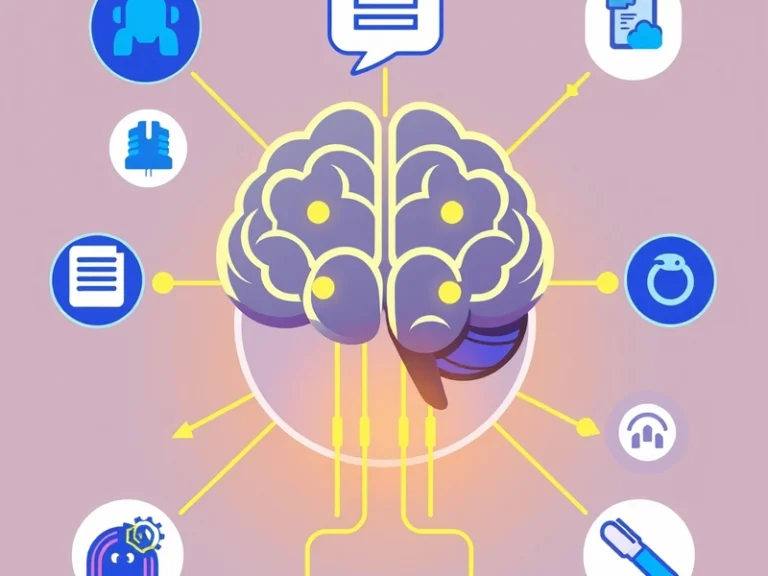
The ability to carry AI interactions and context seamlessly across different models is emerging as a crucial next step in making artificial intelligence truly integrated and intuitive for users. This concept, often termed “portable AI memory,” addresses a fundamental limitation in current AI systems: their inherent statelessness and siloed nature.
Today’s AI models, from large language models like OpenAI’s GPT series and Anthropic’s Claude to specialized AI agents, largely operate in isolation. Each interaction often begins with a blank slate, requiring users to repeatedly provide context, preferences, and background information that they may have already shared with a different AI, or even the same AI in a previous session. This fragmentation leads to inefficient workflows, repetitive inputs, and a fragmented user experience that hinders the development of truly personalized and long-term AI relationships.
The Need for Contextual Persistence
Imagine a scenario where you’re planning a trip. You might start by asking one AI about flight options, then switch to another for hotel recommendations, and perhaps a third for local attractions. Without portable memory, each AI system would require you to re-explain your destination, travel dates, budget, and preferences. A portable AI memory system aims to solve this by providing a persistent, user-centric knowledge base that can be accessed and updated by various AI models.
Such a system would fundamentally change how users interact with AI by offering:
- Seamless Handoffs: Enabling a user to transition from one AI service to another (e.g., from a creative writing AI to a coding assistant) without losing the thread of their ongoing project or conversation.
- Deep Personalization: Over time, the memory system would accumulate a rich understanding of the user’s communication style, preferred formats, factual knowledge, and personal interests, allowing any integrated AI to deliver more relevant and tailored responses.
- Reduced Repetition: Eliminating the need for users to reiterate information, saving time and cognitive effort.
- Enhanced Agency: Giving users greater control over their AI interactions, with their personal context and history acting as a consistent anchor across the AI ecosystem.
Architectural Considerations for Portable AI Memory
Developing a truly portable AI memory system involves overcoming significant technical and conceptual challenges. Key areas of focus include:
- Model-Agnostic Representation: The memory needs to be stored in a format that is not tied to any specific AI model’s internal architecture or training data. This often involves structured data, semantic embeddings (vector representations), and knowledge graphs that capture relationships between concepts, rather than just raw text.
- Contextual Retrieval: Efficiently identifying and retrieving the most relevant pieces of memory for a given AI query or interaction. This relies on advanced retrieval-augmented generation (RAG) techniques and sophisticated indexing.
- Privacy and Security: Personal data and interaction history are highly sensitive. Any portable memory solution must incorporate robust encryption, granular access controls, and transparent data governance policies, putting the user firmly in control of what information is stored, shared, and with whom.
- Integration Standards: For widespread adoption, AI memory systems would benefit from standardized APIs and protocols that allow different AI models and services to easily read from and write to the memory store. This is similar to how various applications integrate with cloud storage or identity providers.
- Memory Management: Deciding what information to retain, how to summarize long interactions, and when to “forget” irrelevant or outdated data. This requires intelligent prioritization and compression mechanisms to prevent memory bloat and maintain relevance.
The underlying infrastructure for such systems often leverages vector databases, which are adept at storing and retrieving high-dimensional embeddings that represent the semantic meaning of data. When an AI model needs context, it can query the vector database with the current conversation’s embedding, retrieving similar past interactions or relevant facts.
The Broader Impact
The emergence of effective portable AI memory would represent a significant leap forward in AI usability and intelligence. It would pave the way for more sophisticated, long-running AI assistants that truly understand and anticipate user needs, moving beyond transactional interactions to more collaborative and continuous relationships. This would not only enhance individual productivity but also foster greater trust and reliance on AI as a personal cognitive extension.
While the technical hurdles are considerable, the demand for such a capability is clear. As AI becomes more ubiquitous and integrated into daily life, the ability to maintain a consistent, personalized context across the multitude of available models will be a defining characteristic of next-generation AI experiences.