

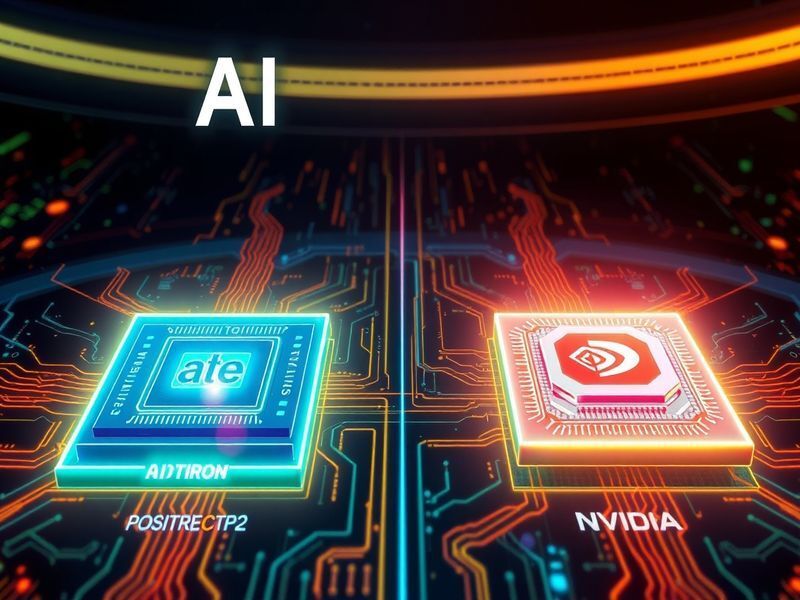
Positron’s Challenge to Nvidia in AI Inference
The AI chip market has long been dominated by a few key players, with Nvidia being one of the most recognized names. However, a new contender has emerged: Positron. This innovative company claims to deliver high performance in AI inference with significantly lower power consumption, potentially disrupting the current landscape. In this article, we will explore Positron’s technology, the implications for the industry, and what the future may hold for AI chip development.
Understanding Positron’s Technology
Positron’s approach centers around a few core innovations that set it apart from existing solutions. At the heart of their chips lies a unique architecture specifically tailored for AI workloads, which allows for optimized data processing.
- Custom Chip Design: Positron utilizes a custom chip design that focuses on parallel processing capabilities, enabling it to handle multiple tasks simultaneously with ease.
- Energy Efficiency: Their chips are engineered to minimize power consumption without sacrificing performance, a critical factor for large-scale AI deployments.
- Scalability: Positron’s architecture is designed to scale effectively, making it suitable for both small and large enterprises.
These innovations suggest that Positron may not only compete with Nvidia but could also redefine performance expectations in the AI inference market.
Industry Implications
The introduction of a new player like Positron could lead to significant shifts in the AI chip industry. Here are some potential implications:
- Increased Competition: The emergence of Positron may drive competitors, including Nvidia, to innovate faster and offer more cost-effective solutions to maintain their market share.
- Cost Reduction: As more companies enter the space, we can expect a decrease in pricing for AI chips, benefiting developers and organizations that rely on these technologies.
- Focus on Sustainability: Positron’s emphasis on energy efficiency could push other players to prioritize sustainability, aligning with global energy goals and reducing environmental impact.
Practical Insights for Businesses
For businesses looking to adopt AI technologies, the emergence of Positron offers several practical insights:
- Evaluate Your Needs: Before committing to a specific AI chip, companies should assess their performance requirements and power consumption needs.
- Consider Long-term Costs: While upfront costs are important, the energy efficiency of a chip can lead to significant savings over time.
- Stay Informed: Keeping abreast of developments in the AI chip market will help businesses make informed decisions and leverage the best technologies available.
Future Possibilities
Looking ahead, Positron’s challenge to Nvidia could pave the way for a more dynamic and innovative AI chip market. Here are some future possibilities:
- Expanded Applications: With more efficient chips, AI applications could expand into areas previously deemed impractical due to cost or energy constraints, such as in smaller devices or remote locations.
- Collaborative Ecosystems: As companies like Positron emerge, we may see new partnerships and ecosystems develop, fostering innovation through collaboration rather than competition.
- AI Democratization: Enhanced performance and reduced costs could democratize access to AI technology, allowing smaller businesses and startups to harness AI capabilities.
In conclusion, Positron’s entry into the AI chip market represents a significant challenge to established players like Nvidia. By focusing on high performance and low power consumption, Positron not only enhances its competitive edge but also encourages innovation and sustainability across the industry. As the landscape evolves, businesses must stay informed and agile to adapt to these changes and leverage new technologies effectively.