

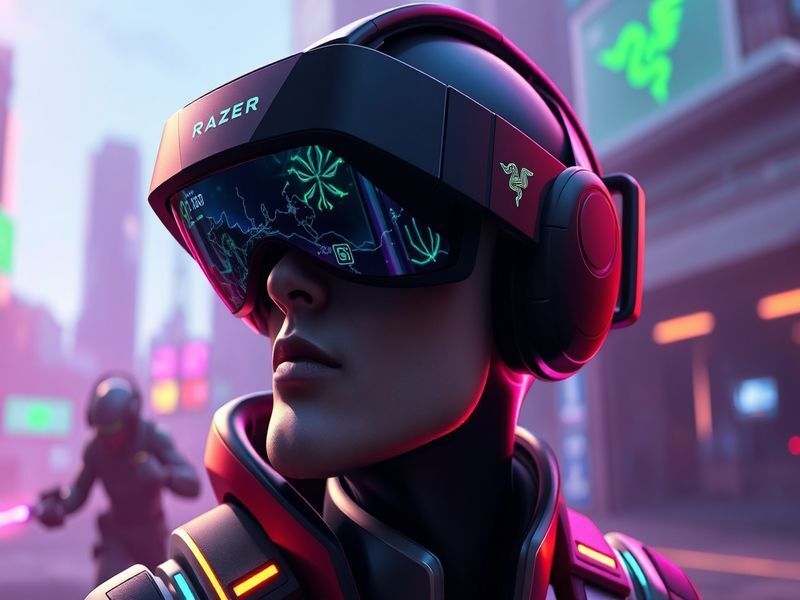
Razer’s Project Motoko: The Future of AI Glasses?
Razer, a leading innovator in gaming hardware, has unveiled an ambitious project that could redefine how we interact with technology: Project Motoko. This AI headset promises not only to enhance gaming experiences but also to integrate seamlessly into everyday life, leveraging artificial intelligence in unprecedented ways. In this article, we will explore the innovative features of Project Motoko, its potential applications, and the broader implications for the tech industry.
Understanding Project Motoko
At its core, Project Motoko is designed as an AI-powered headset that combines augmented reality (AR) with advanced machine learning capabilities. This revolutionary device aims to create an immersive experience that extends beyond traditional gaming, tapping into various sectors such as education, health, and professional training.
- Augmented Reality: The headset integrates AR, enabling users to interact with digital elements in real-world settings.
- AI Integration: Equipped with advanced algorithms, the headset can learn user preferences and adapt to their needs.
- Ergonomic Design: Razer emphasizes comfort, ensuring that users can wear the device for extended periods without discomfort.
Key Features of Project Motoko
The innovative capabilities of Project Motoko stem from several key features:
- Real-time Language Translation: Utilizing natural language processing (NLP), the headset can translate spoken language in real-time, enhancing communication in multilingual environments.
- Gesture Recognition: The device can interpret user gestures, allowing for intuitive control of digital interfaces without the need for physical input devices.
- Contextual Awareness: By employing computer vision, the headset can recognize objects and provide relevant information, making it a valuable tool for education and training.
Potential Applications of Project Motoko
The versatility of Project Motoko positions it as a groundbreaking tool across various industries. Here are some potential applications:
- Education: Imagine students wearing Motoko headsets that overlay information on textbooks or enhance anatomy lessons with 3D models, making learning interactive and engaging.
- Healthcare: Surgeons could use the headset to visualize patient data during operations, improving accuracy and outcomes.
- Gaming: Razer’s core audience could experience games in entirely new dimensions, with virtual characters interacting within their physical space.
- Remote Collaboration: Professionals can conduct meetings with virtual avatars, making remote work more interactive and efficient.
Industry Implications
The introduction of Project Motoko could have significant implications for various industries:
- Competitive Edge: Companies adopting AR and AI technologies may gain a competitive advantage through enhanced productivity and innovation.
- Job Transformation: As AI and AR become mainstream, workforce training programs will need to evolve to prepare employees for new technologies.
- Consumer Behavior: Project Motoko may shift how consumers engage with brands, leading to more immersive marketing strategies.
Challenges Ahead
While the potential of Project Motoko is vast, there are several challenges that Razer and the industry must address:
- Privacy Concerns: With advanced AI capabilities, there are valid concerns regarding data privacy and user surveillance.
- Technical Limitations: Developing reliable gesture recognition and contextual awareness technologies is complex and requires substantial refinement.
- Market Adoption: Convincing consumers and businesses to invest in new AR technologies will require clear value propositions and effective marketing.
Future Possibilities
The future of Project Motoko and similar technologies could unfold in several exciting directions:
- Enhanced Personalization: As AI continues to advance, we may see headsets that adapt in real-time to individual user needs and preferences.
- Integration with IoT: Project Motoko could become a central hub for controlling smart devices, making homes and offices more interconnected.
- Expansion into New Markets: Beyond gaming and education, industries such as tourism and retail could benefit from immersive experiences powered by AI.
In conclusion, Razer’s Project Motoko represents a pivotal moment in the intersection of AI, augmented reality, and user experience. As we stand on the brink of a new technological era, the possibilities seem limitless. With its innovative features and potential applications across industries, Project Motoko could very well shape the future of how we interact with the digital world.