

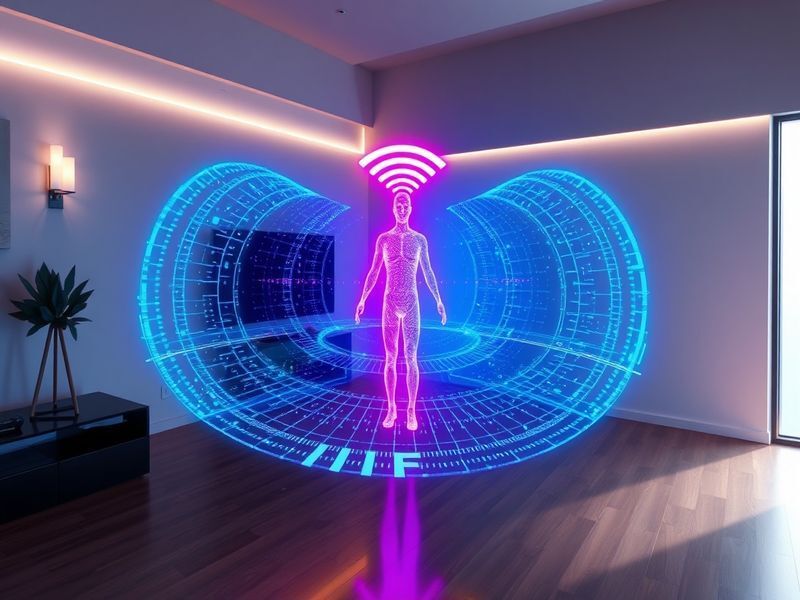
Revolutionizing Body Tracking with AI: How WiFi Technology Can Monitor Body Movements Through Walls Without Cameras or Wearables
The rapid advancement of artificial intelligence (AI) and machine learning (ML) technologies is reshaping how we interact with our environment. One of the most exciting developments in this realm is the use of WiFi signals to track body movements through walls, eliminating the need for traditional cameras or wearables. This innovative approach not only enhances privacy but also opens a plethora of possibilities across various industries.
Understanding the Technology
At the core of this technology is the ability of AI algorithms to analyze WiFi signals. When a person moves within the range of WiFi, their body interferes with the signal, causing it to reflect and refract in unique patterns. AI systems can interpret these patterns to discern movements, gestures, and even the number of people present in a room.
Here’s how it generally works:
- Signal Transmission: WiFi routers emit radio signals that bounce off objects, including human bodies.
- Data Collection: The reflections of these signals are captured by the router.
- Signal Processing: AI algorithms process the data to identify movement patterns.
- Movement Recognition: The system translates these patterns into actionable insights, such as tracking movement or detecting falls.
Practical Insights
This technology presents several practical applications that can significantly impact various sectors:
- Healthcare: Hospitals can monitor patient movements to prevent falls and ensure safety without intrusive wearables.
- Smart Homes: Home automation systems can use movement detection to enhance security and energy efficiency.
- Retail: Stores can analyze customer movements to optimize layouts and improve customer experiences.
- Fitness: Gyms can track attendance and engagement levels without requiring members to wear devices.
Industry Implications
The implications of using WiFi technology for body tracking are vast and far-reaching. Here are several ways this innovation could reshape industries:
- Privacy Concerns: Traditional cameras raise significant privacy issues. This technology can provide a more discreet alternative, as it does not capture visual images.
- Cost-Effectiveness: Businesses can leverage existing WiFi infrastructure rather than investing in expensive camera systems.
- Enhanced Analytics: The data gathered can provide insights into user behavior that were previously unavailable, enabling data-driven decisions.
Future Possibilities
The future of this technology is bright, with numerous possibilities on the horizon:
- Integration with Smart Devices: Imagine a world where your home can adjust lighting and temperature based on your movement patterns, creating a more personalized environment.
- Advanced Security Systems: AI could learn normal movement patterns within a space and detect anomalies, alerting homeowners of potential intrusions.
- Enhanced Accessibility: This technology could be used to assist individuals with disabilities, providing tailored solutions for navigation and safety.
Moreover, as AI algorithms continue to evolve, we can expect improvements in accuracy and sensitivity, allowing for more nuanced interpretations of movement data. The integration of this technology with other AI-driven innovations, such as natural language processing and robotics, could lead to even more groundbreaking applications.
Challenges and Considerations
Despite its potential, this technology does face challenges that need addressing:
- Data Security: Ensuring that the data collected is secure and used responsibly will be paramount to gaining public trust.
- Regulatory Compliance: Adhering to privacy laws and regulations is crucial as this technology becomes more widespread.
- Technical Limitations: The effectiveness of this system can be influenced by environmental factors, such as the presence of multiple walls or interference from other electronic devices.
In conclusion, the ability to track body movements through WiFi technology represents a significant leap forward in how we can monitor and interact with our environments. As this technology matures, it holds the promise of transforming industries while addressing privacy and cost concerns. The future is indeed bright for AI-driven body tracking solutions.