

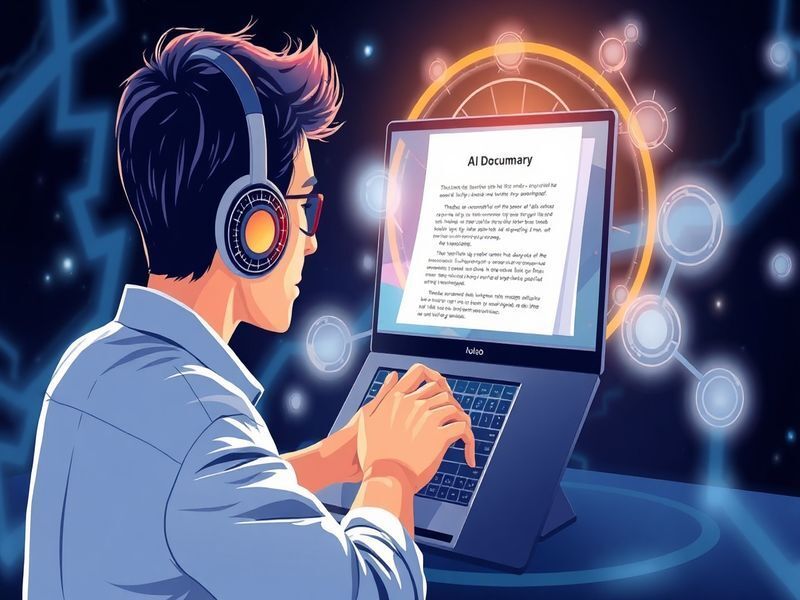
Revolutionizing Document Review: Audio Summaries in Google Docs
In the fast-paced world of document management, professionals often find themselves inundated with lengthy reports, proposals, and research papers. The challenge lies not just in reading these documents, but in extracting key insights efficiently. Enter AI-powered audio summaries—a breakthrough innovation that can enhance productivity and comprehension in document management.
The Rise of AI in Document Management
Artificial intelligence has been transforming various industries, and document management is no exception. Traditional methods of reviewing documents can be time-consuming and prone to oversight. AI technologies, especially those focused on natural language processing (NLP), have emerged to streamline this process.
AI can analyze text, summarize content, and even generate audio versions, allowing users to consume information while multitasking. This is where audio summaries come into play, particularly in platforms like Google Docs.
How AI-Powered Audio Summaries Work
AI-driven audio summaries utilize advanced algorithms to process text and convert key information into spoken content. Here’s how it generally works:
- Text Analysis: The AI scans the document to identify critical points, themes, and arguments.
- Summarization: Using NLP techniques, the AI synthesizes the information into concise audio summaries.
- Audio Generation: The summarized text is transformed into audio using text-to-speech technology, providing a natural-sounding voice.
This process not only saves time but also allows users to engage with the material in a new way, catering to auditory learners and busy professionals alike.
Benefits of Audio Summaries
Implementing AI-powered audio summaries in Google Docs presents several advantages:
- Enhanced Comprehension: Listening to summaries can improve understanding as it engages different cognitive processes compared to reading.
- Multitasking Opportunities: Users can listen to summaries while commuting, exercising, or performing other tasks, making better use of their time.
- Accessibility: Audio summaries can assist individuals with visual impairments or reading difficulties, democratizing access to information.
- Time Efficiency: With audio summaries, professionals can quickly grasp essential insights without needing to read every word of a lengthy document.
Industry Implications
The integration of AI-powered audio summaries into document management systems could have significant implications across various industries:
- Legal Sector: Lawyers and paralegals often deal with extensive legal documents. Audio summaries could expedite case reviews and help in preparing arguments.
- Education: Students can benefit from audio summaries of textbooks or lecture notes, enhancing their learning experience.
- Corporate Environment: Executives can stay updated on reports and proposals without dedicating extensive time to reading, allowing for more informed decision-making.
- Healthcare: Medical professionals can listen to summaries of research papers or patient reports, improving their ability to stay current in a rapidly evolving field.
Future Possibilities
As AI technology continues to evolve, the potential for audio summaries in document management is vast:
- Personalized Summaries: Future AI systems could tailor summaries based on individual user preferences, highlighting information that aligns with their interests or roles.
- Interactive Features: Incorporating interactive elements, such as the ability to ask questions about the summary, could enhance engagement and comprehension.
- Integration with Other Technologies: Combining audio summaries with virtual assistants could facilitate seamless document reviews during meetings or brainstorming sessions.
- Translation Capabilities: Audio summaries could be generated in multiple languages, making documents accessible to a global audience.
Conclusion
AI-powered audio summaries represent a significant leap forward in document management, enhancing productivity and comprehension. By enabling users to absorb information quickly and efficiently, these innovations cater to the needs of modern professionals navigating an increasingly complex information landscape. As we look to the future, the potential applications of this technology are limitless, promising to transform how we interact with documents for years to come.