Revolutionizing Image Quality: How Clarity AI Upscales Photos
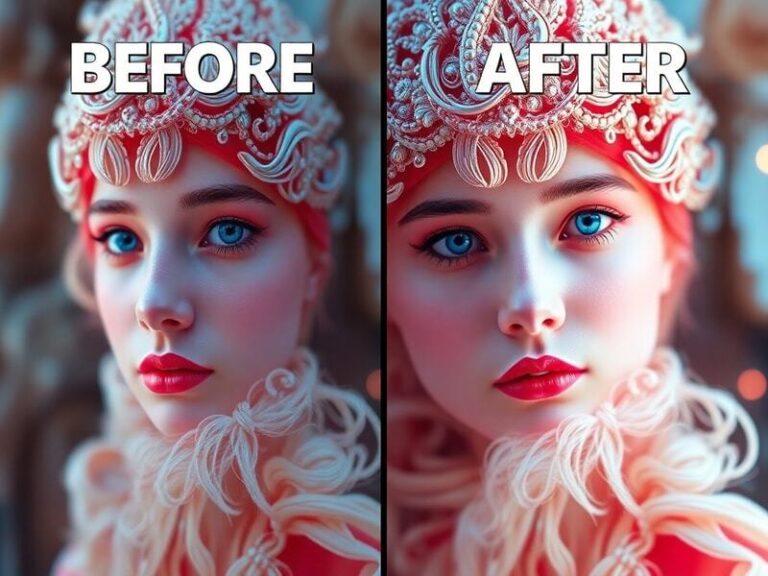
In a world where visual content dominates communication, the quality of images plays a pivotal role in engaging audiences. Enter Clarity AI, a groundbreaking technology that leverages artificial intelligence to enhance low-resolution images by reconstructing missing details. This innovative approach not only improves the visual appeal of photographs but also holds significant implications for various industries, from media to e-commerce. In this article, we will explore the technology behind Clarity AI, its practical applications, and what the future may hold for image enhancement.
The Technology Behind Clarity AI
Clarity AI utilizes advanced machine learning techniques to analyze and enhance images. At its core, the technology employs a convolutional neural network (CNN), which is designed to process pixel data and learn intricate patterns within images. Here’s how Clarity AI effectively upscales photos:
- Training Data: Clarity AI is trained on a vast dataset of high-resolution images paired with their low-resolution counterparts. This data helps the model learn how to predict missing details.
- Feature Extraction: When a low-resolution image is input, the AI extracts features such as edges, textures, and colors to understand the composition of the image.
- Detail Reconstruction: Using the learned features, Clarity AI reconstructs the missing details, effectively filling in gaps to produce a higher resolution image.
- Refinement: The final step involves fine-tuning the image to enhance clarity and reduce artifacts, ensuring a natural appearance.
Practical Insights and Applications
The implications of Clarity AI extend beyond merely enhancing personal photos. Here are some practical applications:
- Media Industry: News outlets and content creators can use Clarity AI to upscale archival images, ensuring that even older content meets modern quality standards.
- E-commerce: Businesses can enhance product images, allowing customers to zoom in on details without losing quality, thereby improving the online shopping experience.
- Gaming: Game developers can utilize Clarity AI to upscale textures and improve graphic fidelity without the need for extensive redesigns.
- Medical Imaging: In healthcare, the technology can assist in enhancing diagnostic images, potentially leading to better patient outcomes through clearer visibility of critical details.
Industry Implications
The rise of AI-driven image enhancement technologies like Clarity AI raises several industry implications:
- Cost Efficiency: By reducing the need for expensive equipment and extensive manual editing, businesses can save time and resources while still achieving high-quality images.
- Democratization of Quality: Access to advanced image enhancement tools allows smaller businesses and individuals to compete with larger organizations, leveling the playing field.
- Regulatory Considerations: As AI-generated images become more common, ethical concerns regarding authenticity and misinformation may arise, necessitating new regulations.
Future Possibilities
The future of image enhancement through AI is promising. Here are some potential developments we can anticipate:
- Integration with Other Technologies: Clarity AI may integrate with augmented reality (AR) and virtual reality (VR) platforms, enhancing user experiences by providing high-quality visuals in immersive environments.
- Real-Time Processing: Advances in computing power could enable real-time image enhancement, allowing users to see the improved quality instantly as they capture photos.
- Personalization: Future iterations of Clarity AI could learn user preferences, automatically adjusting enhancements to align with individual tastes.
- Cross-Industry Applications: As the technology matures, we can expect its adoption beyond current sectors, perhaps influencing fields like education, marketing, and even art.
Conclusion
Clarity AI is at the forefront of a technological revolution that enhances image quality through advanced AI techniques. By reconstructing missing details in low-resolution images, it not only improves visual appeal but also offers practical solutions across various industries. As the technology continues to evolve, the possibilities for image enhancement are boundless, paving the way for a future where high-quality visuals are accessible to all. As we embrace these innovations, it will be crucial to navigate the ethical considerations they bring, ensuring that we harness their potential responsibly.