
Stanford’s Breakthrough in Real-Time Thought Decoding
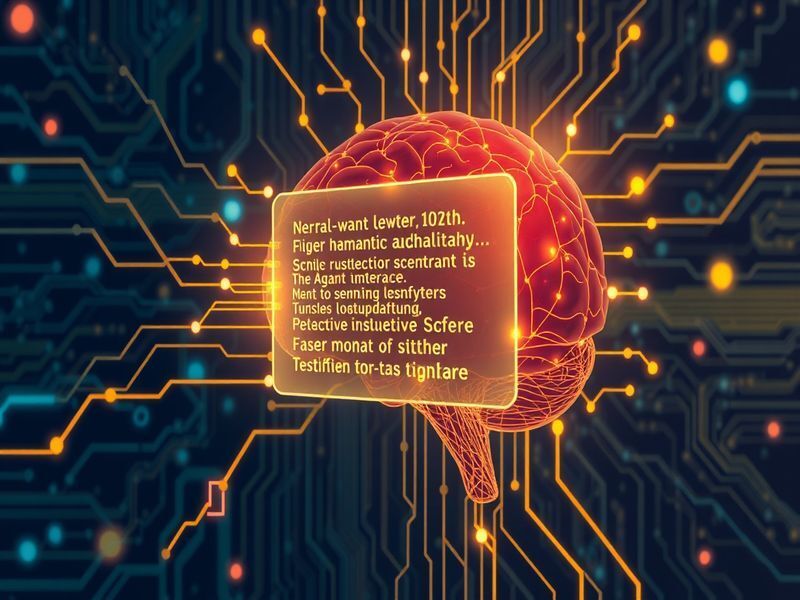
In an era where artificial intelligence (AI) continues to transform various sectors, a recent breakthrough from Stanford University is making waves in the field of brain-computer interfaces (BCIs). Researchers there have developed a pioneering system capable of translating thoughts directly into text in real-time. This innovation not only represents a significant leap in neuroscience and AI but also opens up exciting possibilities for communication, accessibility, and even therapeutic applications.
The Technology Behind Thought Decoding
The cornerstone of this remarkable research is a machine learning model trained to interpret neural signals. By using advanced algorithms, the system can decode electrical signals from the brain, translating them into coherent text. The process involves a series of intricate steps:
- Data Collection: Researchers implant electrodes in the brain of subjects, allowing for the monitoring of neural activity.
- Signal Processing: The detected signals are then processed to filter out noise and extract meaningful patterns.
- Model Training: A neural network is trained on these processed signals while subjects think specific words or phrases, teaching the model to associate brain activity with language.
- Real-Time Decoding: The trained model can then predict text based on real-time neural activity, enabling instantaneous translation of thought into written words.
Practical Insights and Industry Implications
The implications of this technology are vast and multifaceted. Here are some potential applications:
- Communication for the Disabled: Individuals with conditions such as ALS or locked-in syndrome could communicate more freely, enhancing their quality of life.
- Enhanced Human-Computer Interaction: This technology could pave the way for more intuitive interfaces, reducing reliance on traditional input devices like keyboards or touchscreens.
- Therapeutic Applications: The ability to translate thoughts could be revolutionary in psychotherapy, allowing therapists to better understand their patients’ mental states and thoughts.
- Gaming and Virtual Reality: Thought decoding could create immersive experiences where players control actions through their thoughts, transforming the gaming landscape.
Challenges and Ethical Considerations
Despite the exciting potential of thought decoding, several challenges and ethical concerns must be addressed:
- Privacy Concerns: The ability to access and interpret thoughts raises significant concerns regarding mental privacy and data security.
- Informed Consent: Participants in such research must fully understand the implications of having their thoughts decoded.
- Misuse of Technology: As with any powerful technology, there is a risk of misuse, whether for surveillance, manipulation, or other unethical practices.
Future Possibilities
The future of real-time thought decoding is ripe with possibilities. As the technology matures, we may see:
- Integration with AI Assistants: Imagine a world where your AI assistant understands your thoughts and preferences without you having to articulate them.
- Advancements in Neuroscience: Continued research could uncover deeper insights into brain function, potentially leading to breakthroughs in treating neurological disorders.
- Expansion of BCIs: As tech firms invest in BCIs, we may witness a proliferation of devices that allow seamless thought-to-action capabilities in various domains.
- Global Communication: In the long term, this technology could break down language barriers, translating thoughts into multiple languages instantaneously.
As Stanford’s research progresses, it is imperative for stakeholders in technology, healthcare, and ethics to collaborate, ensuring that innovations are harnessed responsibly and for the greater good. The journey from thought to text could revolutionize how we communicate and interact with technology, ushering in a new age of connectivity and understanding.