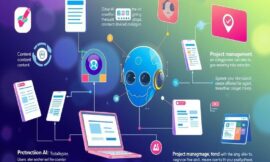


Meet Surfer-H: The Browser Agent That Finally Grows Up
Remember when “automation” meant a macro that clicked the same three buttons while you hovered nearby, ready to rescue it from a pop-up? Those days are quietly ending. A new class of AI-native browser agents—headlined by the just-released Surfer-H from startup MindWave Labs—can now plan, navigate, pay, and confirm entire multi-site workflows without a human in the loop. Want the cheapest nonstop from SFO to Lisbon departing after 3 pm, paid with the card that earns maximum points, and the boarding pass saved to both email and Google Drive? Type one sentence, walk away, and Surfer-H returns with a receipt. No babysitting, no broken XPath selectors, no CAPTCHA hand-offs.
Under the Hood: How Solo Mode Actually Works
Traditional robotic-process-automation (RPA) tools are brittle because they memorize brittle DOM paths. Surfer-H treats the web like a human does: visually and semantically.
Vision-first rendering
Instead of scraping HTML, Surfer-H spins up a headless Chromium instance, takes a screenshot every 300 ms, and feeds the image stream into a fine-tuned vision-language model (VLM) related to MindWave’s earlier open-weight Surfer-VLM-8B. The VLM outputs a structured “action graph”:
- Click “Accept cookies” if banner detected
- Type query in the search box with ARIA label “Where from?”
- Wait for price widget to stabilize before extracting fares
Self-healing memory
If Ryanair redesigns its seat-map SVG, Surfer-H falls back to optical-character recognition and on-screen geometry to locate “Continue.” A short-term episodic buffer stores successful action traces, so the next run starts with a warm cache of likely UI elements, cutting task time by 30–45 %.
Credential vault & wallet
Users preload once:
- Login cookies or passwords encrypted at rest (AES-256 in customer’s own AWS KMS)
- Payment instruments tokenized via PCI-compliant partner
- Traveler profiles (TSA PreCheck, loyalty numbers, dietary prefs) stored as JSON-LD schemata
During a run Surfer-H decrypts only in-memory, never logs raw PAN or CVV, and wipes the browser profile on completion—meeting enterprise infosec checklists that earlier “browser bots” failed.
From Demo to Daily Driver: Early Use Cases
Corporate travel desk automation
Consulting boutique Graymatter trialed Surfer-H for 120 consultants. Average booking time dropped from 14 min human-handled to 3.2 min agent-handled, while policy compliance (preferred airlines, advance booking window) rose from 71 % to 98 % because the agent has no impulse to pick the flashy business-class fare.
E-commerce arbitrage
Amazon sellers use Surfer-H to monitor wholesale portals (Costco Business, Walmart) for inventory drops, add items to cart, checkout, and forward packing slips to 3PL centers—tasks that previously required offshore VAs working night shifts.
Academic systematic reviews
Researchers at Utrecht University let Surfer-H spider PubMed, export CSVs of abstracts, run them through an included embeddings filter, and deposit deduplicated Zotero libraries overnight. One PhD student reported saving 25 hours per review cycle.
Industry Ripple Effects
Re-shoring the “digital assembly line”
Every Fortune 500 has shadow headcount in Manila or Prague clicking through SaaS dashboards. Solo agents convert those opex lines into predictable, metered software subscriptions, accelerating the same “robotics ate my back office” narrative that physical manufacturing saw a decade ago.
New attack surface, new insurance products
Agents that can spend money create novel fraud vectors. Insurtech Coalition already offers “Autonomous Agent Theft” riders, while MindWave provides $1 M fidelity coverage and SOC 2 Type II reports to calm CISO nerves.
Web UX at inflection point
When millions of agent eyes browse rather than human eyes, A/B tests optimized for conversion may backfire. A cloying interstitial that boosts human sign-ups could block agent parsing, effectively excluding an emerging channel. Expect new accessibility-style guidelines: “Agent-parseable” tags akin to alt-text for machines.
What Could Go Wrong? Ethereal But Real Risks
- Over-optimization: Airlines might train counter-models that detect and throttle agent traffic, saddling us with a never-ending cat-and-mouse tax.
- Data moats evaporate: If any user can scrape and compare prices friction-free, price discrimination engines lose signal, potentially raising baseline fares for everyone.
- Accountability gaps: When Surfer-H books a non-refundable ticket on the wrong date, who eats the change fee? Courts haven’t decided whether an AI is an “agent” in the legal sense.
Roadmap: From Solo to Society of Agents
MindWave’s Series A deck (leaked by Axios) hints at multi-agent “Surfer-Fleet” in late 2025. Picture one agent specializing in flights, another in ground transport, a third in restaurant reservations, negotiating among themselves until a complete itinerary converges on Pareto optimality. Add standardized negotiation protocols (think HTTP for bots), and the web becomes less a collection of pages than a bazaar of APIs-without-APIs.
Downstream, browser agents could evolve into personal “digital twins” that hold wallet, identity, reputation, even sentiment. A Surfer-H instance might impersonate your taste profile so accurately that a fashion site offers a private pre-sale, confident the agent will buy exactly your style at your price sensitivity. The economic upside—friction-free matching—must be balanced with fresh governance models: cryptographic provability, zero-knowledge proofs of personhood, and kill-switches that work faster than any runaway shopping spree.
Bottom Line for Tech Leaders
Solo browser agents aren’t a shiny parlor trick; they’re the first concrete step toward post-API software. Companies that expose capabilities only through brittle HTML may find themselves outrun by competitors who expose machine-friendly endpoints (or risk being scraped into margin oblivion). Start piloting now:
- Inventory which internal workflows still require human clicks
- Run a controlled Surfer-H experiment with anonymized credentials
- Track not just time saved but error rates, compliance drift, and downstream customer satisfaction
The ones who treat agents as a new customer segment—designing polite, predictable, rate-limited experiences—will surf the coming wave. The ones who ignore them may discover their entire margin arbitraged away by a server in Ohio running 10,000 headless browsers while they sleep.