

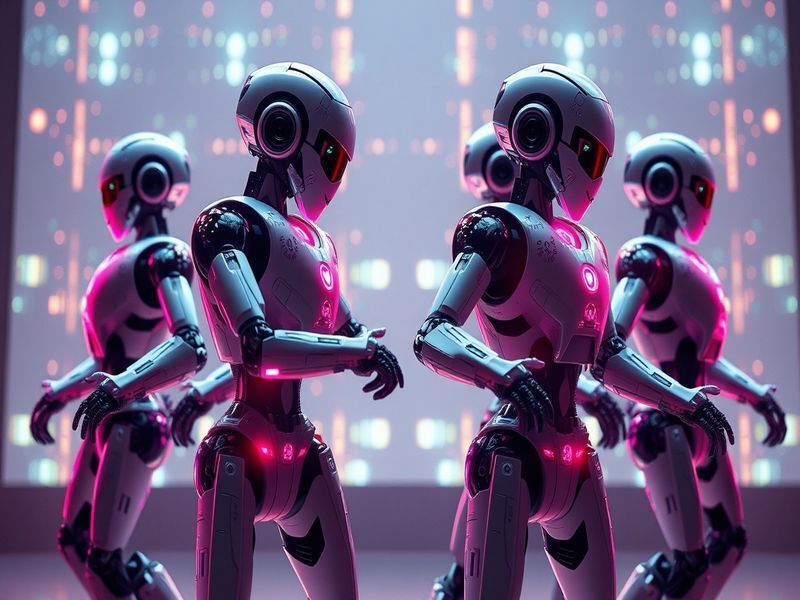
Synchronized Kung Fu Robots: The Future of Humanoid Robotics
As technology continues to advance at an unprecedented pace, the field of humanoid robotics is experiencing a renaissance, with innovators pushing the boundaries of what robots can achieve. A notable example of this advancement is showcased in Unitree’s G1 robots, which are captivating audiences and experts alike with their synchronized movements reminiscent of martial arts. This article delves into the significant strides made in humanoid robotics, particularly through the lens of AI, technology, and innovation.
Understanding Unitree’s G1 Robots
Unitree Robotics, a Chinese company founded in 2017, has quickly established itself as a leader in the development of agile and dynamic quadruped robots. The G1 model is a remarkable demonstration of their engineering prowess, featuring:
- Advanced Mobility: The G1 robots are designed to mimic human movements with high precision, enabling them to navigate complex terrains seamlessly.
- Synchronized Motion: Utilizing AI algorithms, these robots can perform synchronized movements, showcasing their potential in collaborative environments.
- Robust AI Integration: Equipped with sophisticated AI, G1 robots can learn from their surroundings, adapting their movements and strategies in real time.
AI and Machine Learning in Robotics
The integration of AI and machine learning in robotics has opened new frontiers in their capabilities. For the G1 robots, AI plays a crucial role in several areas:
- Real-Time Learning: G1 robots can analyze their environment and modify their actions based on feedback, enhancing their performance over time.
- Obstacle Avoidance: Through computer vision and sensor data, these robots can detect and navigate around obstacles, mimicking the agility of a human martial artist.
- Pattern Recognition: The use of deep learning algorithms allows the robots to recognize and replicate complex movement patterns, making synchronized performances possible.
The Practical Implications of Humanoid Robotics
The advancements represented by Unitree’s G1 robots have far-reaching implications across various industries:
- Entertainment: The ability to perform synchronized martial arts opens new avenues in entertainment, with potential applications in live performances and films.
- Sports Training: These robots could be used in training environments, providing athletes with practice partners that can simulate real opponents.
- Healthcare: In rehabilitation settings, humanoid robots may assist patients in physical therapy, offering personalized support and motivation.
- Security and Surveillance: Agile robots can navigate complex environments for security purposes, monitoring areas with efficiency and precision.
Future Possibilities in Humanoid Robotics
As technology evolves, the future of humanoid robotics appears promising. Here are some possibilities that may shape the next generation of robotics:
- Enhanced Interactivity: Future robots may feature improved natural language processing capabilities, allowing for more intuitive interactions with humans.
- Collaboration with Humans: Robots like the G1 could work alongside humans in various sectors, enhancing productivity and efficiency.
- Environmental Adaptability: Future advancements may enable robots to operate in diverse environments, from disaster zones to remote areas.
- Ethical Considerations: As humanoid robots become more integrated into society, discussions around ethics and the implications of AI will become increasingly important.
Conclusion
Unitree’s G1 robots exemplify the exciting advancements in humanoid robotics, driven by innovations in artificial intelligence and machine learning. As these technologies continue to mature, we can expect robots to become integral to our daily lives, transforming industries and enhancing human capabilities. The synchronized kung fu performances of the G1 robots not only entertain but also signify a leap toward more intelligent and adaptable machines, paving the way for a future where humans and robots collaborate harmoniously.