

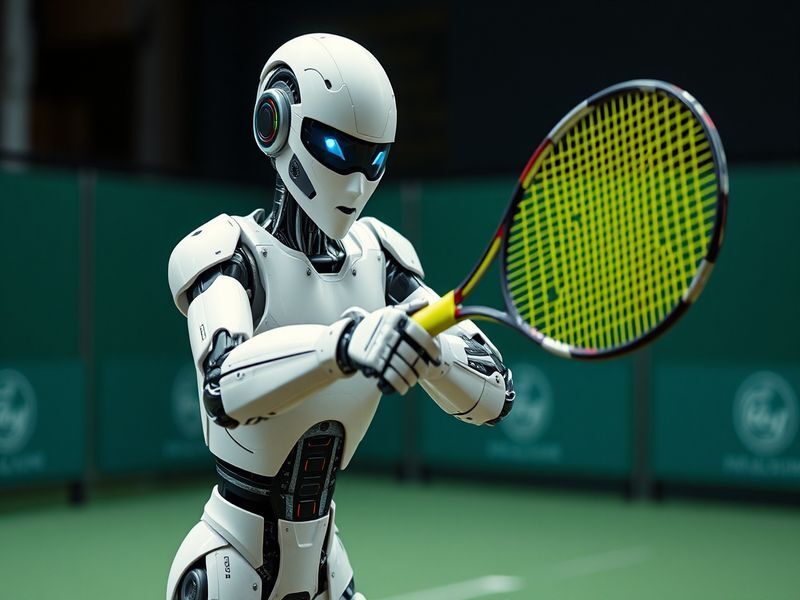
Teaching Robots with Imperfect Data: The Tennis Case Study
In the rapidly evolving world of artificial intelligence (AI) and robotics, one of the most challenging tasks is teaching machines to learn from imperfect data. A recent case study involving a humanoid robot trained to play tennis has shed light on how researchers are overcoming these obstacles. This article explores the innovative approaches taken in this project, the implications for the industry, and the future possibilities that arise from such advancements.
The Challenge of Imperfect Data
In real-world scenarios, data is rarely clean or perfectly labeled. Instead, it often comes with noise, inconsistencies, and a variety of other imperfections. For training a robot to play tennis, the researchers faced several challenges:
- Messy Footage: The training data consisted of video footage from various tennis matches, which included different camera angles, lighting conditions, and player styles.
- Variable Quality: The quality of the footage varied significantly, with some clips being grainy or poorly framed.
- Complex Movements: Tennis involves a wide range of dynamic movements that are difficult to capture accurately in any single piece of footage.
Innovative Approaches to Training
To tackle these challenges, the research team employed several innovative techniques:
- Data Augmentation: By artificially enhancing the training dataset, such as rotating or flipping images, the researchers were able to increase the diversity of the training input, helping the robot generalize better.
- Transfer Learning: They utilized pre-trained models that were already capable of recognizing human movements. This way, the robot could build upon existing knowledge rather than starting from scratch.
- Reinforcement Learning: The robot was trained using reinforcement learning algorithms that allowed it to learn through trial and error, adjusting its actions based on feedback.
Practical Insights from the Tennis Case Study
The research yielded several practical insights that can apply broadly across AI and robotics:
- Embracing Messy Data: The findings suggest that engineers and researchers should embrace the imperfections in data rather than attempt to clean it entirely. This approach can lead to more robust models capable of functioning in real-world conditions.
- Interdisciplinary Collaboration: The project highlighted the importance of collaboration across different fields, including computer vision, machine learning, and sports science, to achieve better outcomes.
- Enhanced Training Methods: The combination of data augmentation and reinforcement learning demonstrated that hybrid training methods can significantly improve a robot’s learning capabilities.
Industry Implications
The implications of this research extend beyond the realm of robotics and sports. As industries increasingly integrate AI into their operations, the ability to train systems on imperfect data could revolutionize various sectors:
- Manufacturing: Similar techniques can be applied to train robots in manufacturing settings where visual data may be inconsistent due to varying lighting or equipment setups.
- Healthcare: AI systems trained on imperfect medical data could assist in diagnostics and treatment plans, enhancing patient care.
- Autonomous Vehicles: Learning from messy real-world driving data can improve the safety and reliability of self-driving cars.
Future Possibilities
As researchers continue to refine their methods for training robots with imperfect data, the possibilities seem limitless:
- Improved Human-Robot Interaction: Robots that can learn from imperfect interactions with humans could become more adept at understanding and responding to human needs.
- Personalized Learning: Future systems could adapt to individual user behaviors, providing tailored experiences based on their unique preferences.
- Wider Adoption of AI: As methods for handling imperfect data improve, we may see wider adoption of AI technologies across various industries, leading to increased efficiency and innovation.
In conclusion, the tennis case study serves as a compelling example of how researchers are successfully navigating the complexities of training robots using imperfect data. By leveraging innovative techniques and embracing the messiness of real-world data, the industry can look forward to a future where intelligent machines are not only more capable but also more accessible to a variety of fields.