

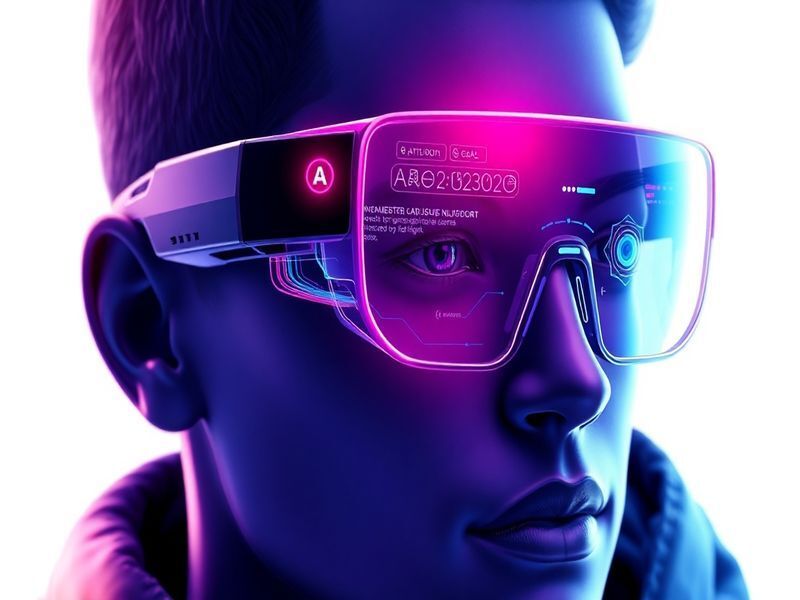
# The Evolution of AI Glasses: Aesthetic Meets Functionality
## Introduction
Artificial Intelligence (AI) is transforming the way we interact with technology, and one of the most exciting developments in this field is the evolution of AI glasses. These smart eyewear devices are no longer the clunky, futuristic gadgets they once were. Today, they blend seamlessly into everyday life, offering a perfect balance of aesthetics and functionality. In this article, we will explore the journey of AI glasses, their practical applications, industry implications, and the future possibilities they hold.
## The Journey of AI Glasses
### Early Beginnings
The concept of AI glasses has been around for decades, but early versions were far from practical. The most notable example is Google Glass, which was introduced in 2013. While it was a groundbreaking innovation, it faced criticism for its bulky design and limited functionality. The device was more of a prototype than a consumer product, and it failed to gain widespread acceptance.
### The Evolution
Over the years, technology has advanced significantly, leading to the development of more sophisticated and stylish AI glasses. Companies like Apple, Facebook, and several startups have invested heavily in this space, focusing on improving both the hardware and software aspects. Today, AI glasses are sleek, lightweight, and packed with features that make them indispensable for both personal and professional use.
## Practical Applications of AI Glasses
### Everyday Life
AI glasses have become an integral part of everyday life, offering a range of functionalities that enhance user experience. Some of the key applications include:
- Augmented Reality (AR): AI glasses overlay digital information onto the real world, providing users with real-time data and navigation assistance.
- Voice Assistance: Integrated voice assistants allow users to perform tasks hands-free, such as sending messages, setting reminders, and making calls.
- Health Monitoring: Advanced sensors in AI glasses can monitor vital signs, track fitness activities, and provide health insights.
- Language Translation: Real-time language translation features make communication easier for travelers and professionals working in multilingual environments.
### Professional Use
In the professional realm, AI glasses are revolutionizing various industries by improving efficiency and productivity. Some notable applications include:
- Medical Field: Surgeons use AI glasses to access patient data and medical records during procedures, enhancing precision and reducing errors.
- Manufacturing: Workers in manufacturing plants use AI glasses to receive real-time instructions and guidance, improving workflow and safety.
- Retail: Retailers employ AI glasses to provide personalized shopping experiences, offering product information and recommendations to customers.
- Education: Educators use AI glasses to create immersive learning experiences, making complex concepts more accessible and engaging.
## Industry Implications
### Market Growth
The AI glasses market is experiencing rapid growth, driven by increasing demand for smart wearables and advancements in AI technology. According to industry reports, the market is expected to reach billions of dollars in the coming years. This growth is fueled by the rising adoption of AI glasses in various industries, as well as the increasing consumer interest in smart wearables.
### Competitive Landscape
The competitive landscape of the AI glasses market is evolving, with several key players vying for market share. Companies like Apple, Facebook, and Google are investing heavily in research and development to create innovative AI glasses. Additionally, startups and niche players are introducing unique features and designs, catering to specific market segments.
### Ethical Considerations
As AI glasses become more prevalent, ethical considerations come to the forefront. Privacy concerns, data security, and the potential for misuse are critical issues that need to be addressed. Companies must ensure that AI glasses are designed with robust security measures and adhere to ethical guidelines to protect user data and maintain trust.
## Future Possibilities
### Technological Advancements
The future of AI glasses holds immense potential, with several technological advancements on the horizon. Some of the exciting possibilities include:
- Enhanced AR Experiences: Future AI glasses will offer more immersive AR experiences, blending digital and physical worlds seamlessly.
- Advanced Sensors: Integration of advanced sensors will enable AI glasses to monitor a wider range of health metrics and environmental factors.
- Improved Battery Life: Innovations in battery technology will extend the usage time of AI glasses, making them more convenient for users.
- Customizable Designs: AI glasses will become more customizable, allowing users to personalize their devices according to their preferences and style.
### Integration with Other Technologies
AI glasses are expected to integrate with other emerging technologies, creating a more connected and intelligent ecosystem. Some of the key integrations include:
- Internet of Things (IoT): AI glasses will connect with IoT devices, enabling users to control smart home appliances and other connected devices.
- 5G Networks: The rollout of 5G networks will enhance the performance of AI glasses, providing faster data transfer and real-time processing.
- Blockchain: Integration with blockchain technology will ensure secure and transparent data management, protecting user privacy.
## Conclusion
The evolution of AI glasses represents a significant milestone in the field of AI and technology. From their early beginnings to the sophisticated devices of today, AI glasses have come a long way. They offer a perfect blend of aesthetics and functionality, making them an essential part of everyday life and various industries. As technology continues to advance, the future possibilities for AI glasses are endless, promising a more connected and intelligent world.
—