The First Data Center in Space: A New Frontier for AI and Computing
As humanity pushes the boundaries of technology, the concept of a data center in space is no longer confined to the realm of science fiction. With advancements in satellite technology and an increasing demand for data processing capabilities, the idea of orbital compute clusters is set to revolutionize how we handle data processing and satellite communication. This article explores the implications of this cutting-edge innovation, focusing on its potential impact on artificial intelligence (AI), technology, and the future of computing.
Understanding Orbital Compute Clusters
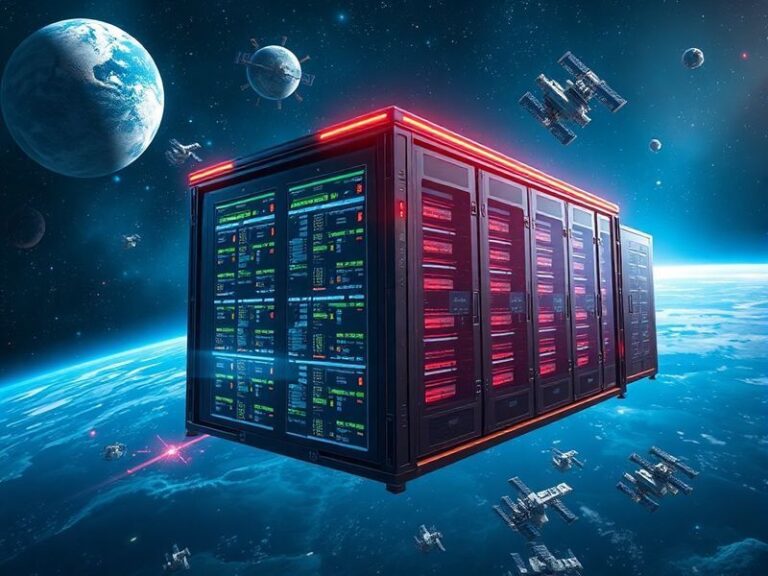
Orbital compute clusters refer to networks of interconnected computing resources stationed in low Earth orbit (LEO). These clusters are designed to perform high-performance computing tasks, providing a new layer of processing power that can be leveraged for various applications, especially in the fields of AI and machine learning.
Some of the key advantages of deploying data centers in space include:
- Reduced Latency: By positioning data centers closer to satellites and other space assets, latency can be significantly minimized, enabling real-time data processing.
- Scalability: Space-based compute clusters can be expanded more easily than traditional on-ground data centers, allowing for the addition of new resources as demands grow.
- Energy Efficiency: Solar energy can be harnessed more effectively in space, leading to lower energy costs compared to terrestrial data centers.
- Global Coverage: These systems can offer worldwide connectivity without the limitations imposed by terrestrial infrastructure.
Practical Insights and Industry Implications
The advent of space-based data centers presents numerous practical insights for industries reliant on massive amounts of data. Here are a few areas where orbital compute clusters could have significant impacts:
- Aerospace and Defense: The ability to process satellite imagery and data in real-time can enhance surveillance, reconnaissance, and disaster response capabilities.
- Telecommunications: Enhanced data processing can improve satellite communications, leading to more reliable connections and faster data transfer rates for users on Earth.
- Environmental Monitoring: With advanced computing power, monitoring climate change and natural disasters becomes more feasible, allowing for predictive analytics that can save lives.
- Research and Development: Scientific research that requires large datasets, such as genomics or astrophysics, can benefit from the high processing power available in orbit.
Revolutionizing AI Applications
Artificial intelligence stands to benefit immensely from the deployment of data centers in space. Here’s how:
- Enhanced Machine Learning Models: The cloud-based infrastructure can facilitate the training of complex AI models with large datasets, improving accuracy and performance.
- Real-Time Data Processing: AI applications that require real-time analysis, such as autonomous vehicles or smart cities, can perform more efficiently with reduced latency.
- Edge Computing: By processing data closer to the source (i.e., satellites), space-based data centers can enable edge computing, which reduces the load on terrestrial networks.
Future Possibilities and Challenges
While the potential of orbital compute clusters is immense, several challenges must be addressed to fully realize their capabilities:
- Cost and Investment: The initial costs associated with launching and maintaining data centers in space can be prohibitively high, necessitating substantial investment and collaboration between public and private sectors.
- Regulatory Hurdles: Navigating the regulatory landscape for satellite communications and space-based operations can be complex, requiring international cooperation.
- Technological Innovations: Continued advancements in satellite technology, including miniaturization and improved communication protocols, are essential for making space-based data centers viable.
- Security Concerns: Protecting sensitive data in space from cyber threats and ensuring the integrity of communications will be critical as these technologies evolve.
Conclusion
The establishment of the first data center in space signifies a monumental step in the evolution of computing and artificial intelligence. As we explore the infinite possibilities that this new frontier presents, it’s clear that orbital compute clusters will not only enhance our ability to process data but will also redefine the way we approach satellite communication and AI applications. The future of computing is not just terrestrial; it is celestial. With careful consideration of the challenges ahead, the industry stands ready to embrace this next frontier of technological advancement.