
The Hive Mind Concept: A New Era of AI Collaboration
In an age where technological advancements are accelerating at an unprecedented rate, the concept of the “Hive Mind” emerges as a compelling vision for the future of artificial intelligence (AI). This idea posits that interconnected AI agents can collaborate seamlessly, sharing knowledge and resources to enhance communication and productivity across various sectors. As we explore this innovative landscape, we will delve into the fundamental principles of the Hive Mind concept, practical insights, industry implications, and the future possibilities it holds for AI and society at large.
Understanding the Hive Mind Concept
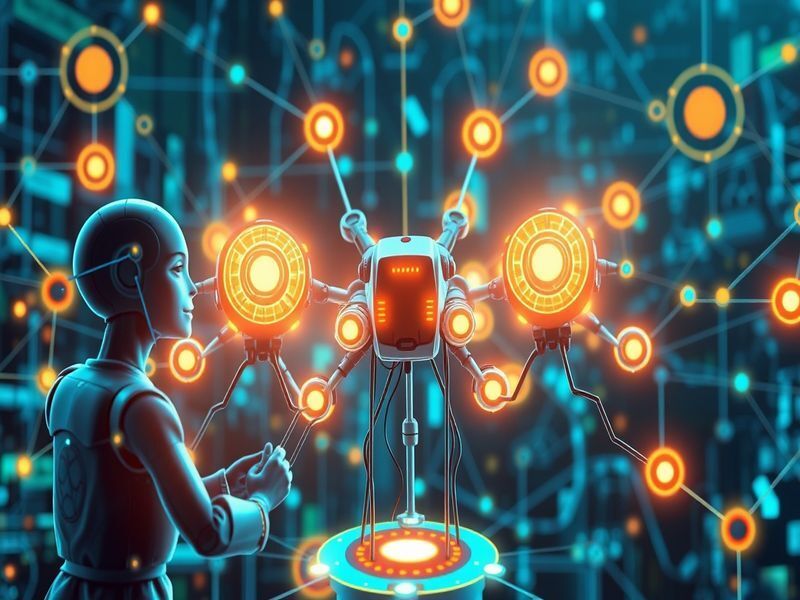
The Hive Mind concept draws inspiration from the collective intelligence observed in nature, particularly among social insects like bees, ants, and termites. These creatures work together in a highly organized manner to achieve complex tasks, demonstrating that collaboration can lead to greater efficiency and problem-solving capabilities. Similarly, the Hive Mind in AI involves a network of autonomous agents that can communicate, learn, and adapt collectively.
At its core, the Hive Mind concept emphasizes the following key principles:
- Interconnectivity: AI agents are linked through advanced communication protocols, allowing them to share data and insights in real-time.
- Distributed Intelligence: Tasks and responsibilities are distributed among agents, enabling them to specialize in different areas while working towards a common goal.
- Continuous Learning: The collective nature of the Hive Mind allows agents to learn from each other, improving their performance as they adapt to new challenges.
Practical Insights: Implementing the Hive Mind in AI
To realize the potential of the Hive Mind concept, organizations can implement several strategies that enhance AI collaboration:
- Develop Open Communication Protocols: Establishing standardized communication protocols is essential for enabling AI agents to interact seamlessly. This includes adopting frameworks like RESTful APIs or messaging systems that facilitate data exchange.
- Encourage Modularity: Designing AI agents as modular components allows for easier integration and collaboration. By enabling agents to operate independently while contributing to a broader system, organizations can foster innovation and creativity.
- Implement Feedback Mechanisms: Create systems where AI agents can provide feedback to one another. This iterative learning process can significantly enhance overall performance and adaptability.
Industry Implications: Transforming Communication and Productivity
The implications of the Hive Mind concept extend across various industries, influencing how businesses operate, communicate, and innovate.
- Healthcare: In the medical field, interconnected AI agents could streamline patient care by analyzing vast amounts of data from diverse sources, leading to more accurate diagnoses and personalized treatments.
- Manufacturing: The Hive Mind can optimize production lines by coordinating machines and robots to improve efficiency, reduce downtime, and anticipate maintenance needs.
- Finance: AI agents can analyze market trends and share insights in real-time, facilitating better decision-making and risk management for investors and financial institutions.
Future Possibilities: A Vision for AI Collaboration
Looking ahead, the Hive Mind concept presents a plethora of exciting possibilities:
- Enhanced Creativity: By pooling knowledge and resources, AI agents could collaborate on creative projects—such as music composition or graphic design—leading to innovative outcomes that a single agent might not achieve alone.
- Smart Cities: In urban planning, interconnected AI agents could manage resources such as traffic, energy, and waste management, creating more efficient and sustainable living environments.
- Education: The Hive Mind can revolutionize learning by enabling AI tutors to share insights and adapt teaching methods based on collective student performance data.
As we continue to explore the possibilities of the Hive Mind concept, it is crucial to consider the ethical implications of such interconnected systems. Issues surrounding data privacy, decision-making transparency, and potential biases must be addressed to ensure that the benefits of AI collaboration are accessible and equitable for all.
In conclusion, the Hive Mind concept heralds a new era of AI collaboration that promises to revolutionize communication and productivity across industries. By fostering interconnectedness among AI agents, organizations can unlock unprecedented potential for innovation and problem-solving. As we embrace this transformative vision, the future of AI collaboration appears not only promising but also profoundly impactful on society as a whole.