
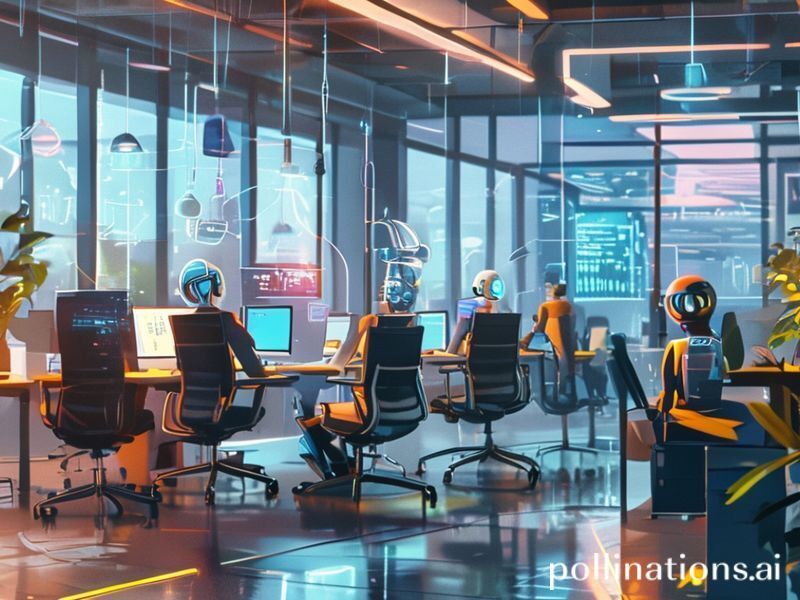
# The Impact of AI on Job Displacement: Understanding the Gradual and Often Unnoticed Replacement of Jobs by AI
## Introduction
Artificial Intelligence (AI) is revolutionizing industries at an unprecedented pace. While AI brings immense benefits, it also poses significant challenges, particularly in terms of job displacement. The gradual and often unnoticed replacement of jobs by AI is a phenomenon that demands our attention. This article explores the impact of AI on job displacement, providing practical insights, industry implications, and future possibilities.
## Understanding AI-Driven Job Displacement
### The Gradual Nature of Job Replacement
AI-driven job displacement is not an overnight phenomenon. It is a gradual process that often goes unnoticed until it reaches a critical point. This gradual nature makes it challenging for industries and workers to adapt quickly.
AI systems are designed to automate repetitive tasks, enhance efficiency, and reduce human error. As AI technologies advance, they increasingly take over roles that were once exclusively performed by humans. This shift can lead to significant job displacement in various sectors.
### The Unnoticed Impact
The unnoticed impact of AI on job displacement is particularly concerning. Many industries are slow to recognize the extent to which AI is replacing human labor. This lack of awareness can lead to inadequate preparation and adaptation strategies.
For example, in the manufacturing sector, AI-powered robots and automation systems have been gradually replacing human workers. While this transition has improved productivity and reduced costs, it has also led to job losses. The gradual nature of this shift means that many workers are caught off guard, struggling to find new opportunities in a rapidly changing job market.
## Industry Implications
### Manufacturing and Production
The manufacturing sector is one of the most affected by AI-driven job displacement. Automation and robotics have significantly reduced the need for human labor in assembly lines and production processes.
Companies are investing heavily in AI technologies to streamline operations and reduce costs. While this has led to increased efficiency and profitability, it has also resulted in job losses for many workers. The gradual nature of this transition means that workers have time to adapt, but they must be proactive in acquiring new skills to remain employable.
### Healthcare and Medicine
The healthcare industry is also experiencing the impact of AI. AI-powered diagnostic tools, robotic surgery, and virtual health assistants are becoming increasingly common. These technologies enhance patient care and reduce the workload on healthcare professionals.
However, the rise of AI in healthcare also poses challenges. While AI can assist in diagnosis and treatment, it cannot replace the human touch and empathy that are crucial in patient care. The gradual integration of AI in healthcare means that professionals must adapt to new technologies while maintaining their core skills.
### Finance and Banking
The finance and banking sectors are undergoing significant transformations due to AI. AI-powered algorithms are used for fraud detection, risk assessment, and customer service. These technologies enhance efficiency and accuracy, reducing the need for human intervention.
However, the gradual replacement of human workers by AI in these sectors poses challenges. Workers must adapt to new roles and acquire skills that complement AI technologies. The gradual nature of this transition provides an opportunity for workers to upskill and remain relevant in the job market.
## Practical Insights and Future Possibilities
### Upskilling and Reskilling
One of the most effective ways to mitigate the impact of AI-driven job displacement is through upskilling and reskilling. Workers must adapt to new technologies and acquire skills that complement AI systems.
Companies can invest in training programs that help employees develop the skills needed to work alongside AI technologies. Governments can also play a role by providing funding and resources for education and training initiatives. The gradual nature of AI adoption provides an opportunity for workers to prepare for the future.
### Embracing AI Collaboration
AI is not a replacement for human labor but a tool to enhance productivity and efficiency. Embracing AI collaboration can lead to new opportunities and innovative solutions.
Companies can leverage AI to augment human capabilities, creating new roles and responsibilities. For example, AI can assist in data analysis, freeing up human workers to focus on strategic decision-making and creative tasks. The gradual integration of AI in the workplace provides an opportunity for companies to explore new ways of working.
### Ethical Considerations
The ethical implications of AI-driven job displacement cannot be ignored. Companies must ensure that their AI systems are designed and implemented responsibly, with a focus on fairness and transparency.
Ethical considerations include ensuring that AI systems do not perpetuate biases and that job displacement is managed fairly. Companies must also consider the social and economic impact of AI on workers and communities. The gradual nature of AI adoption provides an opportunity for companies to address these ethical considerations proactively.
## Conclusion
The impact of AI on job displacement is a complex and multifaceted issue. While AI brings immense benefits, it also poses significant challenges. Understanding the gradual and often unnoticed replacement of jobs by AI is crucial for industries and workers to adapt effectively. By embracing AI collaboration, investing in upskilling and reskilling, and addressing ethical considerations, companies and workers can navigate the challenges of AI-driven job displacement and create a future where AI and humans work together harmoniously.
—