
# The Impact of AI on Job Roles and Employment: How AI is Reshaping the Future of Work
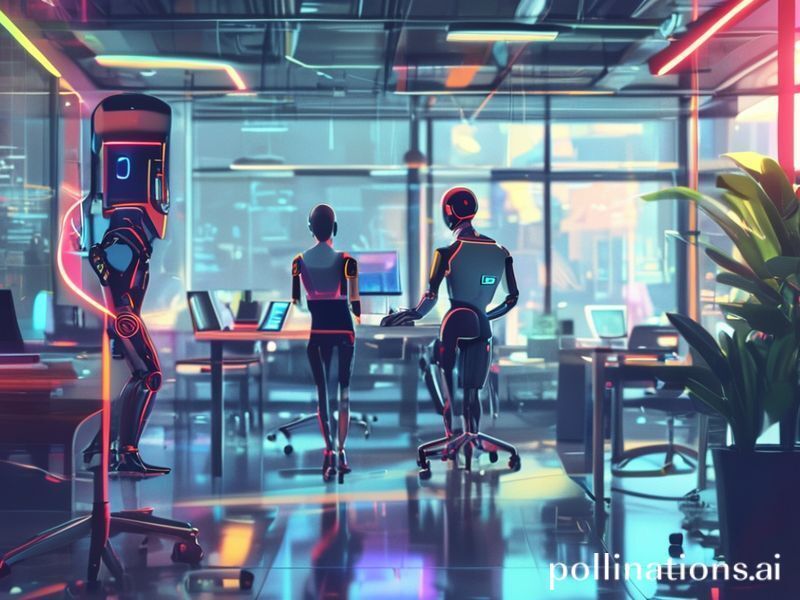
Artificial Intelligence (AI) is not just a buzzword; it’s a transformative force that is reshaping industries, job roles, and the very nature of work. As AI technologies continue to evolve, they are automating routine tasks, augmenting human capabilities, and creating new opportunities. This article explores the impact of AI on job roles and employment, providing practical insights, industry implications, and future possibilities.
## The Current Landscape of AI in the Workplace
### Automation of Routine Tasks
AI is particularly adept at automating repetitive and routine tasks. This includes data entry, customer service inquiries, and even some aspects of manufacturing. For example, chatbots powered by AI can handle customer service queries 24/7, freeing up human agents to focus on more complex issues.
### Augmentation of Human Capabilities
Beyond automation, AI is augmenting human capabilities. In healthcare, AI algorithms can assist doctors in diagnosing diseases more accurately and quickly. In finance, AI can analyze vast amounts of data to detect fraudulent transactions. These examples illustrate how AI is becoming a powerful tool that enhances human performance.
## Industry Implications
### Healthcare
In healthcare, AI is revolutionizing diagnostics, treatment plans, and patient care. AI-powered tools can analyze medical images, such as X-rays and MRIs, with remarkable accuracy. This not only speeds up the diagnostic process but also reduces the likelihood of human error.
### Finance
The finance industry is leveraging AI for fraud detection, risk management, and personalized financial advice. AI algorithms can analyze transaction patterns to detect fraudulent activities in real-time. Additionally, robo-advisors use AI to provide personalized investment advice based on individual risk profiles.
### Manufacturing
In manufacturing, AI is optimizing supply chains, predicting maintenance needs, and improving quality control. Predictive maintenance, for instance, uses AI to analyze data from sensors on machinery to predict when maintenance is required, reducing downtime and costs.
## Future Possibilities
### New Job Roles
While AI is automating some jobs, it is also creating new ones. Roles such as AI ethicists, data scientists, and AI trainers are emerging. These jobs require a combination of technical skills and domain expertise, highlighting the need for continuous learning and upskilling.
### Upskilling and Reskilling
As AI continues to reshape the job market, upskilling and reskilling will be crucial. Employees need to adapt to new technologies and acquire the skills necessary to work alongside AI. Companies are investing in training programs to help their workforce transition to new roles.
### Ethical Considerations
The rise of AI also brings ethical considerations. Issues such as job displacement, bias in AI algorithms, and data privacy need to be addressed. Companies must ensure that AI is used responsibly and ethically, balancing innovation with social responsibility.
## Practical Insights for Professionals
### Embrace Continuous Learning
Professionals should embrace continuous learning to stay relevant in an AI-driven job market. Online courses, certifications, and workshops can help individuals acquire new skills and stay ahead of the curve.
### Focus on Soft Skills
While technical skills are important, soft skills such as creativity, critical thinking, and emotional intelligence are becoming increasingly valuable. These skills are difficult to automate and are crucial for roles that require human interaction and decision-making.
### Collaborate with AI
Instead of viewing AI as a threat, professionals should see it as a tool that can enhance their work. Collaborating with AI can lead to increased productivity, better decision-making, and innovative solutions.
## Conclusion
The impact of AI on job roles and employment is profound and far-reaching. While AI is automating routine tasks, it is also creating new opportunities and augmenting human capabilities. Industries such as healthcare, finance, and manufacturing are already experiencing the benefits of AI. As we look to the future, continuous learning, ethical considerations, and collaboration with AI will be key to navigating the evolving job market.
—