
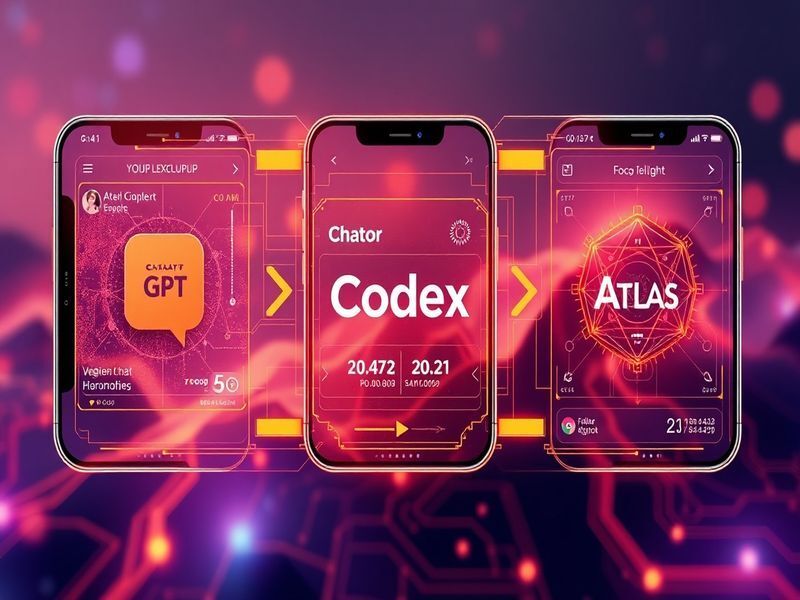
The Merging of ChatGPT, Codex, and Atlas into a Superapp
OpenAI’s recent decision to merge its flagship AI tools—ChatGPT, Codex, and Atlas—into a single application has sent ripples through the tech community. This “superapp” promises to streamline user interaction with AI, providing a more cohesive and powerful platform for developers, businesses, and individual users alike. In this article, we will explore the implications of this merger, its potential impacts on various industries, and what the future may hold for this integrative approach.
The Components of the Superapp
Before diving into the implications of this merger, it’s essential to understand what each of these tools brings to the table:
- ChatGPT: An advanced conversational AI model designed for natural language understanding and generation, capable of engaging in human-like dialogue.
- Codex: A specialized AI tool that translates natural language into code, simplifying the software development process for programmers.
- Atlas: A powerful visual-based AI tool that facilitates the manipulation of data and images, enhancing creative and analytical tasks.
The Implications of Merging AI Tools
The combination of these three distinct tools into a superapp has several implications:
- Enhanced User Experience: By integrating ChatGPT’s conversational abilities with Codex’s coding prowess and Atlas’s data visualization, users can expect a more seamless and intuitive experience. This could reduce the learning curve for new users and enhance productivity for seasoned professionals.
- Improved Collaboration: The superapp allows developers and non-developers to work together more effectively. For instance, a designer could communicate their needs in natural language, and Codex could translate those needs into functional code, all while Atlas provides visual feedback on the project’s progress.
- Streamlined Development Processes: By merging these tools, OpenAI aims to create a one-stop-shop for various tasks ranging from coding to data analysis. This could significantly reduce the time and effort required to switch between applications, thus speeding up project completion.
- Broader Accessibility: The superapp could democratize access to advanced AI capabilities, allowing users without extensive technical knowledge to harness the power of AI in their projects.
Industry Implications
The merging of these AI tools is likely to impact several industries, including:
- Software Development: Developers can anticipate less time spent on repetitive coding tasks, as Codex will facilitate the writing and debugging of code more efficiently.
- Education: The superapp could revolutionize online learning by providing interactive tutoring experiences through ChatGPT, while Codex helps students learn coding in a hands-on manner.
- Marketing and Advertising: Marketers can use the visual capabilities of Atlas to create compelling campaigns, while ChatGPT can generate engaging content tailored to target audiences.
- Data Science: Analysts can leverage the combined powers of Codex and Atlas to streamline data manipulation and visualization, making it easier to derive insights from complex datasets.
Future Possibilities
Looking ahead, the merger of ChatGPT, Codex, and Atlas into a superapp opens up exciting possibilities:
- Continual Learning: The superapp could incorporate continual learning mechanisms, allowing it to adapt and improve based on user interactions and feedback.
- Integration with Other Technologies: Future versions of the superapp may integrate with other emerging technologies such as blockchain, IoT, and AR/VR, creating a more immersive and interactive experience.
- Customization and Personalization: Users might be able to customize their superapp experiences, tailoring the interface and functionalities to meet their specific needs and preferences.
- AI Ethics and Safety: OpenAI’s commitment to ethical AI will play a crucial role in shaping the future of the superapp, ensuring that its capabilities are used responsibly and safely.
Conclusion
The merging of ChatGPT, Codex, and Atlas into a superapp marks a significant milestone in the evolution of AI tools. As this platform continues to develop, it has the potential to reshape how we interact with technology, making advanced AI capabilities more accessible and efficient. By enhancing user experience, improving collaboration, and streamlining processes, the superapp could set new standards for innovation across various industries. As we look toward the future, the possibilities are as exciting as they are vast, and it will be fascinating to observe how this transformative approach unfolds.