
# The Rise of AI in Classrooms: Are We Doing It Right?
## Evaluating Current AI Educational Tools and Their Effectiveness
Artificial Intelligence (AI) is transforming industries worldwide, and education is no exception. The integration of AI in classrooms is gaining momentum, promising to revolutionize the way students learn and teachers instruct. However, as with any technological advancement, the implementation of AI in education comes with its own set of challenges and considerations. This article explores the current landscape of AI in education, evaluates the effectiveness of existing tools, and discusses the future possibilities and implications for the industry.
## The Current Landscape of AI in Education
### Personalized Learning
One of the most significant advantages of AI in education is its ability to provide personalized learning experiences. AI-powered platforms can analyze a student’s performance and adapt the curriculum to meet their individual needs. This personalized approach ensures that students receive the right level of challenge and support, enhancing their learning outcomes.
### Intelligent Tutoring Systems
Intelligent Tutoring Systems (ITS) are another example of AI’s impact on education. These systems use machine learning algorithms to provide immediate and personalized instruction or feedback to learners, usually without intervention from a human teacher. ITS can help students with their homework, prepare for exams, and even provide additional resources to supplement their learning.
### Automated Grading and Feedback
AI can also automate the grading process, saving teachers valuable time. Natural Language Processing (NLP) algorithms can evaluate written responses, providing detailed feedback on grammar, structure, and content. This not only speeds up the grading process but also ensures consistency and fairness.
### Virtual Learning Environments
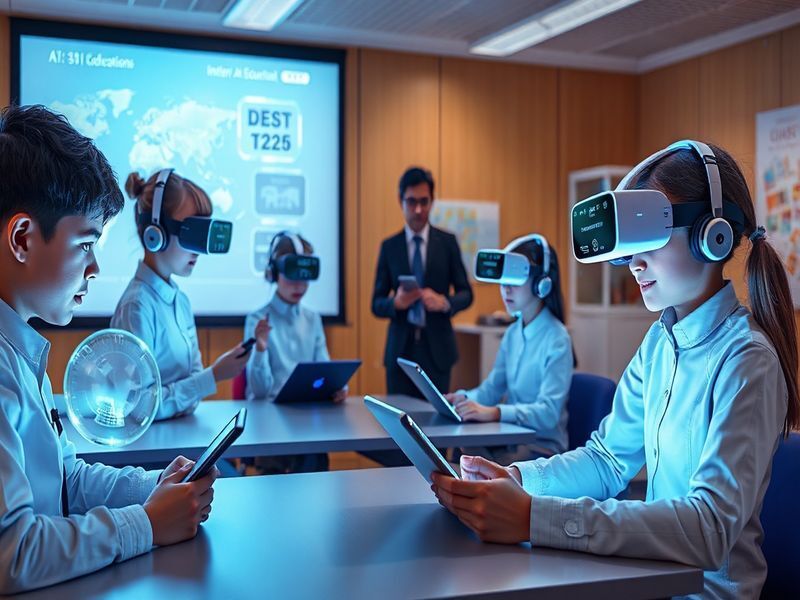
Virtual learning environments powered by AI can create immersive and interactive experiences for students. These environments can simulate real-world scenarios, allowing students to apply their knowledge in practical situations. For example, medical students can practice surgeries in a virtual environment, while engineering students can design and test prototypes.
## Evaluating the Effectiveness of AI in Education
### Benefits of AI in Education
- **Increased Engagement**: AI can make learning more interactive and engaging, capturing students’ attention and motivating them to learn.
- **Improved Learning Outcomes**: Personalized learning and immediate feedback can lead to better understanding and retention of information.
- **Efficiency**: AI can automate routine tasks, allowing teachers to focus on more complex and creative aspects of teaching.
- **Accessibility**: AI can make education more accessible to students with disabilities, providing tools and resources tailored to their needs.
### Challenges and Limitations
- **Data Privacy**: The use of AI in education raises concerns about data privacy and security. Schools must ensure that student data is protected and used responsibly.
- **Bias and Fairness**: AI algorithms can inherit biases from the data they are trained on. It is crucial to ensure that AI tools are fair and unbiased.
- **Teacher Training**: Teachers need to be trained to use AI tools effectively. Without proper training, the benefits of AI may not be fully realized.
- **Cost**: Implementing AI in education can be expensive. Schools must weigh the benefits against the costs and ensure that AI tools are used effectively.
## Future Possibilities and Industry Implications
### AI and the Future of Education
The future of AI in education is bright. As AI technologies continue to evolve, we can expect to see even more innovative applications in the classroom. For example, AI could be used to predict student performance and identify those at risk of dropping out, allowing educators to intervene early and provide support.
### Industry Implications
- **EdTech Companies**: The demand for AI-powered educational tools is growing, creating opportunities for EdTech companies to develop innovative solutions.
- **Educational Institutions**: Schools and universities must adapt to the changing landscape of education, investing in AI technologies and training teachers to use them effectively.
- **Policy Makers**: Policy makers must address the challenges and ethical considerations associated with AI in education, ensuring that student data is protected and that AI tools are used fairly and responsibly.
## Conclusion
The rise of AI in classrooms presents both opportunities and challenges. While AI has the potential to revolutionize education, it is essential to ensure that AI tools are used effectively and responsibly. By addressing the challenges and leveraging the benefits of AI, we can create a more personalized, engaging, and effective learning experience for students.
—
### Practical Insights
- **Start Small**: Schools should start by implementing AI tools in specific areas, such as personalized learning or automated grading, before expanding to other areas.
- **Involve Teachers**: Teachers should be involved in the selection and implementation of AI tools to ensure that they meet the needs of students and teachers.
- **Monitor and Evaluate**: Schools should continuously monitor and evaluate the effectiveness of AI tools, making adjustments as needed to ensure that they are meeting their goals.
### Industry Implications
- **Collaboration**: EdTech companies, educational institutions, and policy makers must collaborate to ensure that AI tools are used effectively and responsibly.
- **Investment**: Schools and universities must invest in AI technologies and teacher training to ensure that they can leverage the benefits of AI.
- **Ethical Considerations**: Policy makers must address the ethical considerations associated with AI in education, ensuring that student data is protected and that AI tools are used fairly and responsibly.
### Future Possibilities
- **Predictive Analytics**: AI could be used to predict student performance and identify those at risk of dropping out, allowing educators to intervene early and provide support.
- **Virtual Reality**: AI-powered virtual reality environments could provide immersive and interactive learning experiences, allowing students to apply their knowledge in practical situations.
- **Natural Language Processing**: NLP algorithms could be used to provide real-time feedback on written responses, helping students improve their writing skills.
—