

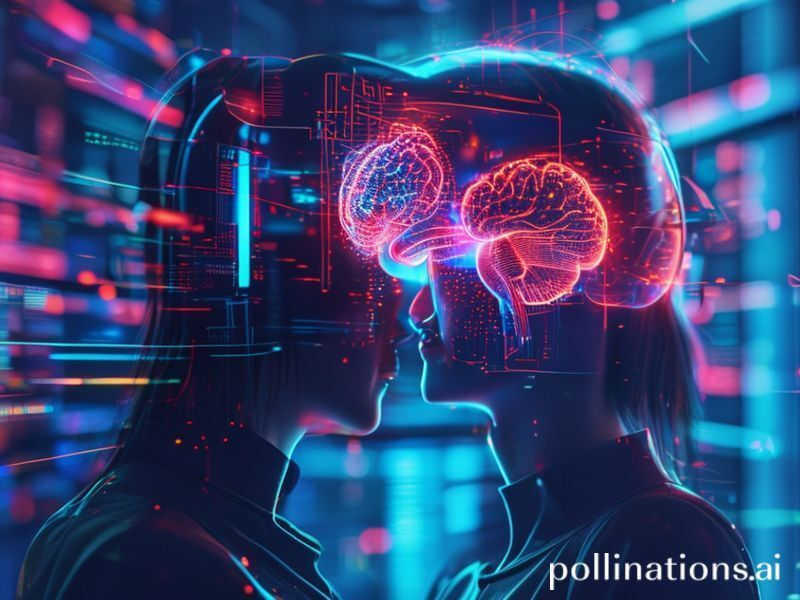
# The Rise of Brain-Computer Interfaces in AI: Exploring Merge Labs’ Noninvasive Approach to Connecting Neurons and AI
## Introduction
The intersection of artificial intelligence (AI) and neuroscience is giving rise to one of the most groundbreaking technologies of our time: brain-computer interfaces (BCIs). These interfaces promise to revolutionize how we interact with machines, offering unprecedented levels of control and communication. Among the pioneers in this field is Merge Labs, a company that is making waves with its noninvasive approach to connecting neurons and AI. This article delves into the rise of BCIs, the innovative work of Merge Labs, and the far-reaching implications for technology and society.
## Understanding Brain-Computer Interfaces
### What Are Brain-Computer Interfaces?
Brain-computer interfaces are systems that enable direct communication between the human brain and external devices. These interfaces bypass the body’s normal neuromuscular pathways, allowing the brain to send commands directly to computers or other devices. BCIs can be invasive, requiring surgical implantation of electrodes, or noninvasive, using external sensors to detect brain activity.
### The Evolution of BCIs
The concept of BCIs has been around for decades, but recent advancements in AI and neuroscience have accelerated their development. Early BCIs were limited to basic commands, such as moving a cursor or controlling a prosthetic limb. Today, BCIs are capable of much more, including:
- Enabling paralyzed individuals to communicate through thought
- Enhancing cognitive abilities through AI augmentation
- Providing real-time feedback for mental health treatments
## Merge Labs: A Noninvasive Approach
### The Vision of Merge Labs
Merge Labs is at the forefront of noninvasive BCI technology. The company’s mission is to create seamless, user-friendly interfaces that connect the human brain with AI systems. Unlike invasive BCIs, which require surgery, Merge Labs’ technology uses advanced sensors and algorithms to interpret brain signals without any physical intrusion.
### How It Works
Merge Labs’ noninvasive BCIs rely on a combination of electroencephalography (EEG) and machine learning. Here’s a simplified breakdown of the process:
- Signal Acquisition: EEG sensors placed on the scalp detect electrical activity in the brain.
- Signal Processing: AI algorithms analyze the raw EEG data to identify patterns and commands.
- Command Execution: The processed signals are translated into actions, such as controlling a device or providing feedback.
### Advantages of Noninvasive BCIs
Merge Labs’ approach offers several advantages over invasive BCIs:
- Safety: No surgical procedures are required, reducing the risk of complications.
- Accessibility: Noninvasive BCIs are more accessible to a broader range of users, including those who may not be candidates for surgery.
- Flexibility: Users can easily put on and take off the sensors, making the technology more adaptable to different situations.
## Practical Insights and Industry Implications
### Applications in Healthcare
BCIs have the potential to transform healthcare, particularly for individuals with disabilities. For example:
- Paralysis: BCIs can enable individuals with paralysis to communicate and interact with the world through thought-controlled devices.
- Neurological Disorders: BCIs can provide real-time feedback for managing conditions like epilepsy or Parkinson’s disease.
- Mental Health: BCIs can be used to monitor and treat mental health disorders by providing insights into brain activity.
### Enhancing Human Capabilities
Beyond healthcare, BCIs have the potential to enhance human capabilities in various fields:
- Education: BCIs can be used to create personalized learning experiences by adapting to the user’s cognitive state.
- Workplace: BCIs can improve productivity by providing real-time feedback and assistance in complex tasks.
- Entertainment: BCIs can revolutionize gaming and virtual reality by enabling thought-controlled interactions.
### Ethical Considerations
As with any emerging technology, BCIs raise important ethical questions. Some of the key considerations include:
- Privacy: Ensuring the protection of users’ brain data is paramount.
- Consent: Users must fully understand the implications of using BCIs and provide informed consent.
- Equity: Ensuring that BCIs are accessible to all, regardless of socioeconomic status.
## Future Possibilities
### The Next Frontier
The future of BCIs is filled with exciting possibilities. Researchers are exploring:
- Direct Brain-to-Brain Communication: Enabling direct communication between individuals through BCIs.
- AI Augmentation: Using BCIs to enhance cognitive abilities through AI-powered assistance.
- Neural Prosthetics: Developing advanced prosthetics that can be controlled through thought.
### The Role of AI
AI will play a crucial role in the continued development of BCIs. Machine learning algorithms will become more sophisticated, enabling more accurate and efficient interpretation of brain signals. Additionally, AI can be used to create personalized BCIs that adapt to the unique needs of each user.
## Conclusion
The rise of brain-computer interfaces represents a significant leap forward in the fusion of AI and neuroscience. Merge Labs’ noninvasive approach offers a promising path toward making BCIs accessible and safe for a broader range of users. As the technology continues to evolve, it has the potential to transform healthcare, enhance human capabilities, and open up new possibilities for human-machine interaction. However, it is essential to address the ethical considerations and ensure that BCIs are developed and used responsibly. The future of BCIs is bright, and the journey has only just begun.
—