

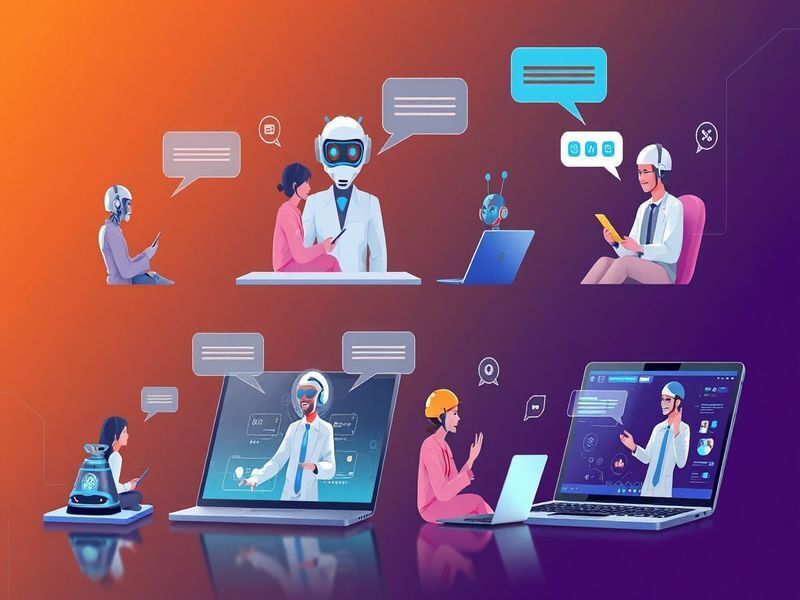
The Rise of Conversational AI Agents: Understanding Their Evolution and Impact on Daily Tasks
As artificial intelligence (AI) continues to evolve, one of the most significant advancements has been the rise of conversational AI agents. These AI-driven entities have transformed the way we interact with technology, enabling more intuitive and efficient communication. From virtual assistants like Siri and Alexa to sophisticated chatbots used in customer service, conversational AI agents are becoming integral to our daily lives. This article delves into how these agents evolve through user interactions and their profound impact on various daily tasks.
The Evolution of Conversational AI
Conversational AI has come a long way since its inception. The evolution can be categorized into several key stages:
- Rule-Based Systems: Early conversational agents relied on predefined rules and scripts. They could respond to specific keywords but lacked understanding of context.
- Statistical Methods: The introduction of machine learning allowed these systems to learn from data. This marked a shift towards more flexible responses based on probabilities rather than fixed rules.
- Deep Learning: The current state of conversational AI heavily relies on deep learning techniques, particularly in natural language processing (NLP). This enables agents to understand context, sentiment, and complex queries better.
- Contextual Awareness: Modern AI agents can maintain context over conversations, allowing for more human-like interactions. They can recall previous interactions and adapt their responses accordingly.
This evolution reflects a broader trend towards creating AI that not only understands commands but also engages in meaningful dialogues with users.
User Interactions: The Key to Improvement
One of the most fascinating aspects of conversational AI agents is their ability to improve through ongoing user interactions. This process can be summarized in the following ways:
- Feedback Loops: Users provide implicit and explicit feedback, helping the AI learn which responses are effective and which are not. This feedback is crucial for training models.
- Data Accumulation: Every interaction contributes to a growing dataset, allowing for continuous refinement of algorithms. More data leads to better understanding and more accurate predictions.
- Personalization: By analyzing user behavior, conversational AI can tailor its interactions, making them more relevant and personalized over time. For example, a virtual assistant might learn your preferences for news topics or music.
These interactions not only enhance the capabilities of AI agents but also ensure that they remain relevant to user needs.
Impact on Daily Tasks
The integration of conversational AI agents into our daily routines has been nothing short of transformative. Some notable impacts include:
- Time Management: Virtual assistants help users manage their schedules by setting reminders, sending calendar invites, and even suggesting optimal times for meetings based on preferences.
- Customer Support: Businesses are increasingly using chatbots to handle customer inquiries. This not only reduces wait times but also allows for 24/7 support, enhancing customer satisfaction.
- Home Automation: Conversational agents control smart home devices, enabling users to adjust lighting, thermostats, and security systems through simple voice commands.
- Accessibility: For individuals with disabilities, conversational AI provides essential tools for communication and interaction, making technology more accessible to everyone.
As these tasks become more streamlined, users can focus on more critical aspects of their lives, enhancing productivity and overall satisfaction.
Industry Implications
The rise of conversational AI agents is reshaping industries across the board. Here are some implications:
- Healthcare: AI agents can assist in patient care by providing information, scheduling appointments, and even monitoring health conditions through conversational interfaces.
- Retail: E-commerce platforms are leveraging chatbots to guide customers through their shopping experiences, making recommendations based on previous purchases and preferences.
- Education: Conversational AI tools can serve as tutors, answering questions and providing explanations in real-time, thereby enhancing the learning experience.
These applications signify that conversational AI is not merely a trend but a crucial component of future innovations in various sectors.
Future Possibilities
Looking ahead, the potential for conversational AI agents is vast. Some future possibilities include:
- Advanced Emotional Intelligence: Future agents may develop the capacity to detect and respond to human emotions more effectively, fostering deeper connections with users.
- Multimodal Interactions: Integrating voice, text, and visual inputs could create a more cohesive experience, allowing users to interact with AI in the way that feels most natural to them.
- Decentralized Learning: As privacy concerns grow, future conversational agents may utilize decentralized learning methods, allowing for personalized experiences while safeguarding user data.
As we move forward, the continuous evolution of conversational AI agents will undoubtedly redefine the landscape of human-computer interaction, leading to more intelligent and responsive systems that enhance our everyday lives.