
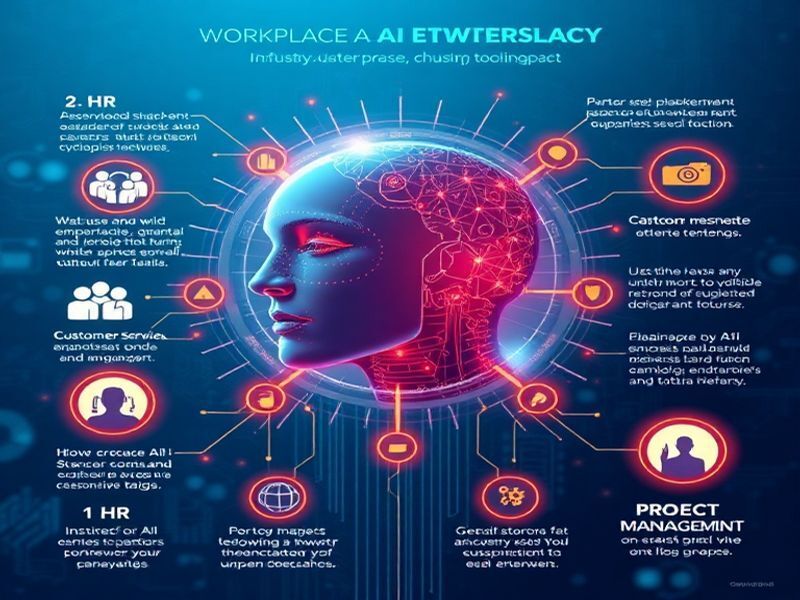
The Role of AI in Modern Workplace Solutions: Insights from MIT’s Research
Artificial Intelligence (AI) is not just a buzzword; it is a transformative force reshaping how we work, collaborate, and innovate within the modern workplace. With groundbreaking research emerging from institutions like the Massachusetts Institute of Technology (MIT), businesses are increasingly leveraging AI to enhance productivity and streamline operations across various tasks.
Understanding AI’s Impact on Workplace Solutions
AI technologies are being integrated into workplace solutions to automate repetitive tasks, improve decision-making, and foster innovation. MIT’s research highlights several key areas where AI is making significant contributions:
- Automation of Routine Tasks: AI can handle mundane tasks such as data entry, scheduling, and email management, freeing up employees to focus on higher-value activities.
- Data-Driven Decision Making: AI analyzes vast amounts of data to provide actionable insights, enabling businesses to make informed decisions quickly.
- Enhanced Collaboration: AI tools facilitate better communication and collaboration among teams, regardless of their physical locations.
- Personalization: AI enables personalized experiences for employees, tailoring tools and resources to meet individual needs and preferences.
Practical Applications of AI Across Various Tasks
The practical applications of AI in the workplace are vast and varied. Here are some insights gathered from MIT’s research:
- Human Resources: AI-driven recruitment tools can sift through thousands of resumes, identifying the best candidates based on specific criteria. This not only speeds up the hiring process but also helps reduce bias.
- Customer Service: Chatbots powered by AI can manage customer inquiries 24/7, providing instant responses and improving customer satisfaction. According to MIT’s studies, these systems can handle up to 70% of inquiries without human intervention.
- Project Management: AI tools assist in project tracking and resource allocation, predicting potential delays and optimizing workflows to keep projects on schedule.
- Sales and Marketing: AI analyzes consumer behavior and preferences, allowing companies to target their marketing efforts more effectively and personalize their sales approaches.
Industry Implications of AI Integration
The integration of AI into workplace solutions is not without its challenges and implications. Industries are experiencing significant shifts that require adaptation and foresight:
- Workforce Transformation: The rise of AI may lead to job displacement in certain areas, but it also opens up opportunities for new roles focused on managing and developing AI technologies.
- Ethical Considerations: As AI technologies are implemented, organizations must grapple with ethical concerns related to data privacy, algorithmic bias, and transparency.
- Competitive Advantage: Early adopters of AI technologies are gaining a competitive edge, leading to increased pressure on lagging companies to innovate or risk obsolescence.
Future Possibilities: What Lies Ahead
Looking ahead, the role of AI in the workplace will only continue to evolve. MIT’s ongoing research suggests several future possibilities:
- AI-Augmented Workforces: Companies will increasingly adopt hybrid models where AI works alongside human employees, enhancing productivity and creativity.
- Continuous Learning Systems: AI will enable continuous learning and development opportunities, adapting training programs to an employee’s individual pace and mastery.
- Greater Interoperability: Future AI systems will be more integrated across platforms, allowing seamless data flow and collaboration among various tools and applications.
- AI Governance Frameworks: As AI becomes more embedded in business processes, organizations will need to establish governance frameworks to ensure ethical and effective use.
Conclusion
AI is fundamentally reshaping the modern workplace, driving efficiency, innovation, and engagement. Insights from MIT’s research underscore the practical applications and implications of AI across various tasks and industries. As we continue to explore the capabilities of AI, organizations must embrace these technologies while addressing the ethical and operational challenges they present. The future of work is not just about technology; it’s about how we integrate AI into the fabric of our daily operations, paving the way for a more intelligent and responsive workplace.