
Tracking the AI Race: Who’s Leading the Pack?
The artificial intelligence (AI) landscape is evolving at a breathtaking pace, with companies and research institutions racing to develop advanced models that can redefine our interaction with technology. Among the frontrunners in this race are large language models (LLMs), which have become pivotal in benchmarking and evaluating AI capabilities. But who exactly is leading the pack, and what do the metrics say about their performance and implications for the future?
The Significance of Large Language Models (LLMs)
Large language models, such as OpenAI’s GPT-4 and Google’s LaMDA, have gained significant attention due to their remarkable ability to understand and generate human-like text. These models are not only transforming natural language processing (NLP) but also influencing various sectors, including:
- Customer Service: AI chatbots powered by LLMs provide 24/7 assistance, improving user experience and reducing operational costs.
- Content Creation: Writers and marketers use LLMs to generate articles, advertisements, and social media posts, enhancing creativity and productivity.
- Programming: Tools like GitHub Copilot leverage LLMs to assist developers in writing code, thereby streamlining the software development process.
Benchmarking AI Models: LLM Stats
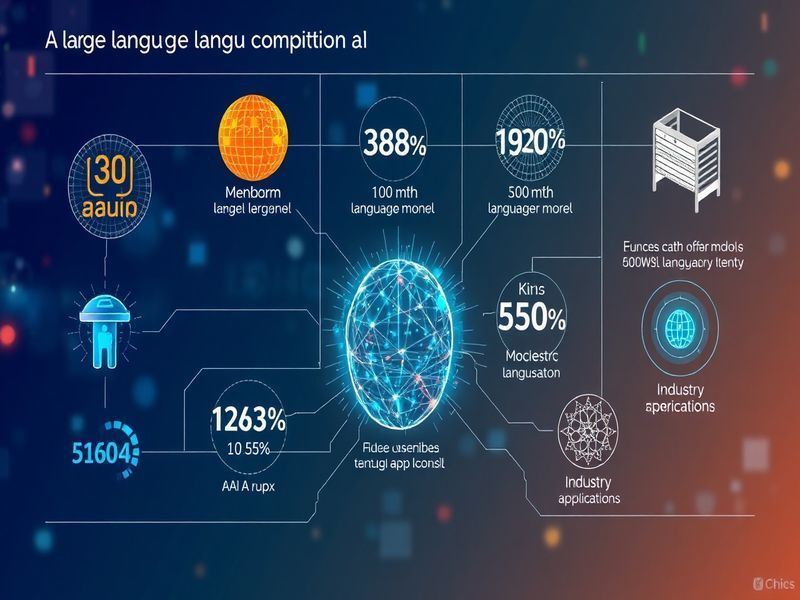
As the competition intensifies, benchmarking becomes crucial for understanding the strengths and weaknesses of various AI models. Key metrics used in evaluating LLMs include:
- Accuracy: Measures how well a model predicts or generates the correct output based on given input.
- F1 Score: A balance between precision and recall, providing a single score to gauge a model’s performance.
- Training Time: The duration it takes to train a model, which impacts resource allocation and deployment speed.
- Model Size: Refers to the number of parameters within the model, affecting its capability and performance.
These metrics collectively provide insights into which models are more efficient and effective, thereby guiding organizations in their AI strategy decisions.
Who’s Leading the AI Race?
As of late 2023, several companies have emerged as leaders in the development of LLMs:
- OpenAI: With its GPT-4 model, OpenAI continues to set benchmarks in terms of versatility and coherence in text generation.
- Google: Google’s LaMDA and other models are known for their contextual understanding and application in various Google services.
- Anthropic: A newer player focusing on safety and alignment in AI, their Claude model shows promise in conversational AI.
- Meta (Facebook): Their LLaMA models aim to provide open-source alternatives that prioritize accessibility and collaboration.
These companies are not only competing on performance metrics but also on ethical considerations and the societal impact of their technologies.
Industry Implications
The advancements in LLMs carry significant implications for various sectors:
- Healthcare: AI models can assist in diagnosing diseases, managing patient care, and providing personalized treatment plans.
- Finance: Predictive models can help in risk assessment, fraud detection, and automating customer interactions.
- Education: Personalized learning experiences and tutoring systems powered by LLMs can cater to individual learning styles and paces.
As these technologies become more embedded in daily operations, the demand for ethical AI practices will also grow, prompting organizations to consider bias, transparency, and accountability.
Future Possibilities
The future of LLMs and AI technology is filled with possibilities. Here are some trends to watch:
- Continued Innovation: As competition heats up, expect rapid advancements in model capabilities, including improved contextual understanding and emotional intelligence.
- Integration with Other Technologies: LLMs will likely be integrated with other technologies like computer vision and robotics, creating more comprehensive AI systems.
- Regulatory Frameworks: As AI adoption increases, governments and organizations will need to establish guidelines to ensure ethical use and mitigate risks.
- Open-source Movements: The push for democratization of AI will lead to more open-source models, allowing wider access and collaboration among developers.
In conclusion, the race to develop leading AI models is not just about who has the most powerful technology; it’s about how that technology can be applied responsibly and effectively across various sectors. As LLMs continue to evolve, they will play a crucial role in shaping the future of AI and our interactions with it.